Unveiling the Grand Egyptian Museum: A Cultural Marvel of the 21st Century
As the Grand Egyptian Museum officially opens its doors in Cairo, it promises a journey through the heart of ancient Egyptian civilization. This colossal structure, poised to be a major cultural landmark, houses an unparalleled collection of artifacts, offering visitors a deep dive into the world of the pharaohs. The museum, which the Egyptian authorities are calling the largest cultural edifice of the 21st century, is set to redefine the landscape of cultural tourism.
A Monumental Design
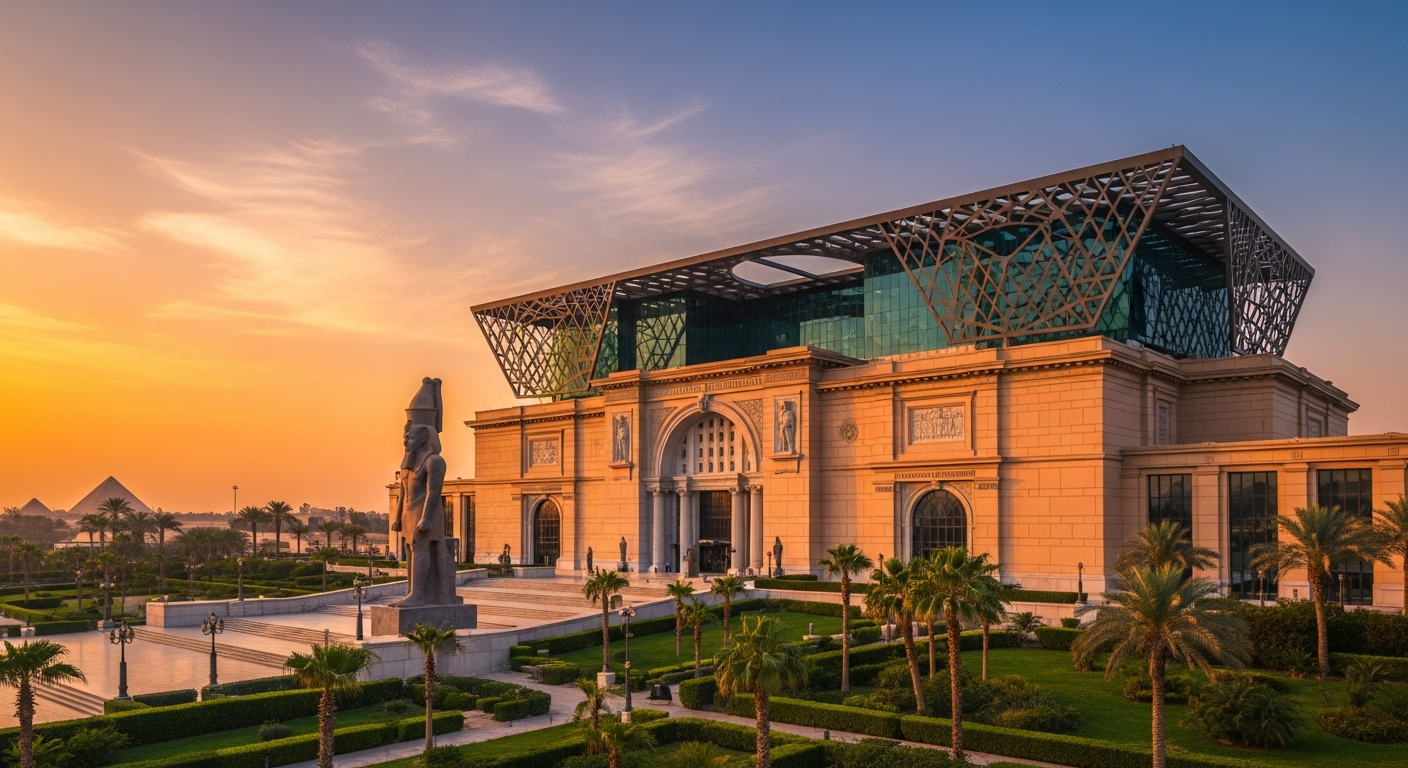
Designed by the Irish firm Heneghan Peng, the museum’s facade of stone and glass is crafted to mirror the Fourth Pyramid on the Giza Plateau, adjacent to the pyramids of Khufu, Khafre, and Menkaure. This architectural marvel covers an area of over 50,000 square meters and is designed to welcome an estimated five million visitors annually, with the aim of bolstering tourism revenue, which is critical to supporting the Egyptian economy.
Treasures Within: A Glimpse into the Past
The museum showcases an extensive collection of about one hundred thousand artifacts, representing thirty pharaonic dynasties. Approximately half of these treasures will be on display, while the rest are preserved in storage. The museum’s centerpiece is the colossal statue of Ramses II, weighing 83 tons and standing 11 meters tall, which greets visitors at the entrance. This statue, a testament to the pharaoh’s reign from 1279 to 1213 BC, has traveled the world and now finds its final home here.
Tutankhamun’s Legacy
A dedicated hall showcases the treasures of Tutankhamun, including over 4,500 funerary items discovered in his tomb in the Valley of the Kings by British archaeologist Howard Carter in 1922. The exhibit features the iconic golden funerary mask of Tutankhamun, inlaid with lapis lazuli, and his red quartz sarcophagus, which holds three nested coffins, the smallest made of solid gold and weighing 110 kilograms. Recent genetic tests and radiological studies conducted in the early 21st century attribute the young pharaoh’s death at the age of 19 (in 1324 BC) to malaria combined with a bone disease.
Solar Boats and Ancient Engineering
A separate building has been constructed to house the solar boat of Pharaoh Khufu, a wooden artifact considered to be the oldest and largest of its kind in history. Constructed around 4,600 years ago from cedar and acacia wood, the boat measures approximately 43.5 meters in length. Through a glass wall, visitors can also observe the ongoing restoration of a second solar boat, discovered in 1987. The museum’s soft opening took place in October 2024.
A Project of Grand Scale
Initiated in 2002 during the presidency of the late Hosni Mubarak, the Grand Egyptian Museum has faced numerous delays, including postponements due to political instability, the COVID-19 pandemic, and regional tensions. The museum, built around a grand staircase adorned with statues and tombs, offers a panoramic view of the pyramids. The upper floor features twelve galleries displaying artifacts from prehistory through the Greco-Roman period, spanning fifty centuries of history. The museum also includes open storage for researchers, laboratories, restoration workshops, libraries, a conference center, restaurants, and shopping areas.
With its vast collection and innovative design, the Grand Egyptian Museum promises to be a captivating destination for history enthusiasts and casual visitors alike. It stands as a tribute to the past and a beacon for the future of cultural preservation.
About the Author