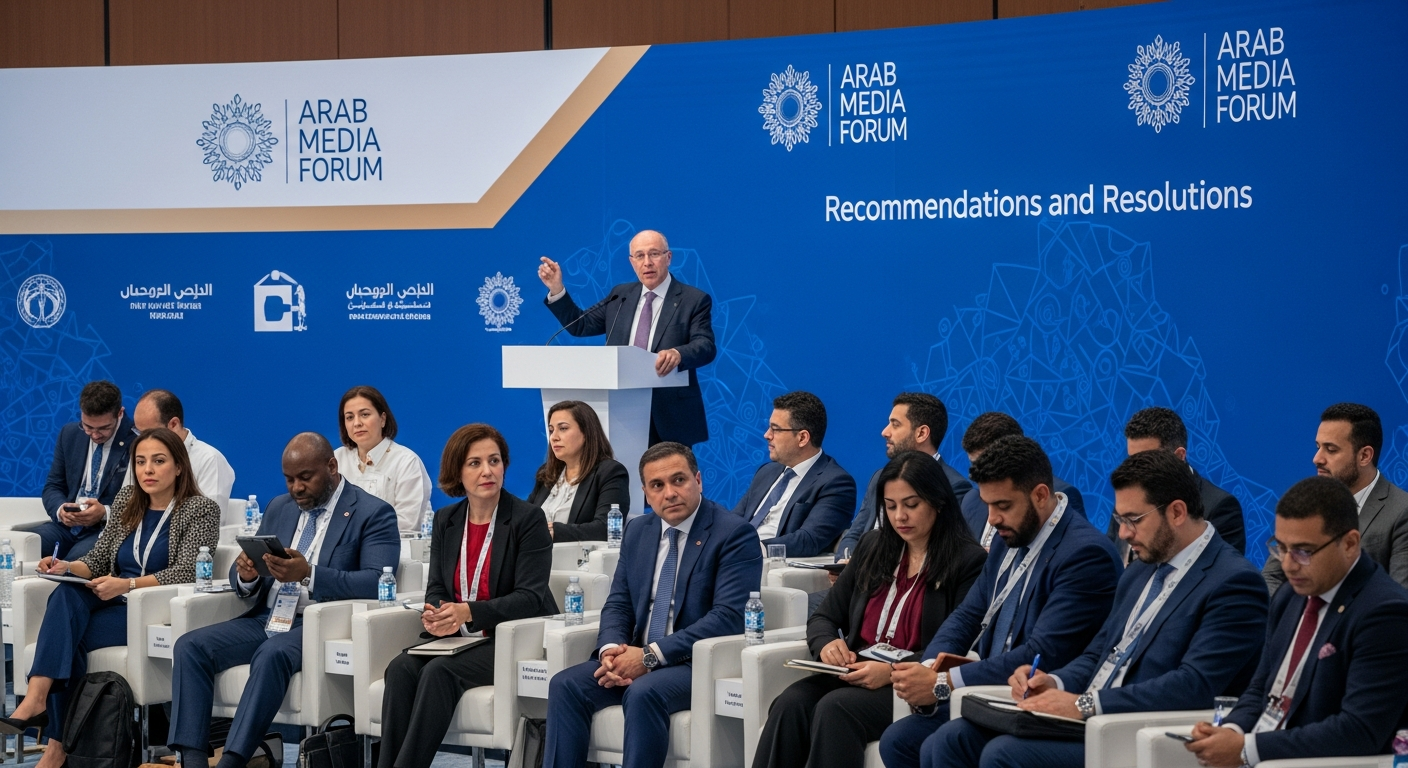
Arab Media Forum Issues Recommendations: What Did They Cover?
The 21st edition of the Arab Media Forum, held in Beirut, Lebanon, under the theme “Media and Development: The Alliance of the Present, the Partners of the Future,” concluded recently. The event, which took place with the patronage of Lebanese President, General Michel Aoun, and the presence of the Minister of Information, Ziad Makary, brought together a diverse group of ministers, officials, media professionals, academics, and experts from across the Arab world.
Key Discussions and Recommendations
Over two days, the forum hosted insightful discussions on the current state of Arab media in light of technological advancements. The sessions covered the role of media in protecting national identity, promoting social awareness, and addressing the future of the profession in the face of artificial intelligence and digital content. Discussions also touched upon the evolution of communication tools and their impact on values such as freedom, credibility, and professionalism.
At the conclusion of the forum, participants issued a series of recommendations outlining their vision for the development of the Arab media landscape. These recommendations encompassed several key areas:
- Freedom of Expression: Emphasizing the importance of safeguarding freedom of opinion and expression as a fundamental pillar of any Arab media project. The forum called for creating a legislative and operational environment that ensures the responsible and professional exercise of freedom.
- Arab Media Integration: Encouraging Arab countries to enhance media integration through joint mechanisms for exchanging news and media content, as well as coordinating communication policies to serve Arab issues and strengthen intellectual and cultural unity.
- Media Development: Promoting joint training courses and events to exchange expertise and develop media capabilities among professionals in Arab media institutions. They also highlighted the importance of supporting young Arab media professionals through training programs and launching initiatives to encourage creativity among new generations of journalists.
- Digital Transformation: Recognizing the need to keep pace with technological developments, including artificial intelligence, in media production, digital editing, and public communication. This is to ensure that Arab media institutions can thrive in a more competitive and innovative environment.
- Legal Frameworks: Reviewing media laws and legislation in Arab countries to align with the requirements of the digital age. This includes balancing freedom of expression with protecting privacy and combating misinformation.
- Media Monitoring: Establishing an Arab observatory for media developments to monitor technical and legal developments and issue annual reports on digital transformations and their impact on the Arab media landscape.
- Collaboration: Strengthening partnerships between media institutions, universities, and research centers to develop new educational programs in digital media, artificial intelligence, and creative content creation.
- Joint Initiatives: Supporting cooperation between information ministries and Arab press, radio, and television institutions to address common challenges, such as combating fake news and protecting the profession from ethical violations.
- Sustainable Development: Highlighting the role of media in supporting sustainable development plans in the Arab world and establishing an Arab fund to support youth media initiatives.
Looking Ahead
The participants also expressed their support for the Arab Media Forum’s initiative to create an “Arab Media Innovation Platform” to foster talent and innovative projects in the media field. They urged the Arab League to officially adopt this initiative within its media and cultural system. Furthermore, the forum recommended expanding cooperation between the Arab Media Forum and regional and international institutions working in communication, media, training, and scientific research.
The forum’s recommendations reflect a forward-looking approach to the challenges and opportunities facing Arab media. By addressing key issues such as freedom of expression, digital transformation, and professional development, the forum aims to contribute to a more vibrant, responsible, and innovative media landscape in the Arab world.
About the Author