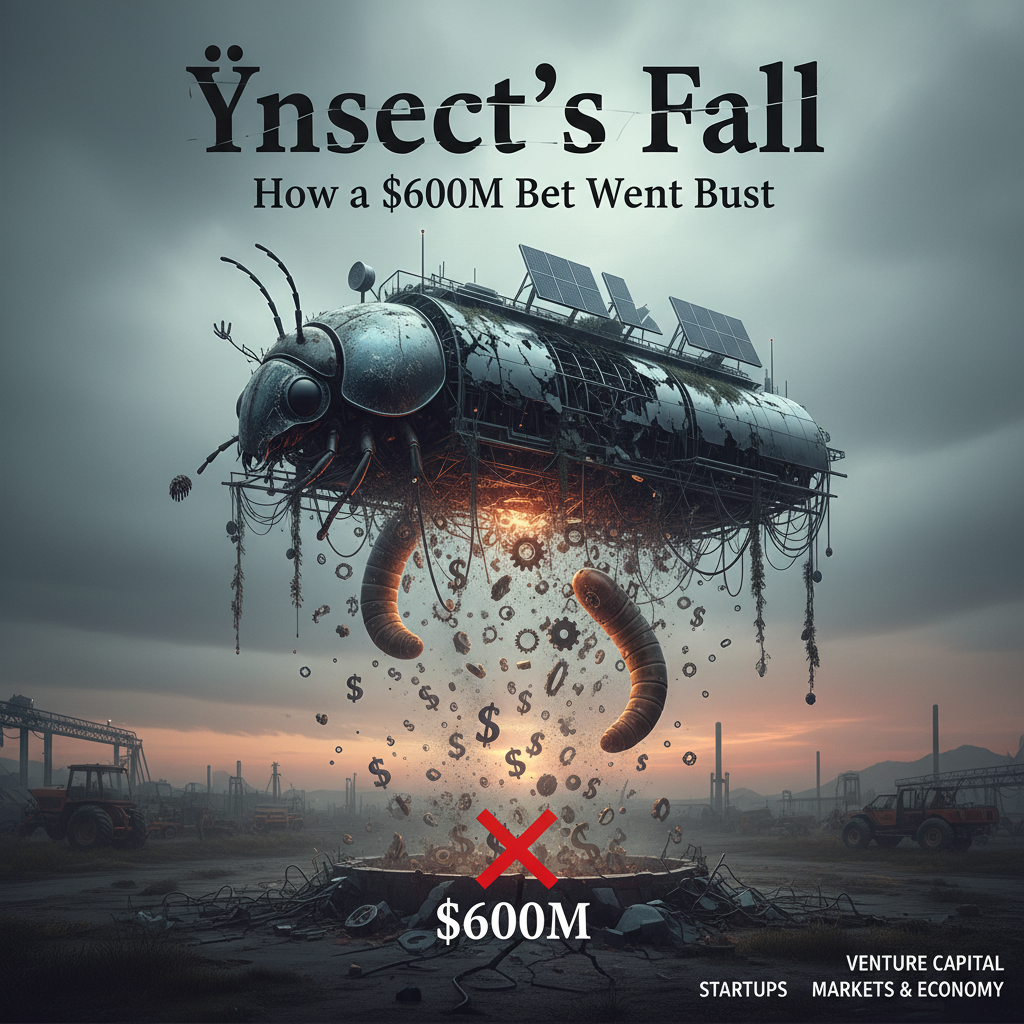
The insect farming industry has faced a major setback. Ÿnsect, a French startup that had garnered significant attention and over $600 million in funding, was recently placed into judicial liquidation. This outcome underscores the considerable hurdles involved in scaling insect farming and the harsh realities of the market.
Context: Founded in France, Ÿnsect aimed to revolutionize the food industry by mass-producing insects for animal feed and human consumption. The company secured substantial venture capital, attracting investors with the promise of sustainable protein production. However, despite the significant financial backing, Ÿnsect’s operations have faltered, leading to its insolvency.
Analysis: The failure of Ÿnsect offers several strategic insights for startups, investors, and operators. The company’s struggles may be attributed to a combination of factors. Scaling production to meet market demand proved challenging. Additionally, the insect farming market is still in its infancy, with uncertain profitability and high capital expenditures. The recent judicial liquidation indicates that Ÿnsect was unable to overcome these significant operational and market challenges.
Implications: The collapse of Ÿnsect sends a clear message to the startup ecosystem. While insect farming has the potential to contribute to a more sustainable food system, it is a high-risk, capital-intensive venture. The case of Ÿnsect should encourage investors to conduct more thorough due diligence and encourage startups to be more realistic about their growth projections and to have a sustainable business model.
What Happens Next: The judicial liquidation of Ÿnsect means that the company’s assets will be assessed, and creditors will be repaid based on their standing. The failure of this high-profile startup may lead to a reassessment of investment strategies in the insect farming sector. It will likely cause investors to be more cautious and encourage other players to re-evaluate their approaches.
Sources:
About the Author