The hum of the servers filled the small engineering lab, a low thrumming that usually faded into the background. But today, the hum was a counterpoint to the quiet intensity of the team, heads bent over schematics, their faces illuminated by the glow of multiple monitors. It was late 2024, and the Mill team was deep in the weeds, stress-testing the next generation of their smart food waste bins.
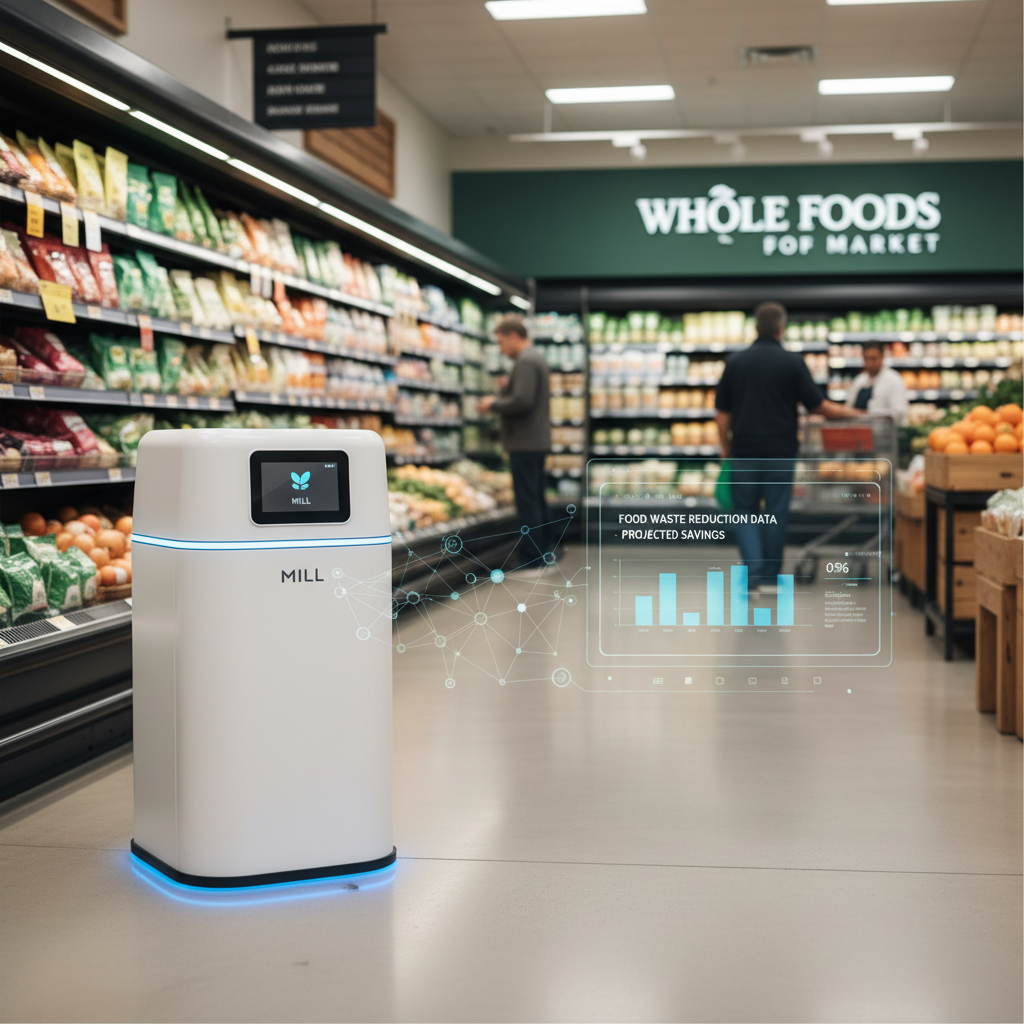
The core innovation? A system that not only captures food waste, but also processes it on-site, turning it into a nutrient-rich substance for animal feed. The aim, of course, is to dramatically reduce the amount of food waste sent to landfills and the associated methane emissions.
This initiative got a significant boost when Amazon’s Climate Pledge Fund invested in Mill. This backing, along with the announcement that Whole Foods will begin installing these smart bins in 2027, signals a major step toward mainstream adoption of this technology. According to a recent report from market analysis firm, Grand View Research, the global food waste management market is expected to reach $95.7 billion by 2028, a figure that certainly got the attention of the executive team.
“The challenge isn’t just about the technology,” explained Sarah Chen, lead engineer on the project, her voice barely audible over the whirring fans, “it’s about the logistics. We’re talking about a complete shift in how a massive company like Whole Foods handles waste. It’s a complex dance of hardware, software, and behavioral change.”
The bins themselves are packed with sensors and smart tech. They weigh the waste, identify its contents, and monitor the decomposition process. Data is transmitted to a central system, allowing for optimization and predictive maintenance. The goal is to create a closed-loop system, minimizing waste at every stage.
But the road hasn’t been without its bumps. Supply chain issues have been a constant headache. The team had to navigate component shortages and rising prices, a familiar story in the tech world. There were also the inevitable software glitches and unexpected hardware failures, the kind that keep engineers up at night.
“We’re not just building a product,” Chen continued, “we’re building a system. It’s like, how do you change a tire while the car is moving? It’s a constant evolution.”
The implications of this rollout are significant. If successful, it could set a new standard for waste management in the retail sector, demonstrating a viable model for other companies to follow. It’s also a win for sustainability, reducing the environmental impact of food waste. And, of course, it’s a validation of the Mill team’s vision. A vision that’s now a little closer to reality, one smart bin at a time.
About the Author