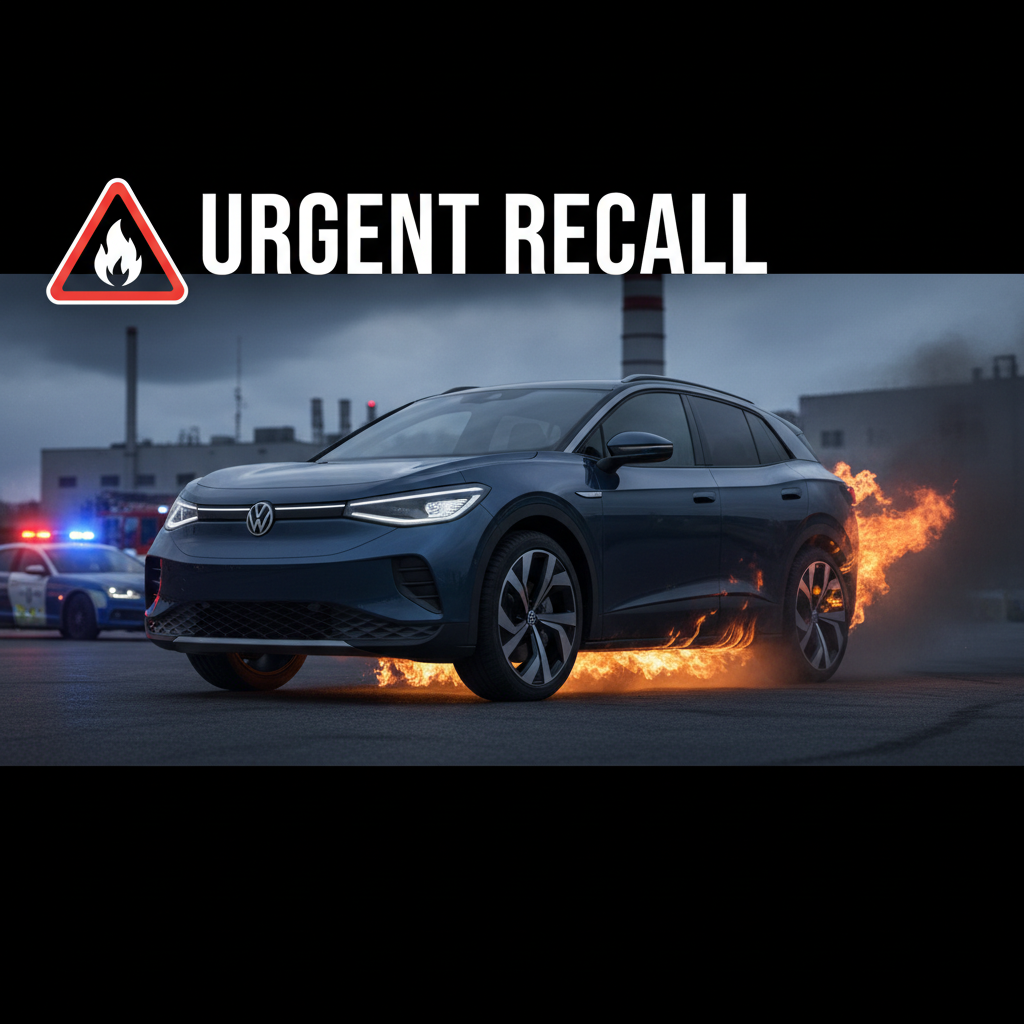
The fluorescent lights of the Volkswagen engineering lab hummed, reflecting off the rows of ID.4 battery packs undergoing thermal testing. It was late September when the first reports of battery overheating began circulating, triggering a scramble that culminated in the recall announced this week. Over 44,000 electric SUVs are now affected, a stark reminder of the challenges facing the EV industry.
The core issue? Overheating batteries. Volkswagen’s investigation revealed a potential fire risk, prompting an urgent safety warning. Owners of the ID.4 are now advised to park their vehicles outside and away from structures immediately after charging. The directive, issued with a sense of palpable urgency, underscores the severity of the situation. This isn’t just about inconvenience; it’s about preventing potential fires.
“This is a significant setback,” noted Stephanie Brinley, an analyst at S&P Global Mobility. “Recalls like these not only damage consumer confidence but also put a strain on production and the supply chain. The ripple effects can be felt across the entire automotive sector.”
The recall itself is a complex undertaking. Volkswagen must identify and repair the affected vehicles, a process that will likely involve software updates and, in some cases, battery replacements. This is not a quick fix. Production bottlenecks, already a concern in the EV market, could be exacerbated by the need for replacement parts. It’s a race against time, with safety as the ultimate goal.
The recall also raises broader questions about battery technology and safety standards. While EVs are touted as the future of transportation, incidents like this highlight the need for rigorous testing and quality control. The rush to bring new models to market, spurred by consumer demand and government incentives, can sometimes overshadow the critical importance of safety. Or maybe that’s how the supply shock reads from here.
The situation at Volkswagen serves as a cautionary tale. The company’s response, while proactive, underscores the inherent risks involved in the rapid adoption of new technologies. The engineering team continues to work on a solution, the pressure is very much on. The financial implications are also considerable. The cost of the recall, coupled with potential reputational damage, could impact the company’s bottom line for quarters to come. It’s a moment of reckoning for Volkswagen, and a stark reminder that safety must always come first.
About the Author