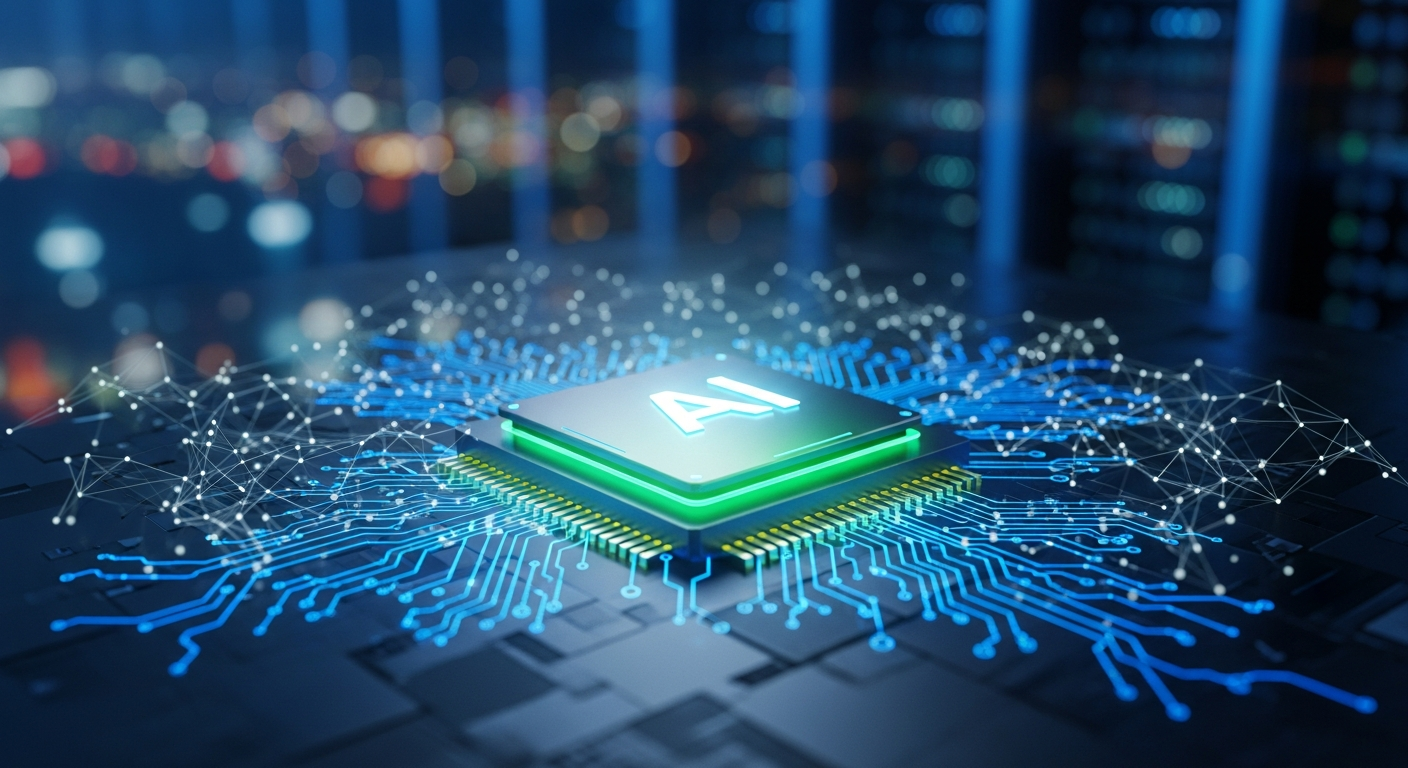
The fluorescent lights of the Unconventional AI lab hummed, reflecting off the polished servers. Engineers, heads bent, huddled around monitors, the low thrum punctuated by the staccato clicks of keyboards. It was a scene of controlled chaos, the kind that precedes a major announcement. Today, December 9, 2025, the company confirmed its $475 million seed round, a significant injection of capital for a hardware startup in a market hungry for alternatives.
This funding, led by the former head of AI at Databricks, Naveen Rao, values the company at a staggering $4.5 billion. The sheer scale underscores the escalating demand for advanced AI hardware. Analysts at Deutsche Bank predict the AI chip market will reach $200 billion by 2027, driven by the insatiable need for processing power to handle increasingly complex models. Or maybe that’s how the supply shock reads from here.
“Unconventional AI is tackling a fundamental bottleneck,” stated Dr. Emily Chen, a senior analyst at Gartner. “Their approach to chip design, if successful, could drastically alter the competitive landscape. The market has been dominated by a few players, but the emergence of new architectures could bring much needed innovation.” The company’s focus is on developing specialized hardware optimized for AI workloads, aiming to overcome the limitations of existing GPUs and CPUs. This involves exploring novel chip designs, potentially bypassing the constraints of traditional manufacturing processes. The race is on.
The engineering team was deep in thermal testing, running simulations on the M100, the first generation of Unconventional AI’s custom chips. Initial reports hinted at a 30% performance improvement over leading competitors, but the team was pushing for more. The pressure was on to meet the projected 2026 launch date. One engineer muttered something about “node limitations.” A short, sharp laugh.
The strategic implications are considerable. With US export controls tightening, and domestic procurement policies favoring local suppliers, the ability to manufacture advanced chips becomes a national priority. China’s SMIC remains a major competitor, but TSMC’s manufacturing prowess is still unmatched. The next generation, the M300, slated for 2027, promises even greater efficiency gains, but success hinges on securing reliable supply chains, a familiar challenge in this era.
The seed round wasn’t just about money; it was about validating a vision. Rao and his team are betting on a future where specialized hardware can unlock new levels of AI performance. The conference call, a blur of strategic pronouncements and market forecasts, ended with a brief moment of silence, a pause before the next phase began. The hum of the servers, a constant reminder of the work still to be done.
About the Author