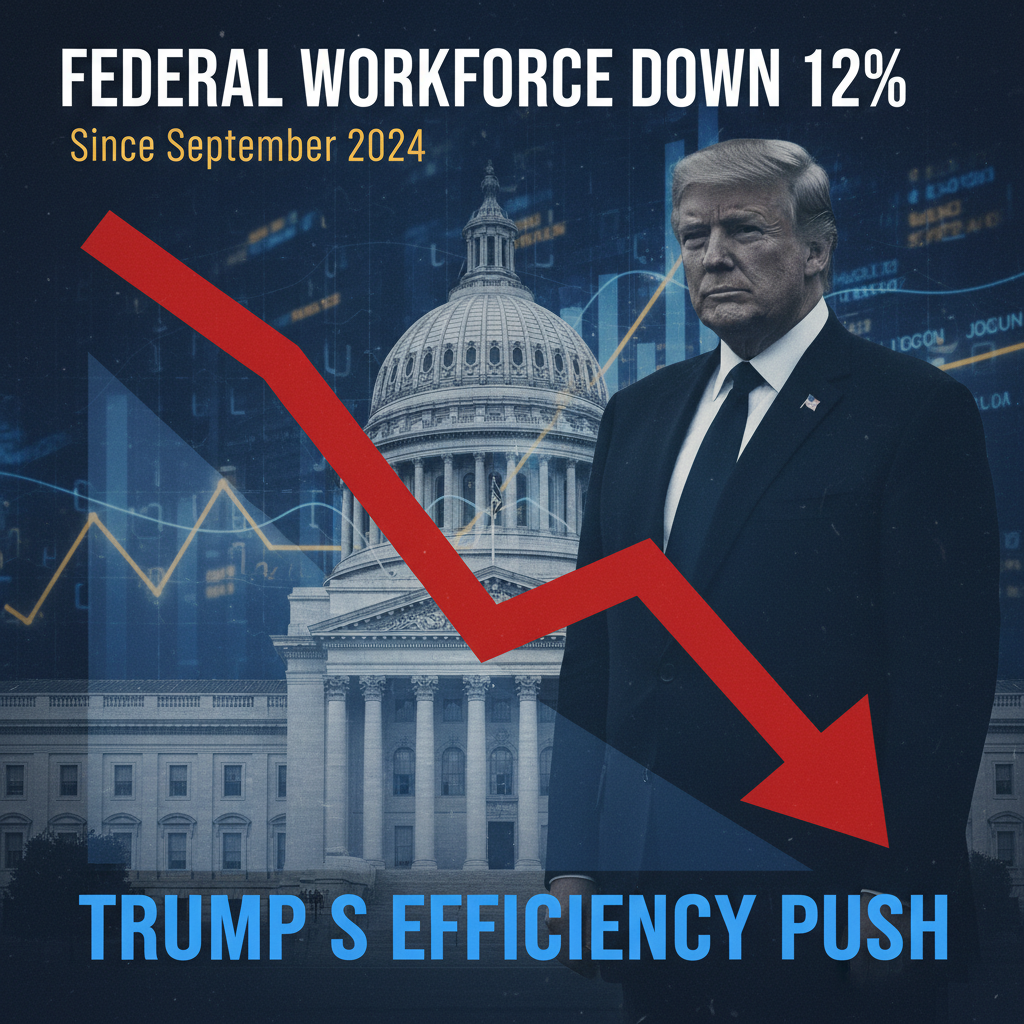
President Donald Trump’s efficiency push has led to a significant contraction of the federal workforce, with a 12% reduction in personnel since September 2024, according to recent data. This move, aimed at streamlining government operations, has resulted in thousands of government employees leaving their positions, raising questions about the implications for various sectors.
The reduction in the federal workforce is a direct result of the efficiency push initiated by President Trump. The primary goal of this initiative is to reduce the size of the government workforce, which the administration believes will lead to greater efficiency and cost savings. The data indicates that the impact of this policy is already being felt across various government departments and agencies.
The shrinking workforce includes a broad range of federal employees, from administrative staff to specialized professionals. The departures, whether through layoffs, attrition, or early retirement, have created a ripple effect, potentially impacting the delivery of government services and the morale of remaining employees. This situation has led to discussions about the long-term effects on government operations and the potential for increased workloads for those who remain.
The efficiency push is a key component of President Trump’s broader economic agenda. The administration argues that a leaner government will be more responsive and less burdensome to taxpayers. However, critics suggest that such significant cuts could undermine the government’s ability to effectively carry out its responsibilities, potentially affecting areas such as public safety, environmental protection, and economic regulation.
The data released provides a clear picture of the scale of the workforce reduction. The efficiency push has resulted in significant layoffs and a decrease in staffing levels across many government departments. The government is now operating with significantly fewer employees than it did prior to September 2024.
The developments raise critical questions about the future of employment within the government and the broader economy. The impact of these staffing changes will likely be felt for years to come. The markets & economy and executive moves & hirings are both significantly affected by these changes, as the government workforce continues to evolve.
This situation underscores the importance of monitoring the ongoing changes within the federal government and assessing their impact on both the public and private sectors. The long-term implications of these moves are still unfolding and will continue to be a subject of debate and analysis.
About the Author