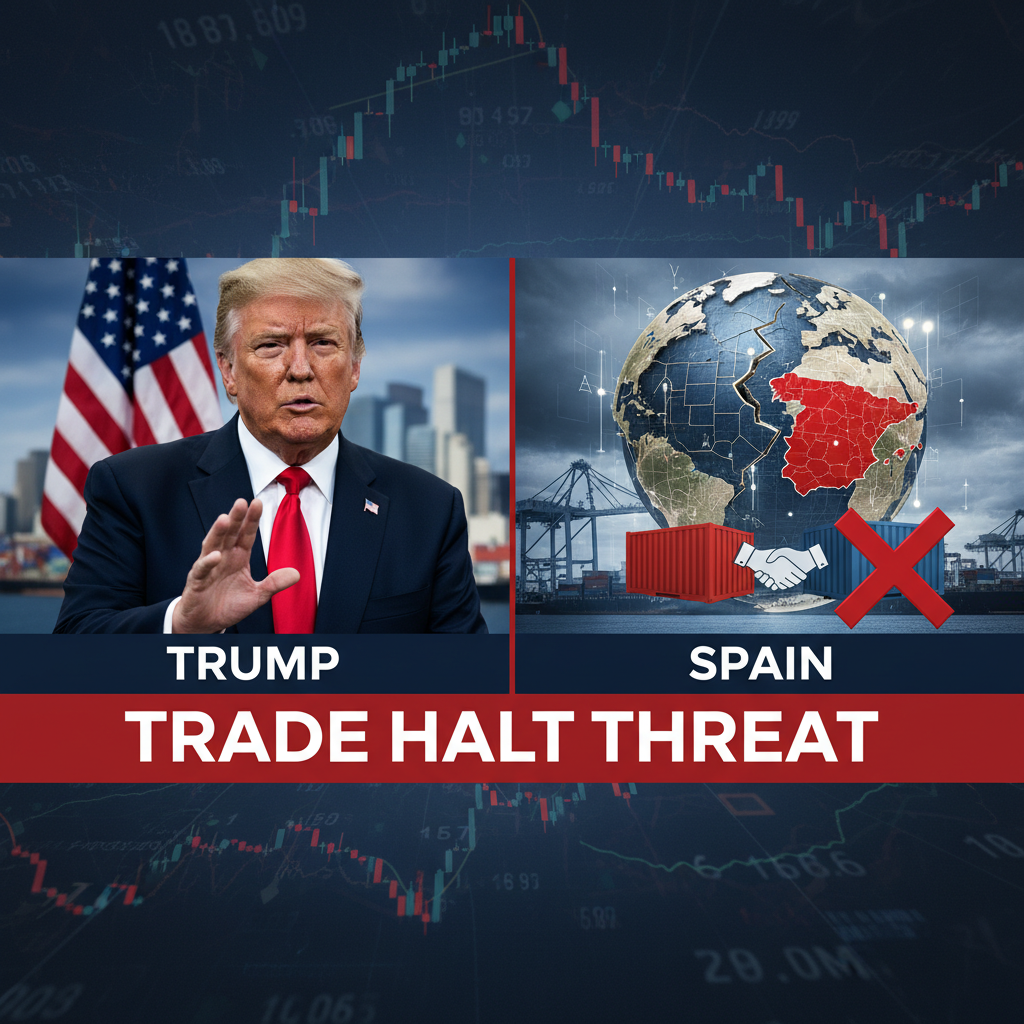
In a move that could roil international markets and strain diplomatic ties, former President Donald Trump has signaled a potential halt to trade with Spain. This announcement, reported by Fox Business, stems from disagreements over Spain’s defense spending and the country’s cooperation in anti-Iran operations.
Context: The core of the issue lies in Spain’s adherence to NATO’s defense spending guidelines and its role in U.S.-led operations targeting Iran. Trump’s statement indicates dissatisfaction with Spain’s current contributions, framing the country as “unfriendly” in the context of these strategic imperatives. The threat to trade is a direct response, highlighting the economic leverage the U.S. can exert in international disputes.
Analysis: This situation underscores the complex interplay between trade, defense, and international relations. Trump’s approach, if implemented, would mark a significant escalation, potentially disrupting established trade flows and impacting both economies. From a strategic perspective, it can be viewed as an attempt to pressure Spain into aligning more closely with U.S. foreign policy objectives, particularly concerning Iran. The move also reflects a broader pattern of Trump’s willingness to use trade as a tool to achieve non-economic goals.
Implications: The implications are multifaceted. For Spain, a trade halt could damage its economy, particularly sectors reliant on U.S. markets. For the U.S., such a move could damage its reputation as a reliable trading partner, potentially triggering retaliatory measures from Spain or other allies. Furthermore, this situation could exacerbate existing tensions within NATO, raising questions about the alliance’s cohesion and strategic direction. The situation also poses challenges for businesses operating in both countries, creating uncertainty and potentially disrupting supply chains.
Keywords: Trump, Spain, Trade, Defense Spending, Iran, NATO, Politics, Economy, International Relations, Threat
About the Author