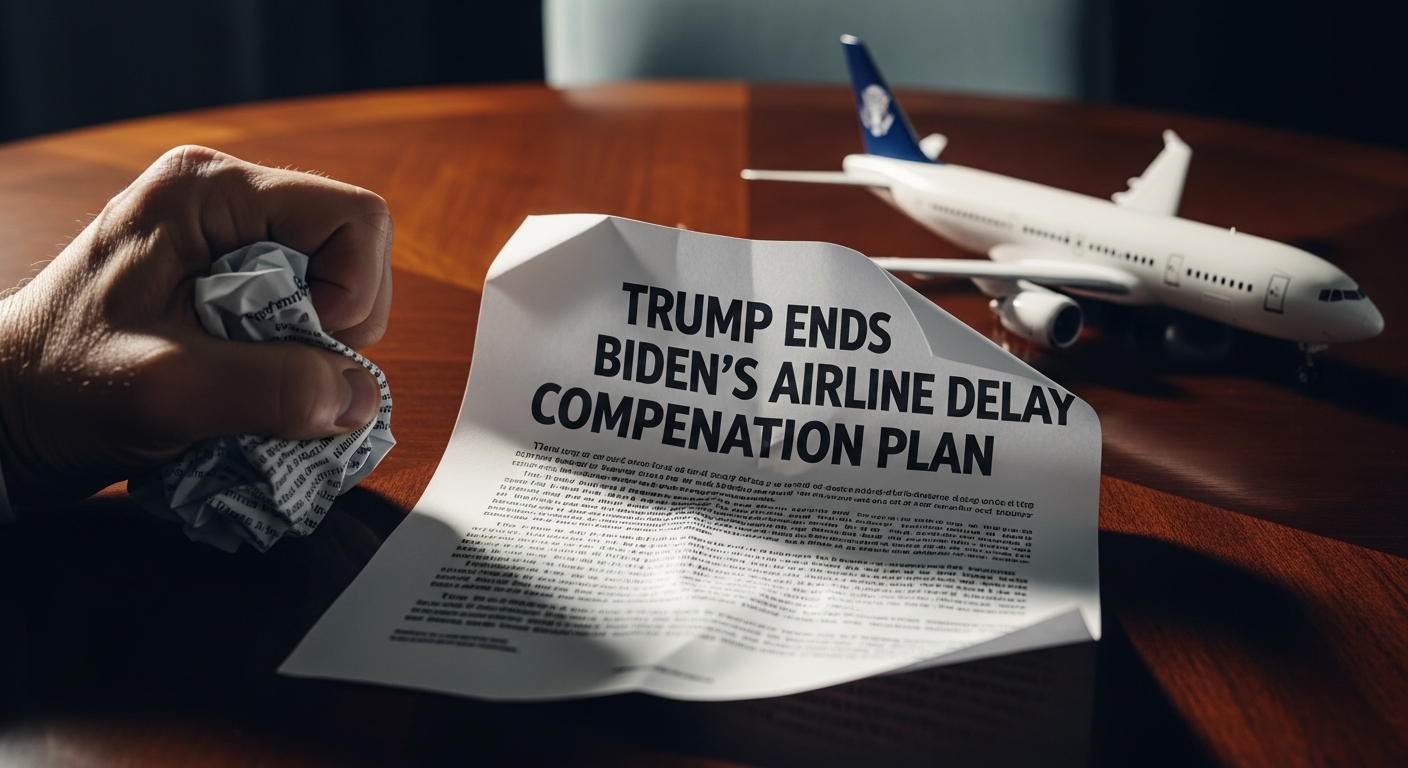
The news hit my inbox this morning, a headline about the Trump administration reversing a Biden-era policy. It concerned airline compensation, a topic that, for anyone who flies even a little, feels immediately personal. The rule, which aimed to make airlines pay up for delays and cancellations, now seems unlikely to take effect.
The core of the matter: a plan that would have forced airlines to compensate passengers up to $775 for the headaches of delayed or canceled flights. The Department of Transportation, under the Biden administration, had proposed these new rules. It was a clear attempt to put some teeth into passenger rights.
This reversal, though, it feels like a familiar pattern, doesn’t it? One administration undoing the work of the last.
It’s a bit like watching a game of political ping-pong.
According to reports, the original proposal was designed to cover a broad range of disruptions, not just those within an airline’s control. That’s a key point.
Airlines, of course, have argued against the measure, citing increased costs. They’ve always maintained that the current system, offering vouchers and rebooking, is sufficient.
Meanwhile, the details of the reversal are still emerging. The exact rationale from the Trump administration hasn’t been fully released yet. Officials haven’t made a public statement on the matter. But, the implications are pretty clear. Without the rule, passengers are less likely to receive direct cash compensation for the frustrations of travel.
The original proposal, as per reports, would have covered a wide array of passenger inconveniences. Not just the delays directly caused by the airlines, but also those outside their control. This included a range of issues, from mechanical failures to staffing issues.
And, the potential payouts were substantial. Up to $775 for certain delays. That’s a significant sum, especially when you’re stranded at an airport, missing connections, or dealing with the ripple effects of a canceled flight.
One can only imagine the conversations that took place. The lobbying efforts. The arguments made behind closed doors.
The whole thing feels like a bit of a setback for passenger rights.
The Department of Transportation, back in December 2023, had estimated that the proposed rule would save passengers more than $500 million annually. Now, that potential benefit is in question.
Still, the story continues. The political back-and-forth, the airline industry’s response, and the potential impact on travelers. It’s a story that will, no doubt, keep evolving.
About the Author