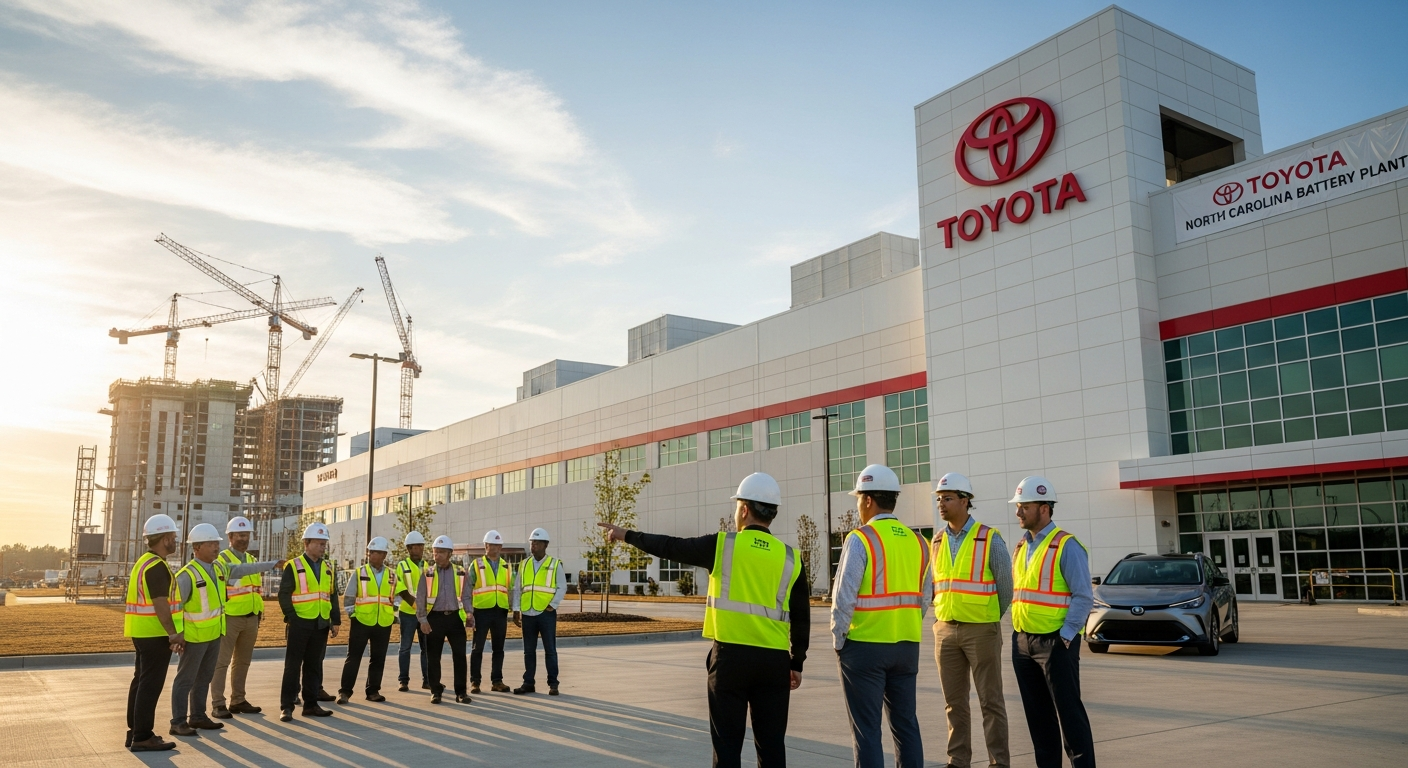
The air in Liberty, North Carolina, felt thick with a mix of humidity and anticipation. It was Tuesday, the day Toyota officially opened its massive new battery plant. You could feel the buzz — a lot was riding on this.
The scale of the facility is hard to grasp until you’re there. It’s a sprawling complex, and as per reports, the project represents a $13.9 billion investment. The company is hoping to create 5,100 jobs. A big deal for the area, no doubt.
Officials were, of course, on hand. Speeches were made, and ribbons were cut. The whole thing had a polished feel, but I noticed the undercurrent of seriousness. This wasn’t just a ribbon-cutting; it was a stake in the ground. Toyota is betting big on the future of electric vehicles and on America.
I overheard someone say, “It’s a game changer for the local economy.” A witness told reporters that the plant’s presence would reshape the job market for years. I can see it, honestly — the ripple effect of that kind of investment.
And it’s not just about this one plant. Toyota is committing another $10 billion to U.S. manufacturing over the next five years. That’s the real headline, you know — the long-term commitment. It signals a shift, or maybe a doubling down, on their strategy.
The tricky part is what comes next. Production ramp-up, supply chains, all the moving pieces. It felt tense — still does, in a way. I mean, it’s a huge undertaking, even for a company as large as Toyota. And everyone is watching.
The implications are far-reaching, from the local community to the broader automotive industry. The plant is a sign of things to come, a bet on the future. Or maybe I’m misreading it.
About the Author