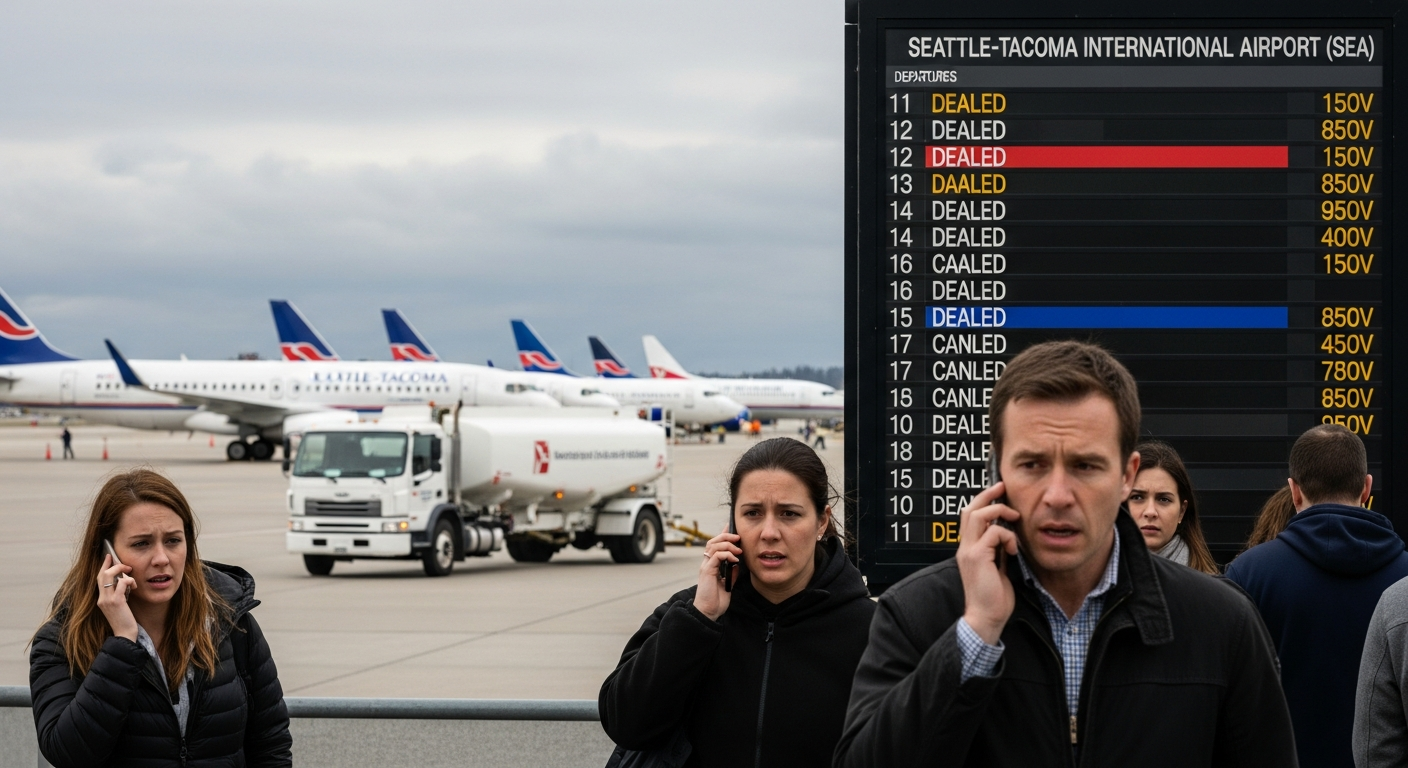
As Thanksgiving travel kicks off, airlines are scrambling to mitigate potential disruptions stemming from a pipeline leak near Seattle-Tacoma International Airport (SEA). The incident, which impacts jet fuel supplies, has prompted carriers to activate contingency plans to avoid widespread delays during one of the busiest travel periods of the year.
Context: The leak has reduced the availability of jet fuel at SEA, a critical hub for both domestic and international flights. This supply constraint forces airlines to adapt quickly to ensure they can maintain flight schedules and minimize passenger inconvenience. The situation highlights the vulnerability of air travel to infrastructure issues and the importance of robust backup plans.
Analysis: Airlines are responding by adding fuel stops to their flight routes, a costly but necessary measure to ensure planes have enough fuel to reach their destinations. This strategy will likely increase flight times and potentially lead to higher fuel costs for the airlines, which could be passed on to consumers. The situation also underscores the interconnectedness of the energy and transportation sectors, where disruptions in one area can quickly cascade into others.
Implications: Travelers flying in and out of SEA during Thanksgiving week should be prepared for potential delays. Airlines are working to reroute flights and find alternative fuel sources, but disruptions are still possible. This incident serves as a reminder of the importance of checking flight status updates and allowing extra time for travel during peak periods. The long-term effects of the pipeline leak will depend on the duration of the disruption and the effectiveness of the response efforts.
Keywords: Airlines, Fuel, Pipeline leak, Seattle airport, Thanksgiving travel, Travel delays, Backup plans, Jet fuel, Energy, Economy
About the Author