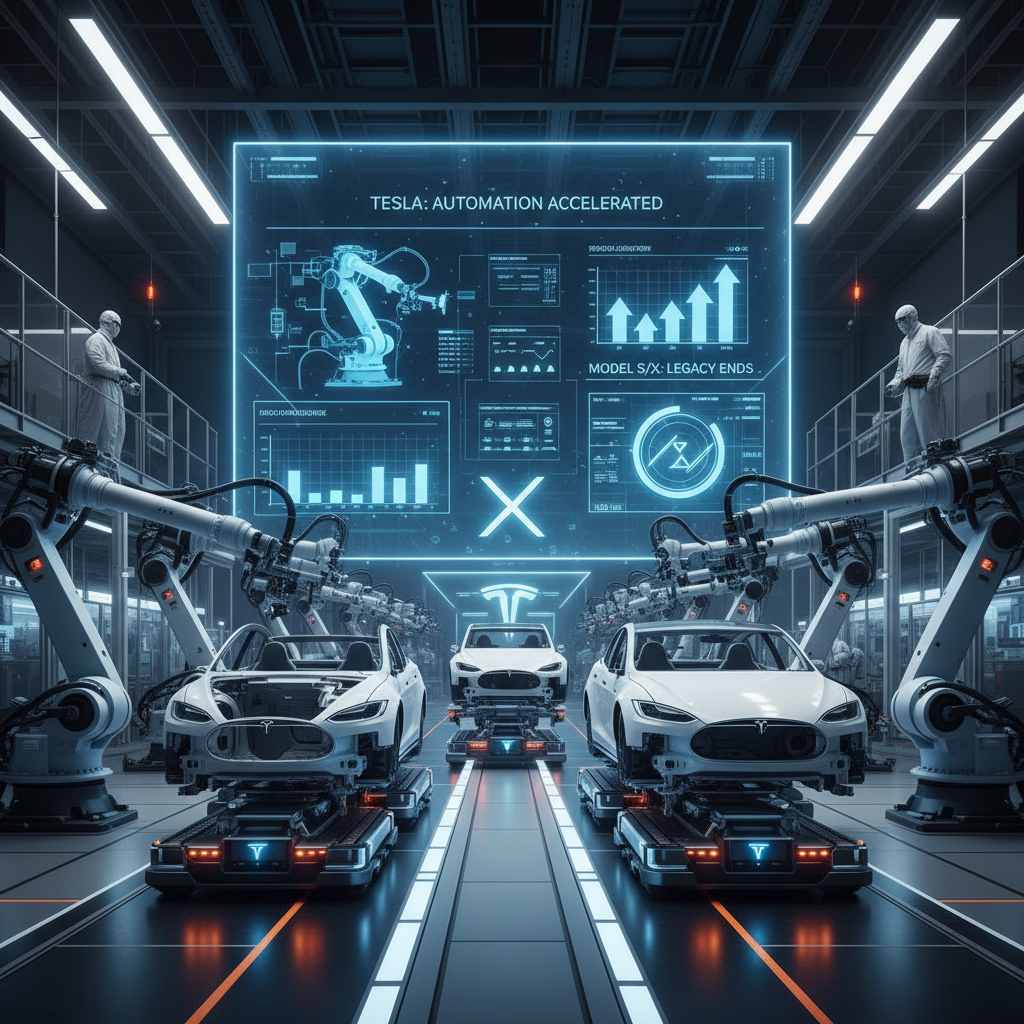
The hum of servers filled the air as the engineering team at Tesla reviewed thermal tests. It was late 2025, or maybe early 2026; the lines were blurred. The focus, according to an internal memo that had already leaked, was shifting. The Model S and Model X, once the vanguard of Tesla’s electric vehicle fleet, were nearing their production end. The future, Elon Musk had declared, was Optimus.
The pivot, as announced via Fox Business, marks a dramatic shift. Tesla plans to redirect its resources towards mass-producing its humanoid robot, with a target launch date of sometime in 2026. This decision, according to analysts, reflects a bet on the future of autonomous technology and robotics, even as the EV market faces increasing competition. “It’s a bold move, but it aligns with Musk’s long-term vision of a company that’s more than just an automaker,” stated Alex Potter, a technology analyst at Piper Sandler.
The implications are significant. Tesla has been a leader in the EV space, but now the company is doubling down on its robotics ambitions. The transition won’t be seamless. Manufacturing robots at scale presents a different set of challenges than producing cars. The supply chain for advanced robotics components, including sophisticated sensors, AI chips, and high-precision actuators, is complex. Further, it’s a capital-intensive undertaking. The company’s ability to secure components, especially in a landscape of export controls and domestic procurement policies, will be crucial. The sourcing of advanced chips, for example, is already a major strategic concern for many companies, especially with the ongoing tensions between the US and China, affecting companies like SMIC and TSMC. The company’s plans for Optimus’s capabilities are ambitious, but they depend on the availability of advanced components.
On a recent earnings call, Musk had emphasized that Optimus is not just a side project, but a core part of the company’s future. The company’s roadmap includes advanced AI training and inference capabilities and a planned integration of the robot into various aspects of daily life. The success of this strategy hinges not only on technological breakthroughs but also on the ability to manufacture these robots at an unprecedented scale, which could represent a significant shift for the company, and for the industry.
The shift to robotics is a strategic gamble. The EV market is crowded, and profit margins are shrinking. Tesla’s move to focus on Optimus robot production could be a way to create a new market for the company, or maybe that’s how the supply shock reads from here. The company’s future now depends on how quickly it can scale up production, and how well it can navigate the complexities of robotics manufacturing. The team continued reviewing the test data, the fate of the company, and its next era hanging in the balance.
About the Author