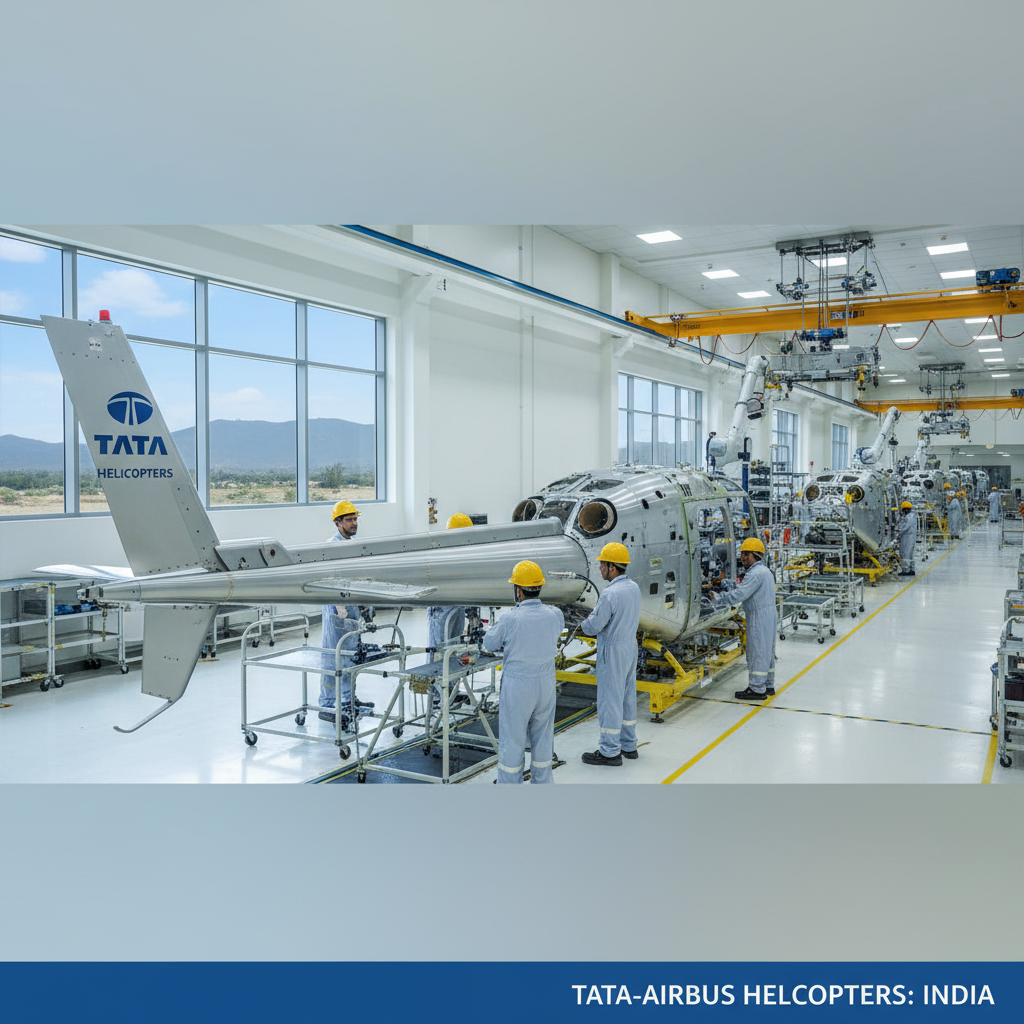
The air in the Karnataka facility hums with the low thrum of machinery, the scent of fresh metal and jet fuel hanging in the air. Engineers in crisp, blue overalls huddle around a partially assembled H-125 helicopter, their faces illuminated by the bright fluorescent lights. This isn’t just any factory floor; it’s the newly unveiled final assembly line for H-125 helicopters, a joint venture between Tata Advanced Systems Limited and Airbus, representing a significant leap forward in India’s aerospace capabilities.
The inauguration, attended by dignitaries including Narendra Modi, Emmanuel Macron, and French Defence Minister Catherine Vautrin, underscores the strategic importance of this partnership. It’s a clear signal of the deepening ties between India and France, particularly in defense and technology. The facility, which will build the H-125, a versatile single-engine helicopter used for various missions, is expected to significantly boost India’s domestic manufacturing capacity.
“This is a pivotal moment,” says a senior analyst at Teal Group, a leading aerospace and defense market analysis firm. “It demonstrates India’s commitment to self-reliance in the aerospace sector. The H-125 is a workhorse, and having the assembly line here means faster deployment and reduced reliance on imports.” The analyst expects the facility to produce approximately 50 helicopters annually within the next three years, with potential for further expansion based on market demand. They point out that the global helicopter market is projected to reach $60 billion by 2028, according to recent forecasts.
The assembly line itself is a marvel of modern engineering. Robots work alongside skilled technicians, meticulously piecing together the complex components of the helicopter. The process is a testament to the transfer of technology and the development of a skilled workforce in India. The facility’s impact extends beyond mere assembly; it’s about fostering a complete ecosystem of aerospace manufacturing, from component sourcing to final testing.
The collaboration between Tata and Airbus is also a strategic move. By partnering with a global aerospace leader, Tata gains access to cutting-edge technology and expertise. Airbus, in turn, benefits from access to the Indian market and a lower-cost manufacturing base. This partnership could become a model for other joint ventures in the future, further accelerating India’s aerospace ambitions.
The implications are clear: India is not just a consumer of aerospace technology; it’s becoming a key player in its production. This assembly line is more than just a factory; it’s a symbol of a rising India, taking flight in the global aerospace industry.
About the Author