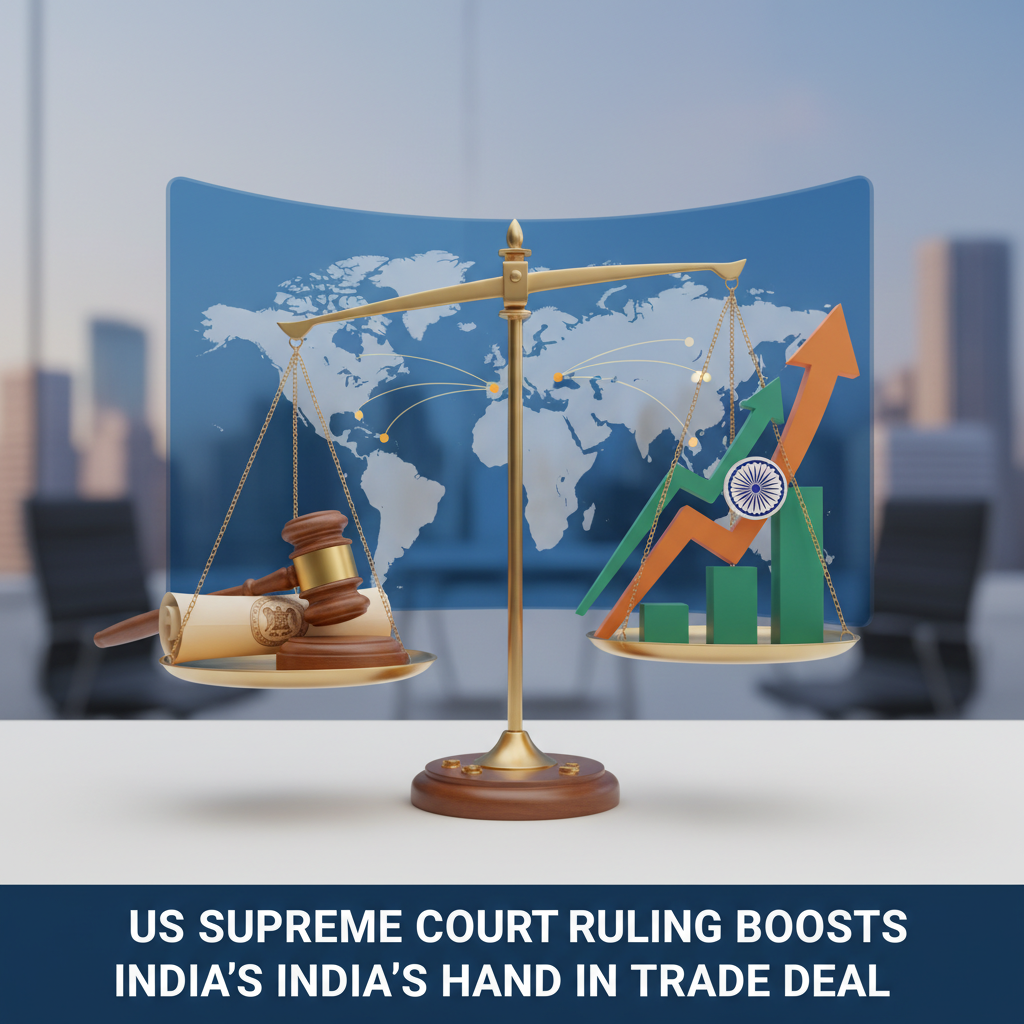
The news hit the trading floors, or maybe it was just a murmur. The US Supreme Court, they ruled, effectively blocking the threat of higher tariffs that had loomed over international trade for a while now. This, according to analysts at the Peterson Institute for International Economics, opens up a window for India to re-evaluate the terms of its trade deal with the United States.
It’s a subtle shift, but the implications could be significant. The initial reaction seemed muted, the market, in general, appeared to wait, watching. But behind the scenes, you could almost feel the gears turning — the quiet hum of analysts tapping away at spreadsheets, the muted chatter of conference calls.
The core issue? The court’s move, blocking the former administration’s tariff plans, removes a major source of pressure, allowing India to reassess its position. This is happening now, or at least it feels that way, because the threat of those tariffs has been a key factor in the ongoing negotiations. So, with the threat diminished, India can, in theory, negotiate from a stronger position.
“This ruling provides India with a renewed opportunity,” said Dr. Priya Sharma, a trade economist at the Center for Strategic and International Studies. She added that “it allows for a more balanced approach to the trade deal.”
The numbers tell a story, too. Trade between the US and India totaled over $191 billion in 2023, according to the US Trade Representative. The potential for that figure to grow, unfettered by the specter of increased tariffs, is considerable. The question is, how will India play its hand?
One potential outcome is a push for better terms on agricultural products, or maybe a renewed focus on intellectual property rights. Or maybe both. The specifics are still unfolding, of course, but the shift is there.
Of course, this also means the United States has to rethink its strategy. It’s a complex dance. And it’s not just about the immediate impact. The ruling, as per reports, also sends a signal about the stability of trade relations. It suggests that even in a climate of political uncertainty, the rule of law can prevail.
The impact will probably be felt across several sectors, from manufacturing to services. The details will take time to fully emerge.
Still, it’s a moment. A moment of shifting sands, and new possibilities. The air felt… different, somehow.
About the Author