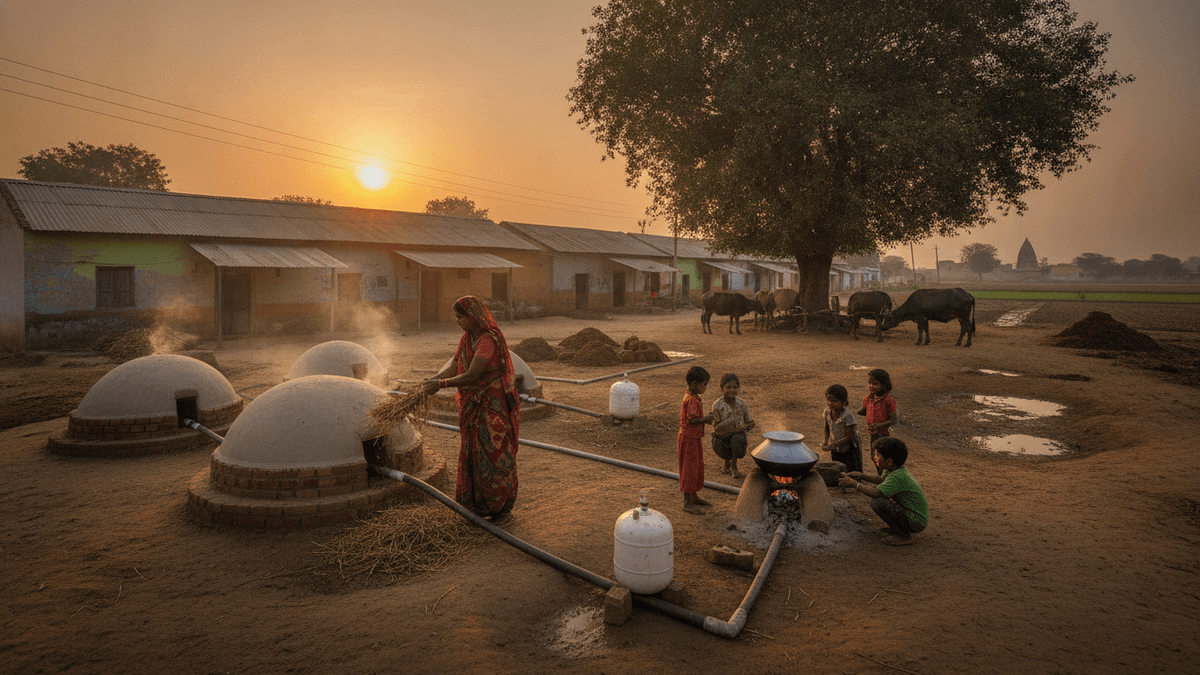
Rural Indian woman cooks with biogas, children and cattle in background at sunset.
Surat-based Sumul Dairy is setting a national precedent for sustainable rural development, successfully implementing 6,543 biogas plants across Gujarat’s milk-producing villages. This initiative transforms cattle waste into clean cooking fuel, significantly reducing the reliance on LPG cylinders for dairy farming households.
Supported by key organizations including the National Dairy Development Board (NDDB), Gujarat Cooperative Milk Marketing Federation (GCMMF), the Ministry of New and Renewable Energy, and the Gujarat government, the program directly benefits over 6,500 dairy farmers and more than 50,000 rural residents.
The project processes approximately 300 metric tonnes of cow dung daily to produce biogas for domestic use. This effort is estimated to save around 40,000 LPG cylinders annually, bolstering energy self-reliance in these villages.
Beyond the economic advantages, the initiative yields substantial environmental benefits. The scientific processing of cattle waste is helping to reduce nearly 40,000 tonnes of greenhouse gas emissions each year. Furthermore, the process generates about 600 metric tonnes of organic manure daily from biogas slurry, which farmers utilize to improve soil fertility and decrease their dependence on chemical fertilizers, thereby promoting sustainable agricultural practices.
Sumul Dairy officials describe the project as a prime example of integrating dairy farming, renewable energy, and organic agriculture within a cooperative framework, embodying a ‘Waste to Wealth’ philosophy. The Sumul model is now recognized as a scalable blueprint for other dairy cooperatives nationwide, demonstrating how the dairy sector can contribute to milk production, rural livelihoods, climate action, and overall sustainable development through collective community engagement.
About the Author