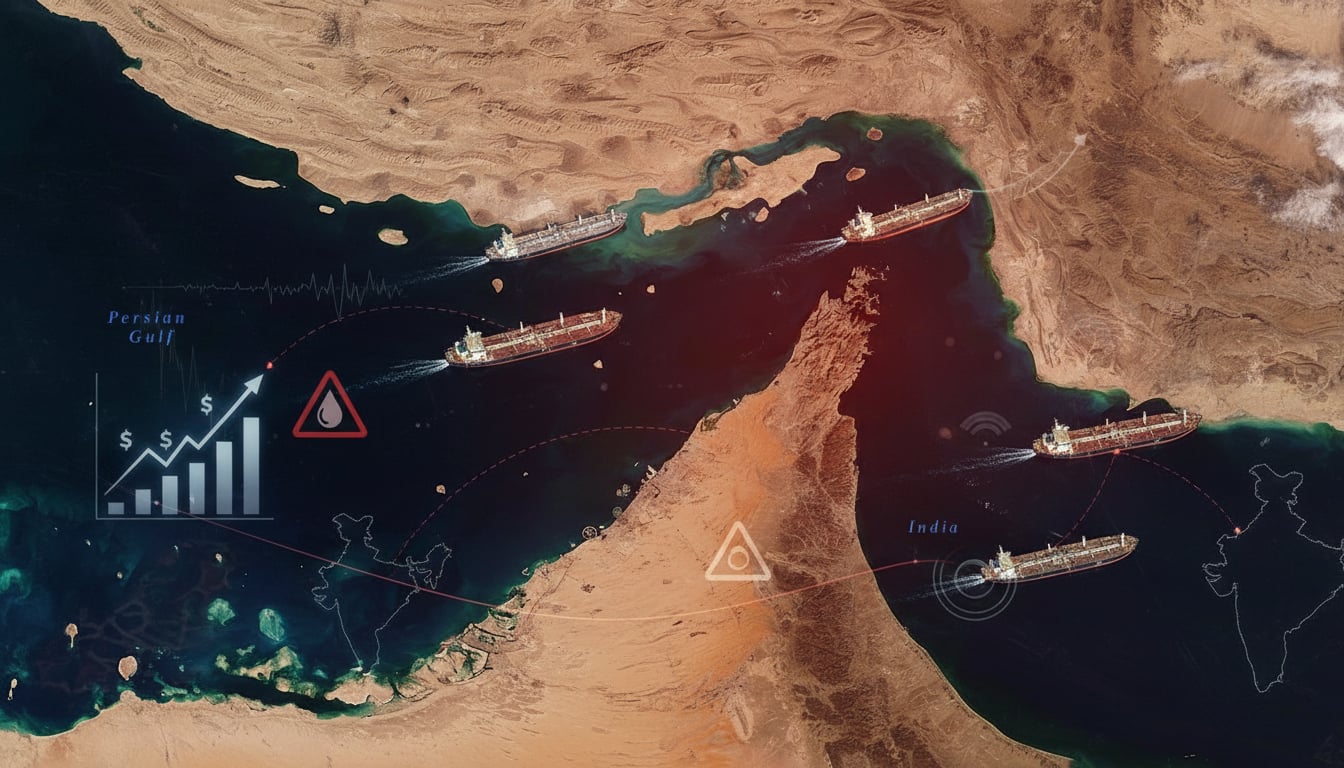
Strait of Hormuz oil transit risks for India
Escalating tensions between the U.S. and Iran are heightening risks for global shipping, particularly through the Strait of Hormuz, a critical oil transit route. Insurers are cancelling war-risk covers, potentially leaving vessels stranded and disrupting energy supplies.
India, which imports about 88% of its crude oil needs, with over half transiting the strait, faces potential disruptions. According to Fortune India and The Hindu, India holds approximately 100 million barrels of crude oil in reserve, covering 40-45 days of requirements.
While immediate shortages are unlikely due to existing inventories and alternative sourcing, a prolonged closure of the Strait of Hormuz would significantly increase import costs and freight charges. Policy interventions, such as redirecting refined product exports to domestic markets, could buffer against severe disruptions.
Balasundaram R., Head of Marine Insurance at Policybazaar, notes that the cancellation of war risk coverage, with potential reinstatement at premiums up to 0.5% of a vessel’s hull value, adds to the financial strain. London-based insurers and India’s GIC Re have issued cancellation notices, creating uncertainty in cover availability.
The Strait of Hormuz handles nearly one-fifth of global daily oil consumption, connecting major Gulf oil producers to international markets. The presence of numerous oil tankers in the Persian Gulf creates vulnerability to missile and drone attacks, with industry estimates placing the exposure of trapped vessels at approximately $22 billion.
Companies like Shipping Corporation of India and Indian Oil Corp. have vessels exposed to these risks. Securing war-risk cover, despite the costs, is crucial in this volatile environment. The crisis is expected to worsen energy security issues and shipping disruptions globally.
About the Author