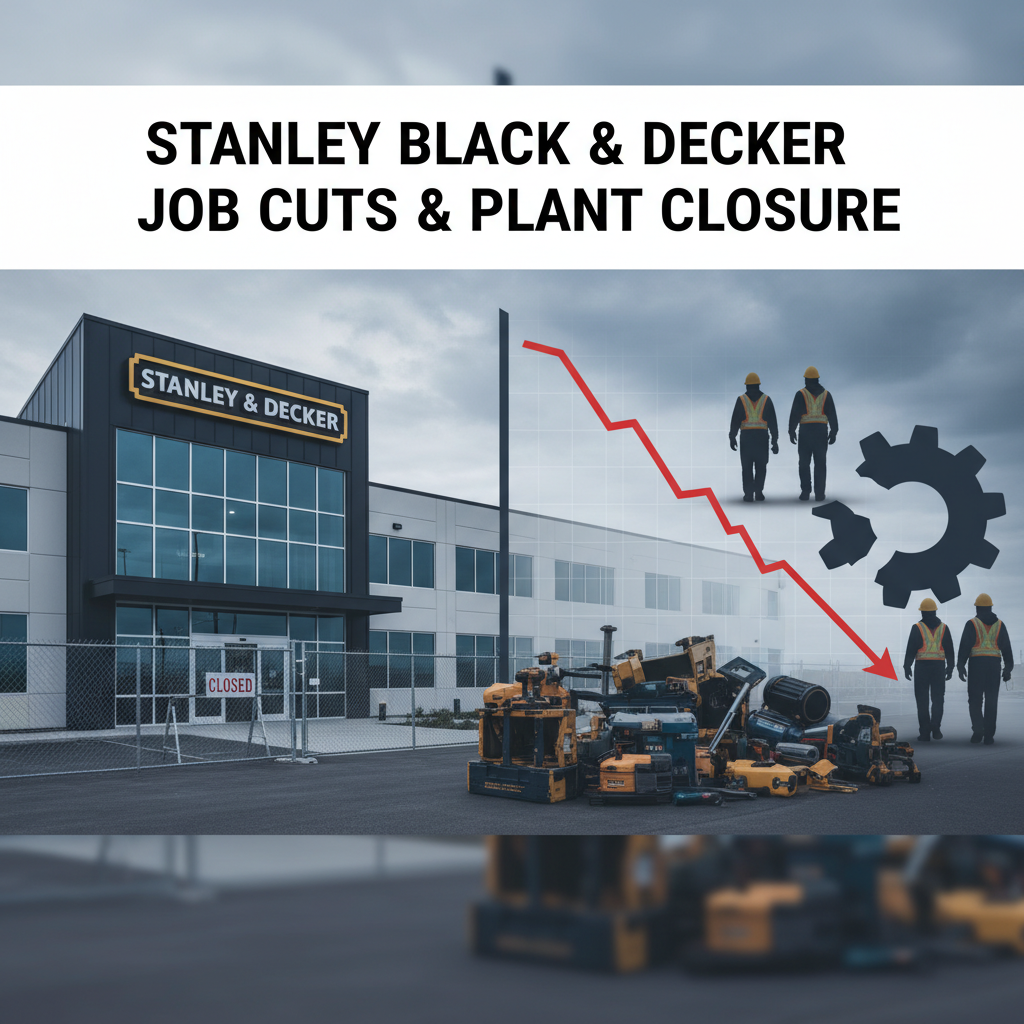
Stanley Black & Decker is taking decisive action in response to a decline in demand. The company plans to eliminate approximately 300 jobs and shutter a tape-measure plant located in Connecticut. This move is part of a broader, multiyear restructuring plan aimed at streamlining operations.
This strategic shift comes as the company navigates a challenging economic landscape. The decision to reduce its workforce and close a plant reflects the pressures faced by manufacturers in the current market. These actions are a direct response to declining demand, which has prompted the company to reassess its operational footprint.
The restructuring plan, which has been underway for some time, underscores Stanley Black & Decker’s commitment to adapting to market realities. The closure of the Connecticut plant and the associated job cuts are significant indicators of the company’s efforts to reduce costs and optimize its business model. This will likely involve consolidating operations and potentially reallocating resources to more profitable areas.
The impact of these changes will be felt by the affected employees and the local community in Connecticut. The layoffs represent a setback for the workforce, and the plant closure will alter the economic landscape. The company’s actions reflect the broader trends in the manufacturing sector, where businesses are constantly evaluating their strategies to stay competitive. This includes managing costs, responding to market fluctuations, and ensuring long-term sustainability.
In conclusion, Stanley Black & Decker’s decision to cut jobs and close a plant highlights the dynamic nature of the manufacturing industry and the economic challenges companies face today. The restructuring plan is a strategic response to declining demand, with the goal of positioning the company for future success. The situation underscores the importance of adaptability and strategic planning in the face of economic uncertainty.
About the Author