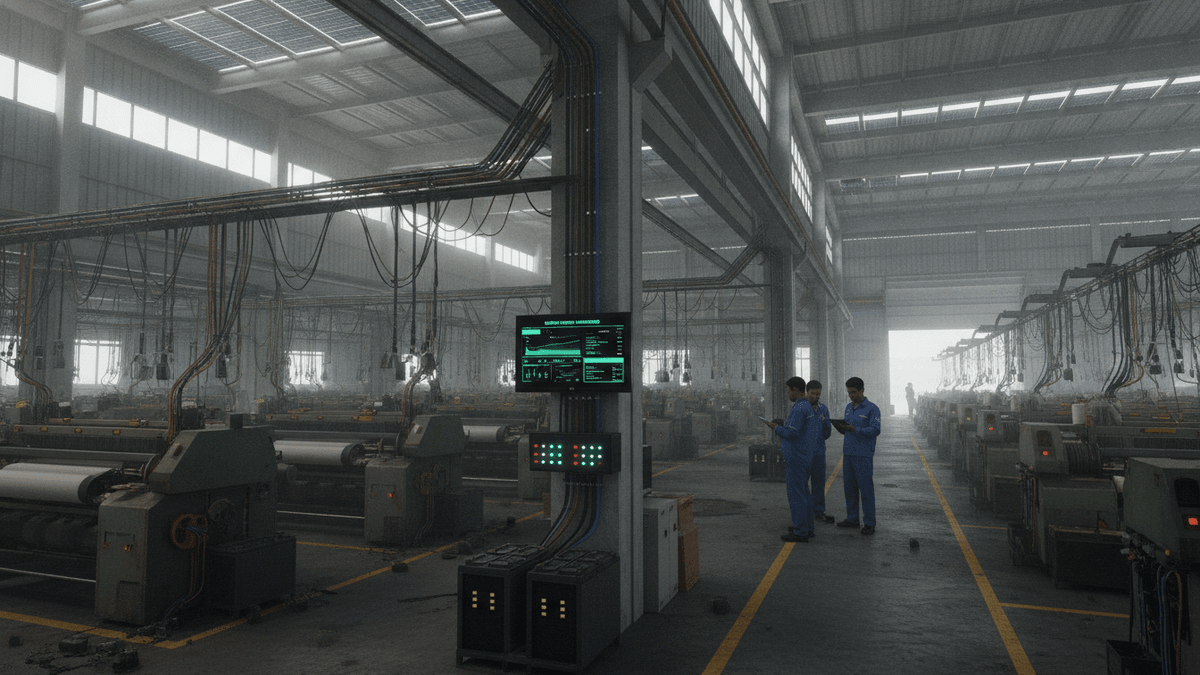
Textile factory floor with smart energy monitoring system.
The textile industry, long accustomed to viewing energy as a fixed operational cost, is now at a critical juncture. With escalating electricity prices and mounting global pressure for carbon emission reduction, intelligent energy management isn’t just a good idea—it’s becoming the next battleground for competitive advantage.
This shift is fueled by the pervasive adoption of digital manufacturing, which seamlessly integrates smart energy solutions into the operational fabric. Smart energy isn’t merely about turning off lights; it’s a sophisticated ecosystem leveraging digital technologies like advanced sensors, smart meters, cloud analytics, and real-time monitoring. These tools provide granular data on energy consumption, allowing for unprecedented optimization.
For textile manufacturers, this translates directly into significant gains. Experts project that intelligent energy use can lead to substantial energy savings, typically ranging from 10% to 20%. Beyond cost reduction, smart energy systems are instrumental in achieving ambitious sustainability goals, providing a verifiable pathway to reduced carbon footprints. This strategic pivot transforms energy from a static expense into a dynamic asset that can be managed, optimized, and leveraged for operational efficiency.
Countries like Bangladesh, already a trailblazer in green manufacturing, are particularly well-positioned to capitalize on this trend. By deploying smart energy management systems—including innovative solutions like battery storage and integrated rooftop solar—Bangladeshi textile firms can not only enhance their global competitiveness but also gain real-time visibility into their energy usage patterns. This empowers them to make data-driven decisions, streamline operations, and solidify their leadership in sustainable production. The future of textile manufacturing will undoubtedly be defined by those who master the art of smart energy.
About the Author