The hum of the fabrication lab was a constant, a low thrum punctuated by the staccato of machinery. Engineers at First Solar were huddled, poring over thermal imaging reports. It was just last week they’d been discussing the latest projections, the ones that had silver prices spiking. It seems the solar panel boom isn’t slowing, not yet, anyway.
Earlier this year, analysts at Goldman Sachs had predicted a 20% increase in solar panel installations globally. That forecast, along with others, has kept the demand for silver high. After all, silver is a key component in photovoltaic cells. A significant portion of the world’s silver supply goes directly into solar panel production. The market is watching the interplay between demand, supply, and the ever-evolving efficiencies of panel technology.
“We’re seeing a fascinating, and somewhat volatile, dance,” said Maria Hernandez, a senior analyst at Energy Insights. “The demand is there, absolutely. But the industry is also getting better at using less silver per panel. That could mean a market correction, or maybe that’s how the supply shock reads from here.”
Meanwhile, the efficiency of solar panels is improving. Manufacturers are constantly seeking ways to reduce the amount of silver needed, which could eventually lead to oversupply. Companies like Maxeon Solar Technologies are pushing the boundaries of cell design, trying to squeeze more power from each panel. This, combined with increased silver mining, could shift the market dynamics.
The Ministry of Industry and Information Technology in China, for example, announced a plan last month to ramp up domestic solar panel production by 30% by the end of 2025. This, of course, puts additional pressure on the silver market. It’s a lot to keep track of.
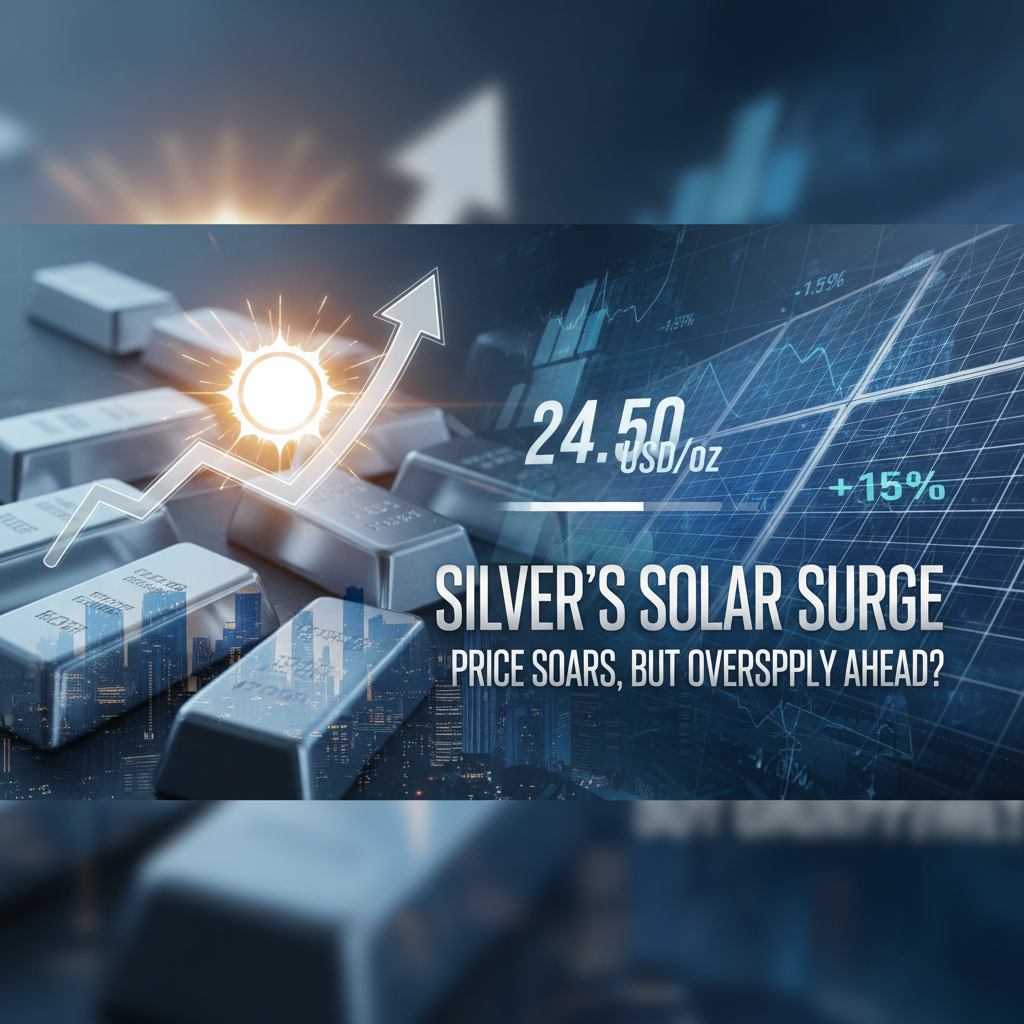
The price of silver has already reacted. It has surged recently, hitting levels not seen in a while. But that rise also brings the risk of a correction if efficiency gains outpace demand. It’s a bit of a tightrope walk for the industry.
The interplay of factors is complex: manufacturing costs, geopolitical tensions, and technological leaps. The market is responding to all of it. And it seems, for now, the boom is still on.
About the Author