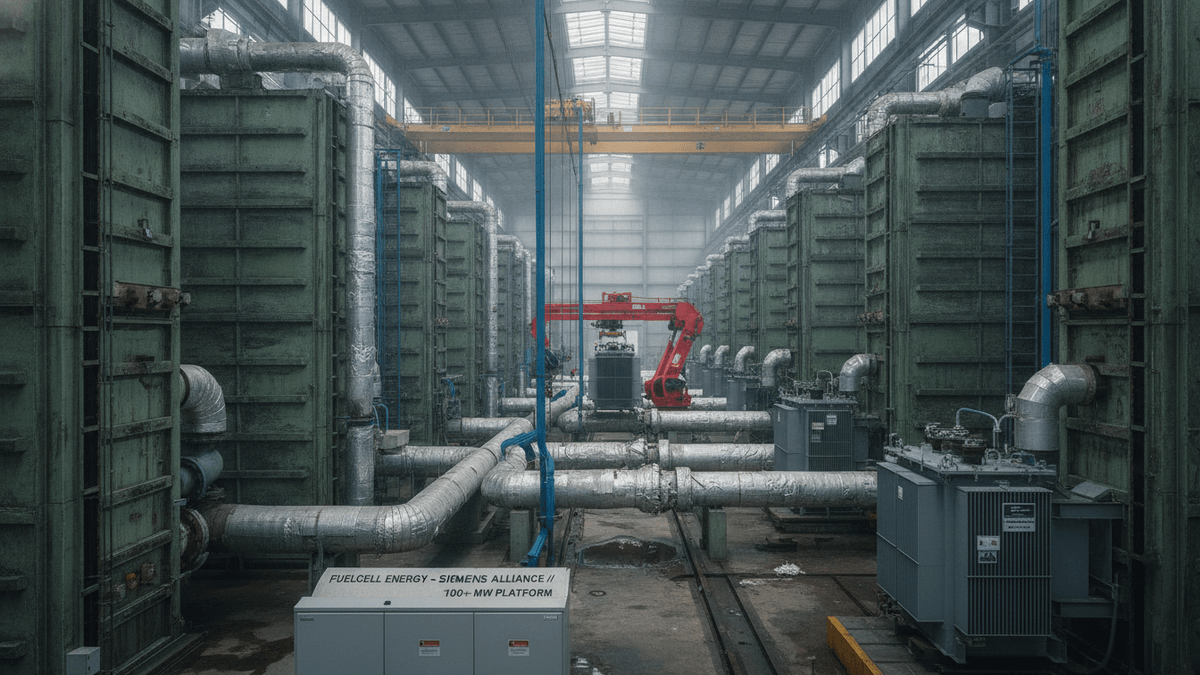
Interior of a large industrial facility housing rows of fuel cell power generation units.
In a significant move towards sustainable energy solutions for the digital age, industrial giant Siemens and clean energy specialist FuelCell Energy have inked a Memorandum of Understanding (MoU). The partnership targets the development of high-capacity fuel cell systems exceeding 100 megawatts (MW) specifically designed for data centers, a sector grappling with escalating energy demands and increasing pressure to decarbonize.
This collaboration underscores a growing industry recognition that traditional power grids may struggle to meet the future energy requirements of hyperscale data centers, which are projected to consume an ever-larger share of global electricity. Fuel cells offer a compelling alternative: they generate electricity through an electrochemical reaction, producing power with high efficiency and significantly lower emissions compared to conventional combustion-based generation.
For startup founders and investors in the energy and data infrastructure space, this alliance signals a clear trend: distributed, cleaner power generation is not just a ‘nice-to-have’ but an impending necessity for critical infrastructure. Siemens brings its vast engineering expertise, global market reach, and experience in large-scale energy projects, while FuelCell Energy contributes its proprietary molten carbonate fuel cell technology, which is capable of handling various fuel sources, including natural gas and biogas, with high electrical efficiency.
The strategic implications are substantial. Data center operators are under increasing pressure from regulators, investors, and customers to reduce their carbon footprint. Reliable, on-site, and low-emission power sources like those envisioned by this partnership could offer a competitive edge, reducing reliance on often carbon-intensive grid electricity and enhancing energy security. Furthermore, the 100MW+ scale suggests an ambition to address the power needs of even the largest data center campuses, moving beyond pilot projects to substantial commercial deployment.
Looking ahead, the success of this MoU will depend on overcoming technical scaling challenges and navigating the complex regulatory landscape for distributed power generation. However, the combined strength of Siemens and FuelCell Energy positions them to be key players in shaping the future of sustainable data center infrastructure, potentially unlocking new markets for advanced fuel cell technology and accelerating the energy transition within the digital economy.
About the Author