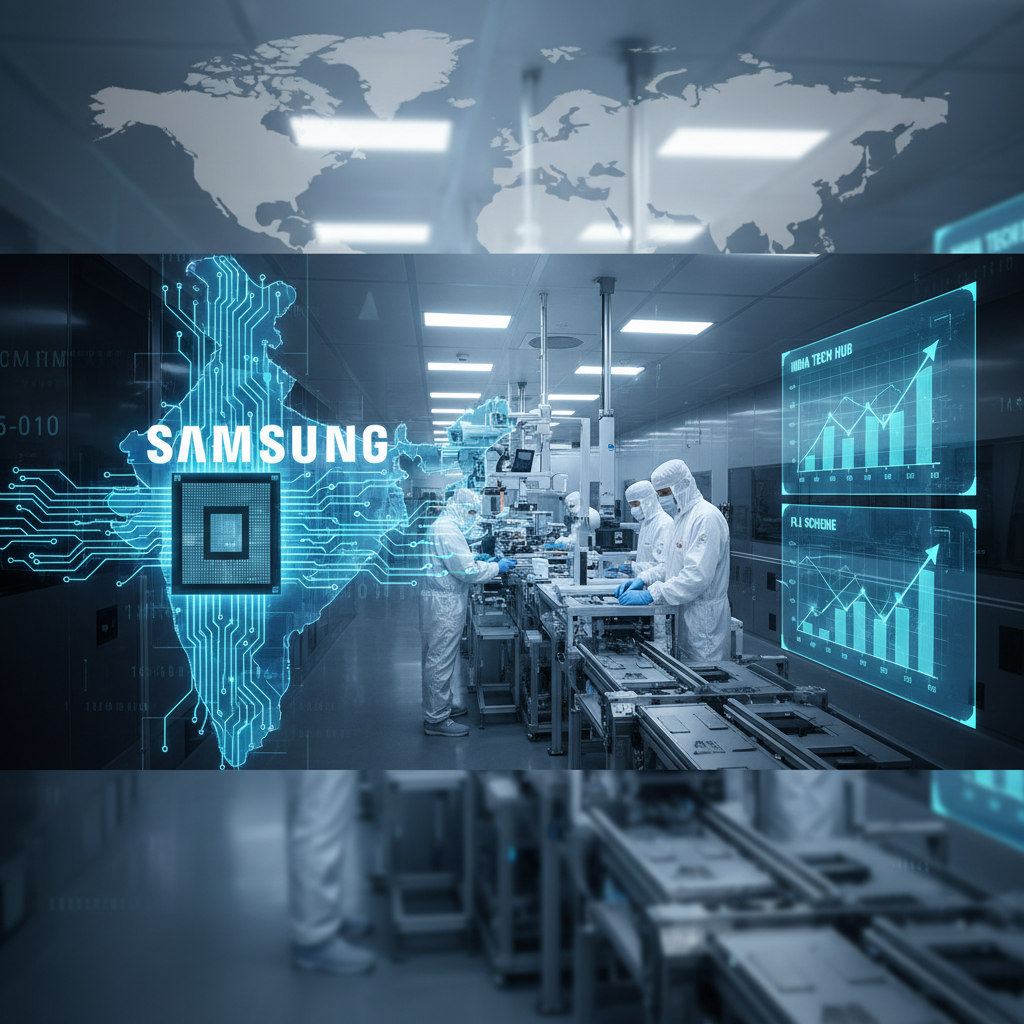
The hum of servers fills the air, a constant reminder of the data flowing, the calculations churning. Inside a Samsung engineering lab in Bangalore, teams are deep in thermal testing, pushing the limits of the next-generation chips. The air crackles with anticipation, the pressure of deadlines palpable. It’s the kind of environment where hardware and policy collide.
Samsung’s commitment to India is growing, fueled by the government’s Production Linked Incentive (PLI) scheme. JB Park, president and chief executive of Samsung’s southwest Asia region, recently stated the company’s intentions to establish a significant technology and manufacturing hub in India. This move is more than just expansion; it’s a strategic play in the global semiconductor game.
The core of Samsung’s strategy lies in its willingness to source chips from India if the price is competitive. This seemingly simple statement carries significant weight. It signals Samsung’s intent to support India’s burgeoning semiconductor ecosystem. The goal? To become a major player in the global semiconductor supply chain. This ambition is not without its hurdles. Sourcing chips from within India requires a robust, competitive, and reliable local supply chain, which is something the government is working to foster.
“Samsung’s interest in local chip sourcing is a game-changer,” says Rajeev Chandrasekhar, a senior analyst at the India Semiconductor Research Institute. “It validates India’s PLI scheme and signals confidence in India’s long-term semiconductor goals.” He added that the scheme, which offers financial incentives to boost domestic manufacturing, is a crucial catalyst. The goal is to establish India as a hub for both design and manufacturing, potentially reducing reliance on the current dominant players like TSMC and Samsung itself.
The implications are far-reaching. For India, it means potential job creation, technology transfer, and a boost to its manufacturing sector. For Samsung, it offers diversification and access to a rapidly growing market. However, the path isn’t without its challenges. The global semiconductor landscape is fiercely competitive, with established players like TSMC and Intel holding significant advantages. Moreover, geopolitical tensions, export controls, and supply chain disruptions continue to pose risks. The recent US export controls, for instance, have forced companies to reassess their global strategies.
The move is a bet on India’s future, its potential, and the government’s commitment to making the country a major stakeholder in the global semiconductor supply chain. It’s a complex equation, but one that Samsung seems ready to solve, one chip at a time. Or maybe that’s how the supply shock reads from here.
About the Author