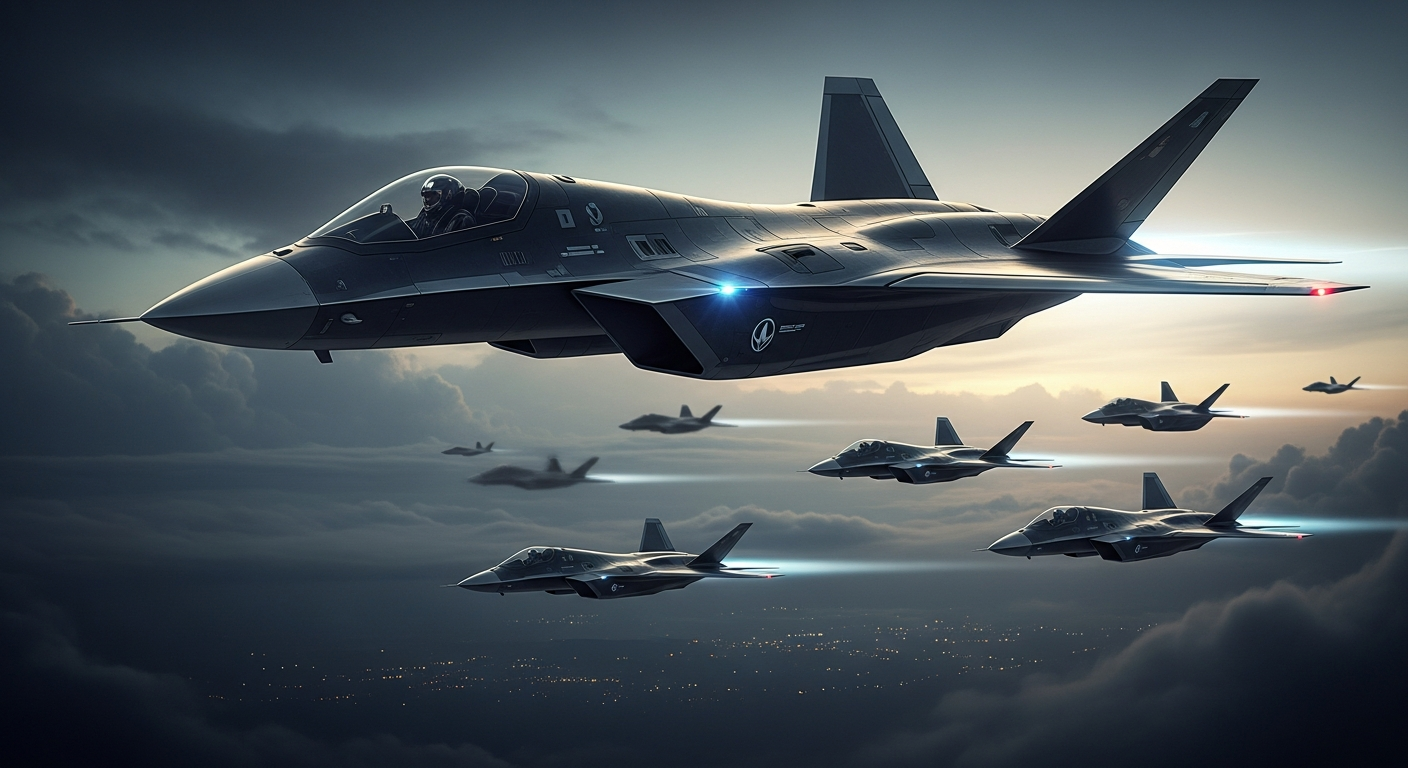
The hum of servers filled the air, a constant thrum in the Anduril Industries lab. Engineers hunched over screens, reviewing thermal tests on the latest iteration of their autonomous fighter jet prototype. It was late 2024, and the pressure was on. The U.S. military’s appetite for pilotless aircraft was growing, and Anduril, along with competitors like Northrop Grumman and Lockheed Martin, were racing to deliver.
The promise is clear: pilotless jets offer the potential to reshape aerial warfare. They can fly longer, harder, and in more dangerous situations than human pilots, all while potentially lowering the cost per flight hour. But the path to this future is paved with technical challenges, supply chain bottlenecks, and complex policy considerations.
“We’re talking about a complete paradigm shift,” explained Dr. Emily Carter, a senior analyst at the Center for Strategic and Budgetary Assessments. “It’s not just about taking the pilot out of the cockpit. It’s about building an entirely new ecosystem of AI, data processing, and communication systems. That includes training the LLMs that will be making split-second decisions.”
One of the biggest hurdles? The chips. The advanced GPUs needed for AI processing, the kind that can handle the complex calculations required for real-time decision-making, are in short supply. The U.S. government’s export controls on advanced semiconductors, particularly those manufactured by companies like SMIC in China, add another layer of complexity. Then there’s the question of manufacturing capacity. TSMC, the world’s leading chip manufacturer, is already operating at full capacity, and the demand for advanced chips is only increasing.
Lockheed Martin, for example, is reportedly targeting a 2027 rollout for its next-generation autonomous fighter. But even with a 2027 target, the road ahead is uncertain. “These programs require massive investment and a willingness to accept risk,” says Carter. “Or maybe that’s how the supply shock reads from here.”
The human element remains. Training the AI, ensuring its reliability, and establishing the right ethical guardrails are all crucial. The military needs to be able to trust these systems, and that trust has to be earned. The engineers at Anduril know this, and that’s why they were working late into the night, poring over data, tweaking algorithms, and pushing the boundaries of what’s possible. The future of aerial warfare, it seems, is being built one line of code at a time.
About the Author