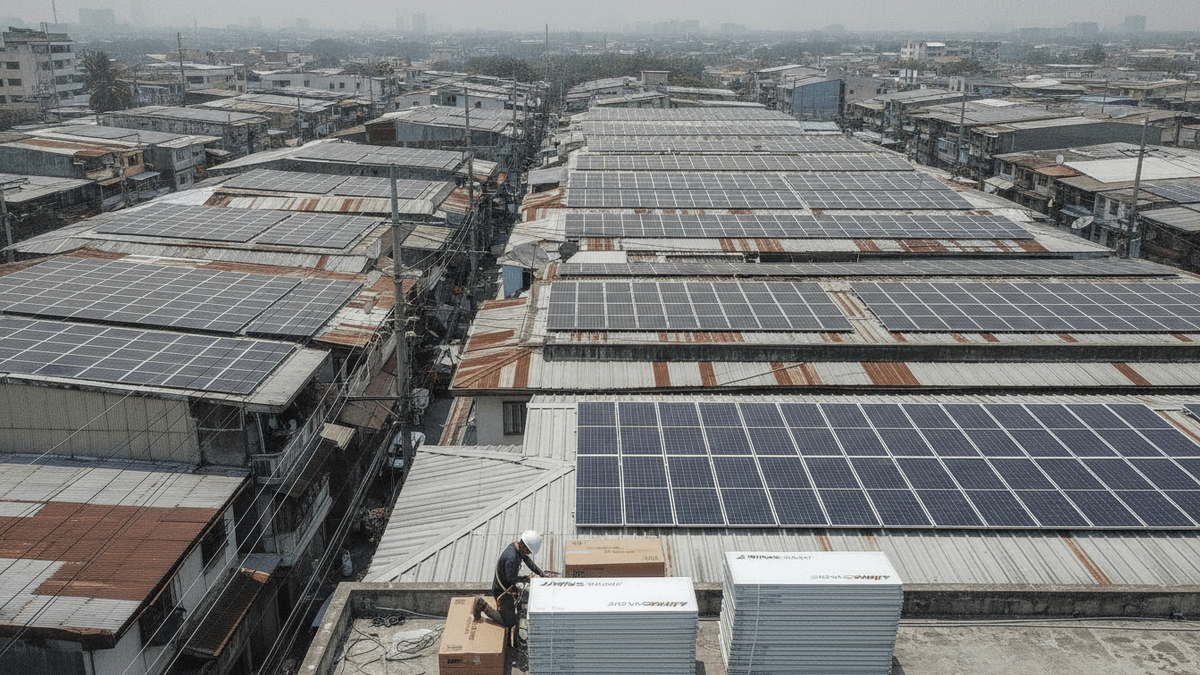
Rooftop solar installation in progress over densely packed Manila neighborhood
The Philippines is experiencing an unprecedented surge in rooftop solar installations, driven by escalating electricity costs—the highest for residential use in Southeast Asia. This energy transformation is being significantly supercharged by China, which has rapidly become the archipelago nation’s largest overseas market for solar panels this year, surpassing even Pakistan.
In the first five months of 2026, Chinese solar exports to the Philippines more than doubled compared to the previous year. March alone saw a remarkable 262% year-on-year jump in imports, with Filipino buyers spending over half a billion dollars on Chinese panels during 2026. This aggressive adoption reflects a clear strategic response by households and businesses to global oil and gas market disruptions and the subsequent hike in utility bills.
Chinese manufacturers, renowned for their cost-effective and technologically advanced solar products, are capitalizing on this demand. Jinko Solar Co., a major player, reported sales equivalent to nearly 1.5GW in 2025 and has already shipped close to 1GW in the first half of 2026. The popularity of higher-end N-type modules, well-suited for the Philippines’ hot climate, further underscores the strategic fit between supply and demand.
This boom presents a symbiotic relationship for both nations. The Philippines gains access to affordable, easy-to-deploy renewable energy technology, a critical step towards energy independence and cost reduction. For China, it provides a crucial export market for its vast solar production capacity, especially as Western markets like the US and Europe impose tariffs. Manila’s regulatory approach has focused on certifying solar systems for safety rather than implementing trade barriers, further facilitating this rapid expansion.
The Philippine government is actively supporting this shift through low-interest loans and fast-tracking renewable energy projects, making residential rooftop solar financially attractive with payback periods as short as three years. This has led to a 170% increase in average weekly rooftop solar installations since late February, with customer inquiries soaring by 582%.
However, this rapid growth isn’t without its challenges. The surge in demand is currently outpacing the market’s ability to deliver, leading to supply chain shortages and a limited pool of qualified installers. Despite these hurdles, major manufacturers like Jinko and Trina Solar express confidence in their capacity to meet future demand, signaling a sustained trajectory for the Philippines’ green energy transition, heavily underpinned by Chinese innovation and manufacturing prowess.
About the Author