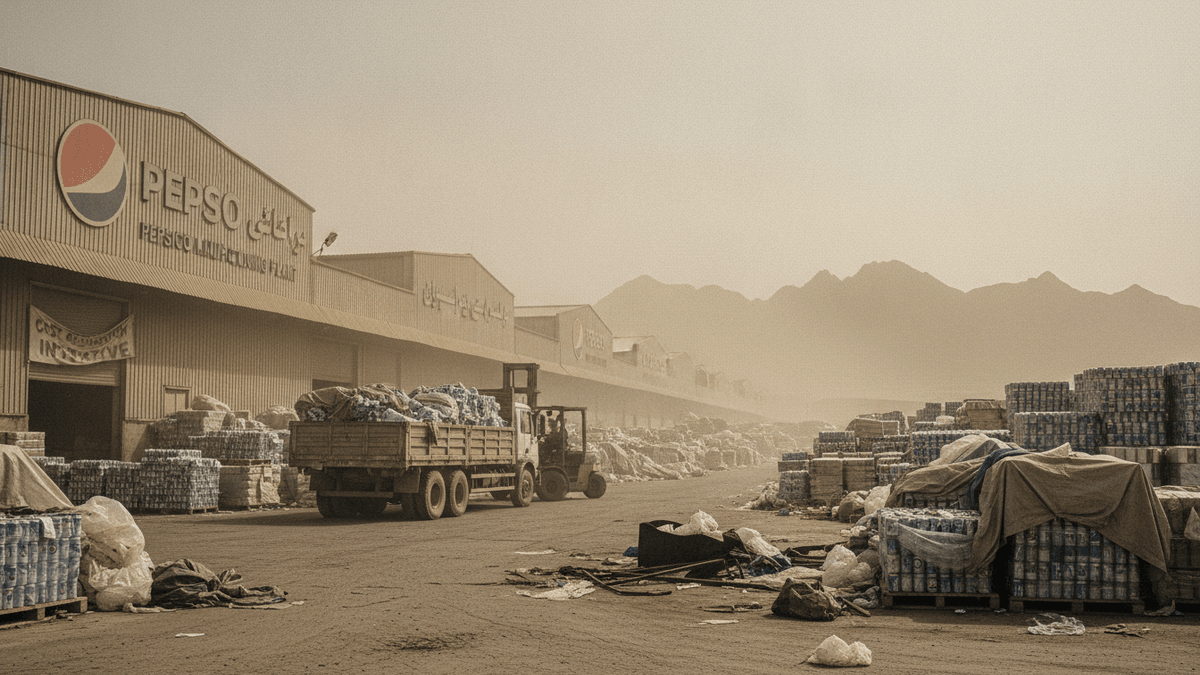
PepsiCo manufacturing facility in the Middle East with goods stacked outside and a forklift.
PepsiCo is bracing for increased commodity costs in the latter half of 2026, a challenge compounded by a 2% decline in its North American food sales. This dual pressure signals a pivotal moment for the snack and beverage giant as it navigates a shifting consumer landscape and external economic headwinds.
In response, PepsiCo is strategically increasing investments and implementing aggressive price reductions, including cuts of up to 15% on popular brands like Lay’s and Doritos. This move directly targets value-conscious consumers, a growing segment influenced by broader economic uncertainties. The company also faces rising packaging and logistics expenses, partly attributed to the ongoing Iran war, which adds another layer of cost pressure to its supply chain.
Despite these challenges, PepsiCo’s CFO, Steve Schmitt, remains optimistic, anticipating that tariff refund claims and productivity savings will help mitigate the impact of rising input costs. This proactive financial management is crucial as the company adapts its business model.
Beyond pricing, PepsiCo is heavily investing in product innovation. The focus is on healthier offerings, such as lower-sugar Gatorade and new protein-rich options, designed to align with evolving consumer preferences and the increasing influence of weight-loss drugs like GLP-1s. This strategic pivot reflects an understanding of how health trends are reshaping demand in the food and beverage sector.
Despite the headwinds, PepsiCo has maintained its annual forecasts, projecting organic revenue growth of 2-4% and core constant currency earnings per share growth of 4-6% for fiscal 2026. The company also reported strong quarterly revenue, surpassing analyst expectations with a 6.4% rise to $24.18 billion and core earnings per share at $2.20. This indicates a resilient performance even as the company adjusts its strategy to navigate a complex market.
About the Author