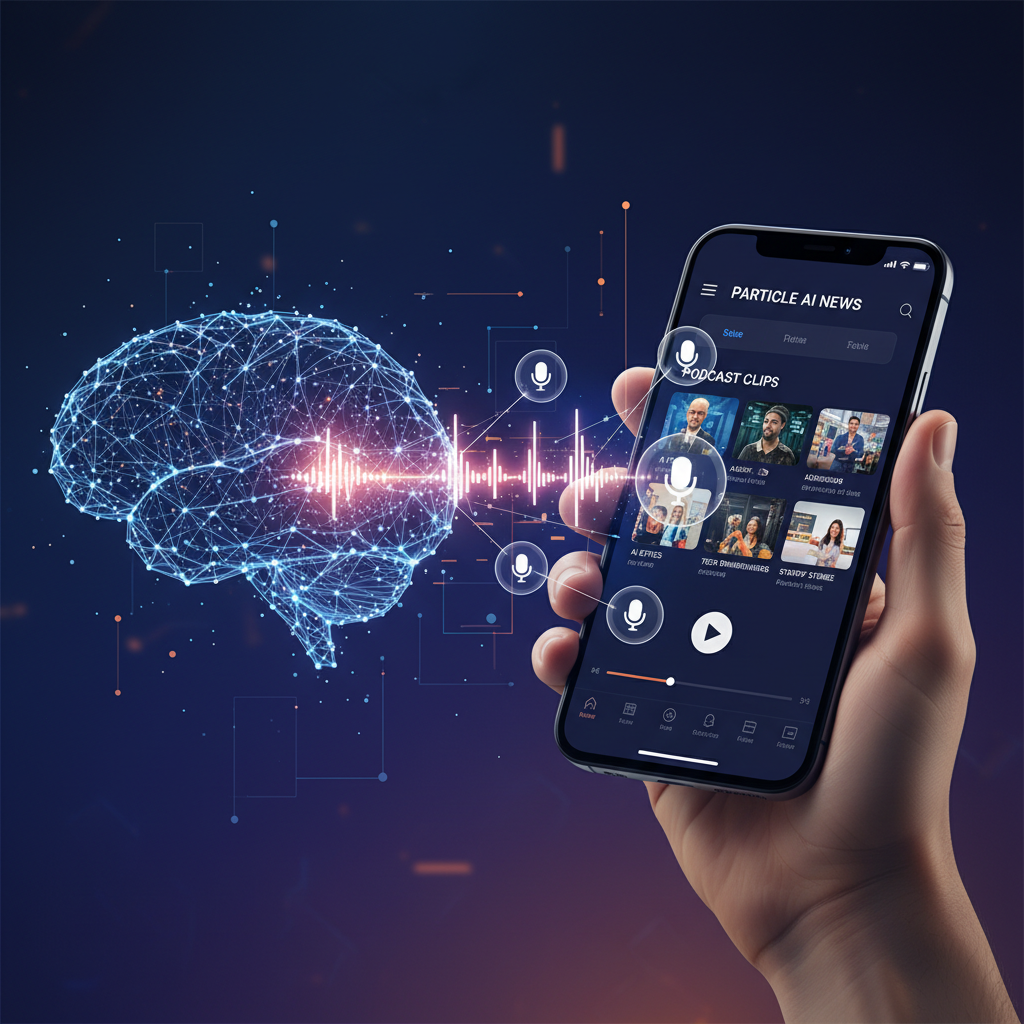
The hum of the servers was a constant backdrop, even in the usually quiet Particle engineering lab. It was late February 2026, and the team was huddled around a monitor, watching the latest iteration of their AI news app pull in key moments from a podcast on the future of AI. The app, which had already made waves by curating articles, was now tackling the spoken word.
The core innovation? Particle’s AI could listen to podcasts, identify relevant segments, and let users instantly play short clips alongside related news stories. It’s a simple idea, but executing it required some serious processing power. “We’re essentially building a real-time audio search engine,” explained Sarah Chen, Particle’s lead engineer, during a brief break in the debugging session. “That means constant transcription, topic modeling, and relevance scoring – all done on the fly.”
The challenge wasn’t just technical; it was also about data. Training the AI required a massive dataset of podcast audio, transcriptions, and metadata. Particle had spent the last year building its own, but also partnered with several podcast networks to gain access to more content. According to a recent report from Forrester, the market for AI-powered content curation is expected to reach $2 billion by 2027. That figure, however, hinges on the ability of companies like Particle to secure access to the necessary data, which is becoming increasingly competitive.
Analyst firm Gartner has estimated that over 70% of news consumption will involve some form of AI by 2026. This shift creates interesting dynamics. For example, the current version of Particle’s app is processing about 500,000 minutes of audio per day. The team is aiming to double that figure by the end of Q2, 2026. This aggressive expansion, though, is also straining their infrastructure. They’re running into the limitations of their current cloud setup, and are evaluating whether to bring on more custom hardware. The team is also aware of the export controls on advanced AI chips, and will need to adapt if the situation changes.
The implications are far-reaching. Imagine a user reading a news story about a new biotech breakthrough. Instead of just reading the text, they could instantly hear a scientist explain the research in their own words, pulled directly from a podcast interview. Or maybe a snippet from a company’s earnings call, providing instant context to the financial news. The potential to enhance the news experience is significant, and Particle is betting big on that potential. The team is also looking at expanding the feature to video content, but that will require even more processing power and a whole new set of challenges.
The market is watching. Will Particle succeed in its quest to become the go-to news app for the AI age? Or will supply-chain limitations and the ever-changing policy landscape derail their plans? One thing is certain: the race to dominate the AI-powered news space is on.
About the Author