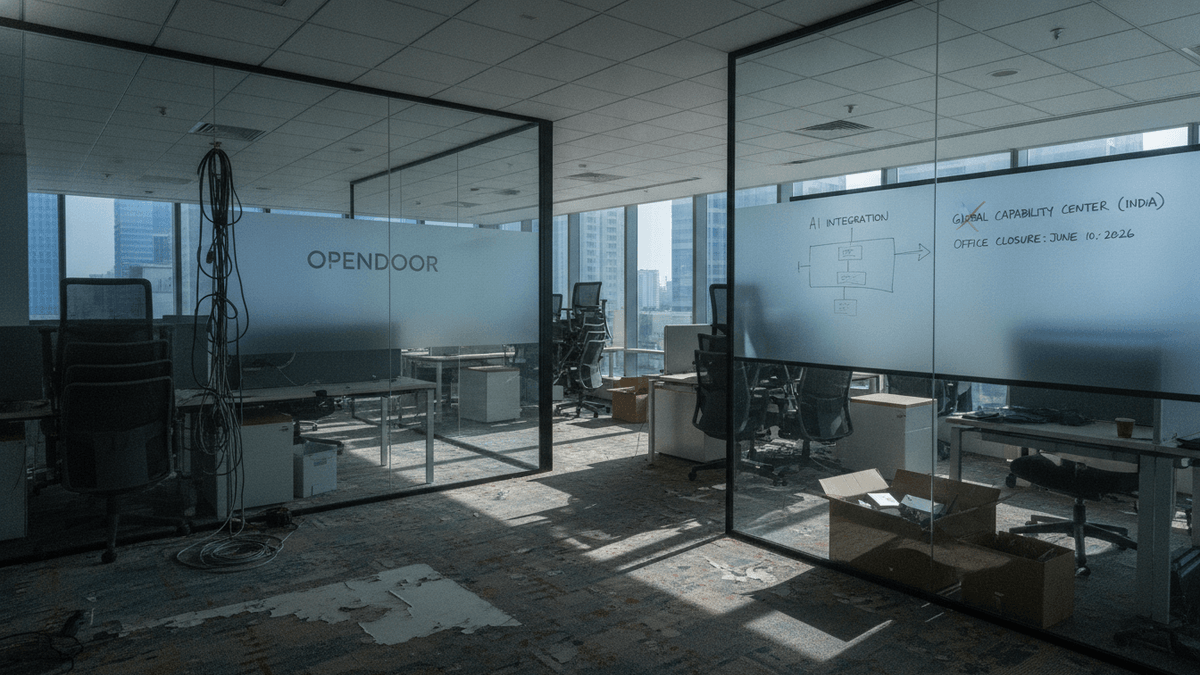
Abandoned Opendoor office in India, with notes on frosted glass walls.
Opendoor, a prominent U.S. online real estate company, has announced its exit from the Indian market. The decision, made effective June 10, 2026, comes at a time when India is solidifying its position as the world’s largest Global Capability Center (GCC) market. This move is now fueling a broader conversation about the evolving role of Artificial Intelligence (AI) and traditional outsourcing models in global business operations.
While the specific reasons for Opendoor’s withdrawal from India have not been fully detailed, the timing is significant. India has become a critical hub for multinational corporations establishing GCCs to leverage the country’s vast talent pool for technology, R&D, and business process outsourcing. Opendoor’s exit, however, suggests a potential shift in strategic thinking, possibly influenced by advancements in AI that could automate tasks previously handled by human workforces in offshore locations.
The implications of this development extend beyond Opendoor. It raises questions about whether AI-driven efficiencies might reduce the reliance on large-scale outsourcing operations that have defined global business strategies for decades. Companies are increasingly exploring how AI can streamline operations, reduce costs, and enhance productivity, potentially altering the landscape for countries that have heavily benefited from the outsourcing boom.
This strategic recalibration by Opendoor underscores a growing trend where technological innovation, particularly in AI, is forcing businesses to re-evaluate their global operational footprints and talent strategies. As India continues to grow its GCC market, the industry will be watching closely to see how companies balance the established benefits of outsourcing with the transformative potential of AI.
About the Author