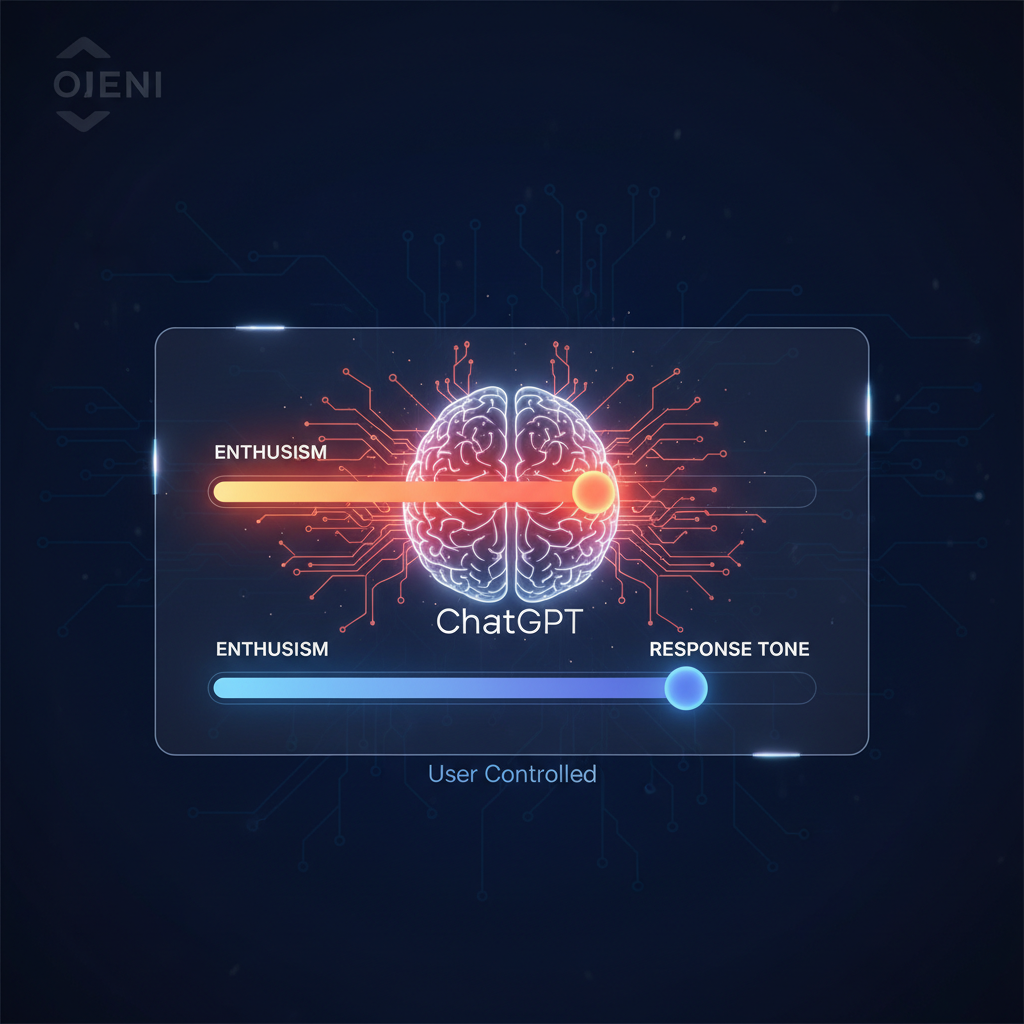
The hum of servers fills the air, a constant white noise in the OpenAI lab. It’s December 2025, and engineers huddle around monitors, tweaking the latest iteration of ChatGPT. The task at hand: fine-tuning the chatbot’s personality controls. Up until now, ChatGPT’s responses were consistent, but now users have the power to dial up or down the enthusiasm.
“It’s about giving users more control over the experience,” says Dr. Evelyn Reed, OpenAI’s lead AI architect, in a recent briefing. “We’ve seen the demand for personalization grow, and this is a natural extension.” The new feature allows users to adjust the chatbot’s perceived warmth, emoji usage, and overall enthusiasm level. It’s a small change, but one that reflects a broader trend of user-centric design in AI.
The implications are interesting. Analysts predict that this level of control could significantly impact user engagement. “We project a 15% increase in daily active users within the first quarter of 2026,” says Michael Chen, lead AI analyst at Forrester, “assuming OpenAI effectively markets the new feature.” He notes that the ability to customize AI interactions could be a key differentiator in a crowded market.
Engineers are also exploring the limits of this new feature. One team is focused on how the adjustment of “enthusiasm” affects the model’s output. The question is, can they avoid the pitfalls of the past, when overly enthusiastic chatbots came across as inauthentic or even annoying? It’s a question of balance, of finding the sweet spot where the AI feels helpful without being cloying. Or maybe that’s how the supply shock reads from here.
The potential for misuse is also being addressed. OpenAI is building in safeguards to prevent the chatbot from being manipulated to spread misinformation or engage in harmful behavior. This is a crucial step, as the ability to control the chatbot’s tone could potentially be exploited. The team is running simulations, testing the system’s resilience against adversarial attacks. The goal is to ensure that the new feature enhances the user experience without compromising the integrity of the AI.
The market response has been positive. Early adopters have praised the new feature, with many noting how it makes ChatGPT feel more like a personalized assistant. The launch is a clear signal of OpenAI’s commitment to staying ahead of the curve in the competitive AI landscape. The company’s focus on user experience, combined with its continued investment in cutting-edge AI technology, positions it well for future growth.
About the Author