The hum of the servers was a constant presence, a low thrumming that vibrated through the floor of the data center. Engineers at a major AI firm, let’s call them ‘InnovAI,’ were huddled around a bank of monitors, poring over thermal tests. The air conditioning fought a losing battle against the heat generated by the latest Nvidia H100 GPUs, the workhorses of modern AI. It was a scene repeated countless times, across the globe, as companies raced to build and deploy large language models (LLMs).
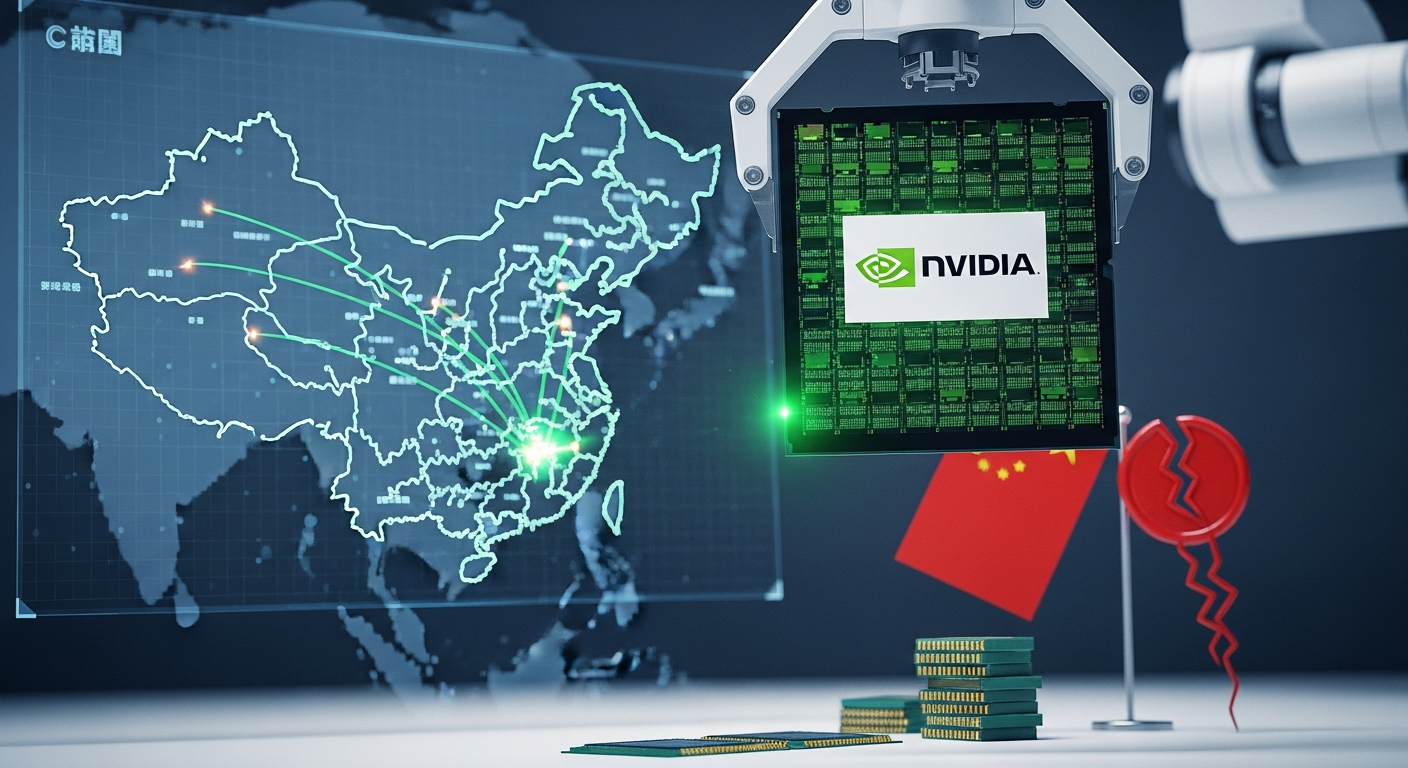
Then came the news, a shock that rippled through the industry: former President Trump greenlighting the export of Nvidia’s AI chips to China. Senator Chuck Schumer didn’t mince words. “Selling out America,” he declared, a stark accusation echoing through the political arena. He wasn’t alone in his concern; the move was immediately framed as a potential threat to national security, a giveaway of cutting-edge technology to a strategic rival.
The situation is complex. Nvidia, the dominant player in the AI chip market, designs its chips in the US, but relies on Taiwan Semiconductor Manufacturing Company (TSMC) for fabrication. This global supply chain is a key factor. Restrictions on exports to China, particularly of advanced GPUs, have been in place for some time, part of a broader effort to curb China’s technological advancement. The US government, under both administrations, has been wary of allowing China access to the most powerful AI chips, fearing their use in military applications or to accelerate China’s own AI development.
But the market is relentless. China is hungry for AI chips. Its domestic tech giants, such as Baidu and Alibaba, are investing heavily in AI and need access to the latest hardware to compete. The demand is so high that even if Nvidia can’t supply its most advanced chips, Chinese companies will look to alternatives. “The market will always find a way,” says Sarah Jones, a semiconductor analyst at Deutsche Bank. “If they can’t get the best, they’ll make do with something else, or build their own.” That ‘something else’ might be less performant Nvidia chips, or even domestic Chinese designs from companies like Huawei or Biren.
The implications are far-reaching. The decision to allow certain Nvidia exports to China could be seen as a strategic compromise, a recognition that complete decoupling is impossible. It also raises questions about the effectiveness of existing export controls. The US government’s goal is to slow China’s progress, not halt it entirely. This is a delicate balancing act, trying to maintain US technological leadership while preventing the complete isolation of the Chinese market. The situation, therefore, is not so black and white, or perhaps it’s more like a series of shades of grey.
The engineers at InnovAI, meanwhile, continued their work. The cooling fans whirred, the monitors displayed complex charts, and the race to build the next generation of AI models continued, regardless of the political winds. The future, as always, remained uncertain.
About the Author