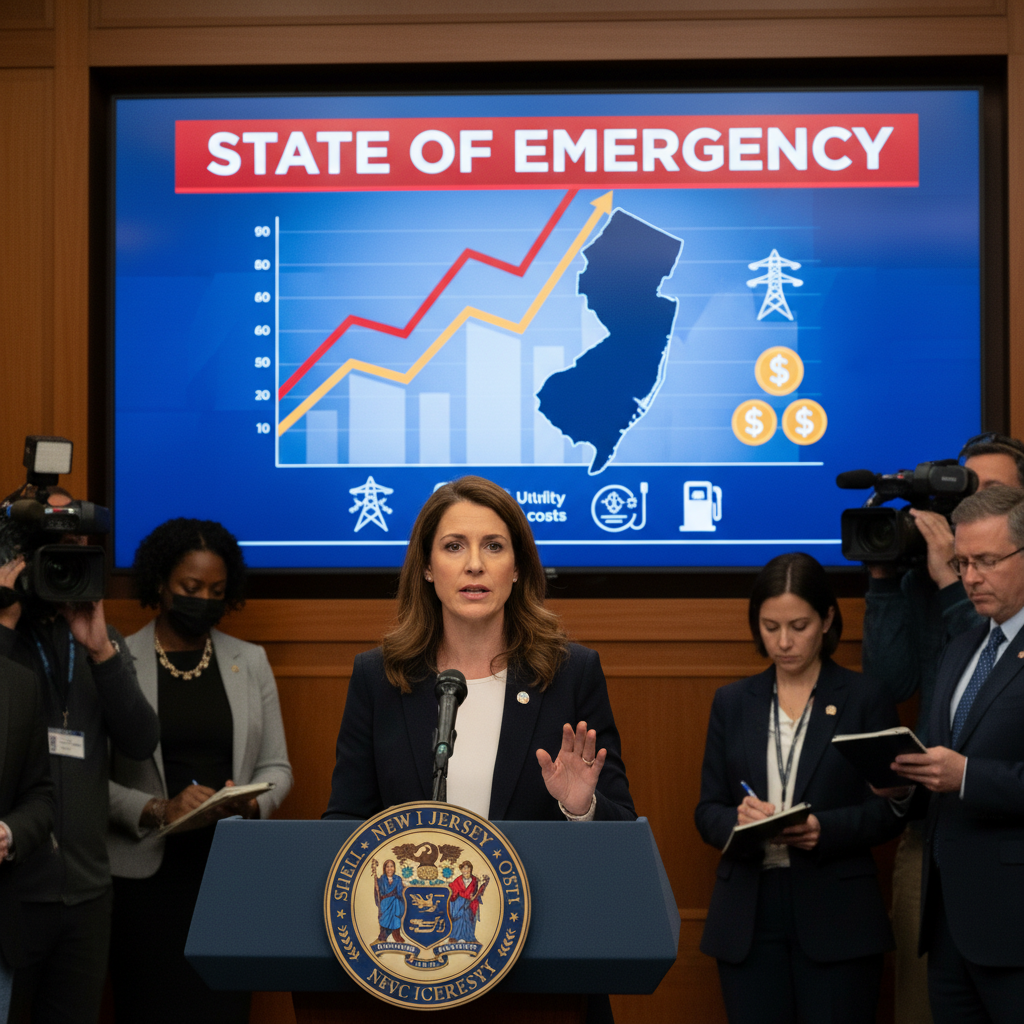
In a move signaling immediate action, New Jersey Governor Mikie Sherrill declared a State of Emergency focused on the pressing issue of utility costs during her inaugural speech. This announcement, coupled with the signing of her first executive orders, underscores the new administration’s commitment to tackling the financial strain placed on New Jersey residents.
During her inaugural address, Governor Sherrill highlighted the urgency of the situation, emphasizing the need for immediate intervention to mitigate the impact of rising energy expenses. The declaration of a State of Emergency allows the state government to expedite actions and allocate resources to address the crisis effectively. This includes potential measures aimed at stabilizing utility rates and providing relief to consumers.
The decision to prioritize utility costs reflects the broader economic challenges facing New Jersey. The Governor’s actions are a direct response to the increasing financial burden on households and businesses due to high energy prices. The executive orders signed by Mikie Sherrill are expected to outline specific steps the state will take to alleviate these costs and ensure affordable access to essential services.
The State of Emergency declaration is a clear indication that the Sherrill administration views this as a top priority. The focus on utility costs, energy markets, and the state’s economy suggests a strategic approach to economic stability and consumer protection. The government’s actions will likely be closely monitored by residents, businesses, and energy sector stakeholders.
The impact of these executive orders and the State of Emergency will unfold in the coming weeks and months. The focus remains on how the government will provide relief to New Jersey residents and address the systemic issues contributing to high utility costs. The situation will continue to be a central topic in state politics and economic discussions.
About the Author