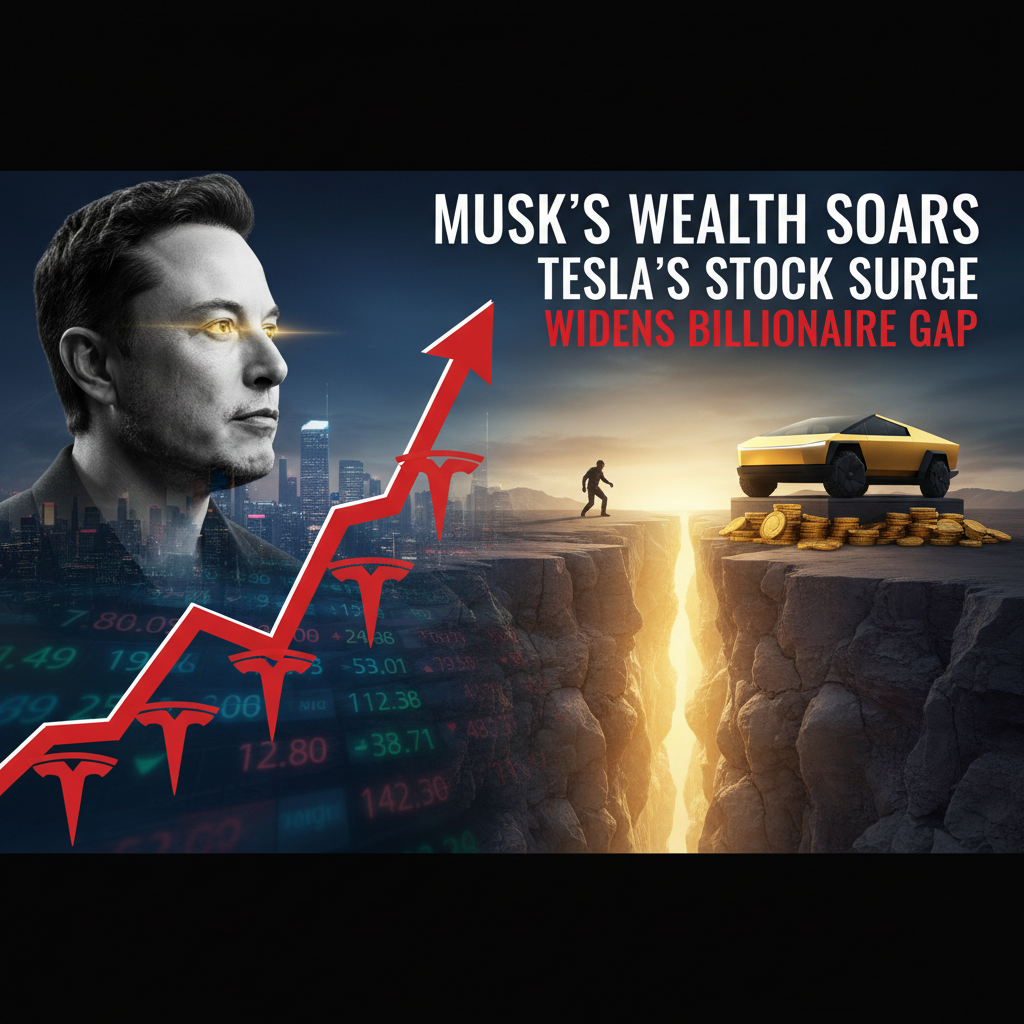
The hum of servers filled the air at the Tesla AI Day presentation. Engineers in the back, hunched over glowing screens, reviewed thermal tests for the next generation of Dojo supercomputers. Meanwhile, on the main stage, Elon Musk laid out the vision: more autonomy, more processing power, and, of course, more market dominance. The numbers tell the story. Tesla’s stock surge has propelled Musk’s net worth to an estimated $681 billion, a figure that’s more than double the $249 billion held by Google co-founder Larry Page, according to recent reports.
This isn’t just a win for Musk; it’s a statement about the electric vehicle (EV) market and Tesla’s position within it. The company’s stock performance reflects growing investor confidence in its long-term strategy, despite the global supply chain problems that continue to plague the entire industry. Or maybe that’s how the supply shock reads from here.
“Tesla’s ability to navigate these challenges, particularly in chip procurement, has been remarkable,” noted analyst Sarah Jones of Morgan Stanley. She pointed to Tesla’s vertical integration strategy, which gives the company greater control over its supply chain. This is a crucial advantage when facing shortages. Tesla’s ability to secure its own supplies, while other automakers struggle, is a huge advantage.
The implications are far-reaching. The wealth gap between Musk and his peers highlights the shift in the tech landscape. It’s a clear indication of where the market sees the future: EVs, renewable energy, and the technologies that support them. The company’s growth is not just about selling cars; it’s about building an entire ecosystem. Musk has built an empire.
Tesla’s roadmap for the coming years is aggressive. With the unveiling of the next-generation Dojo supercomputer, the company aims to enhance its AI capabilities. This supercomputer will be essential for training the neural networks that power its autonomous driving systems. The goal is to move from the current M100 to the more powerful M300 by 2026, which will require significant advancements in chip design and manufacturing. But supply chain constraints, export controls, and manufacturing limits (think SMIC versus TSMC) remain a huge hurdle.
The market is watching closely. The stock’s performance isn’t just about the here and now, it’s about the future. The question is: Can Tesla continue to innovate and maintain its lead in the face of increasing competition? The answer, as the engineers in the back of the room know, is not a simple one.
About the Author