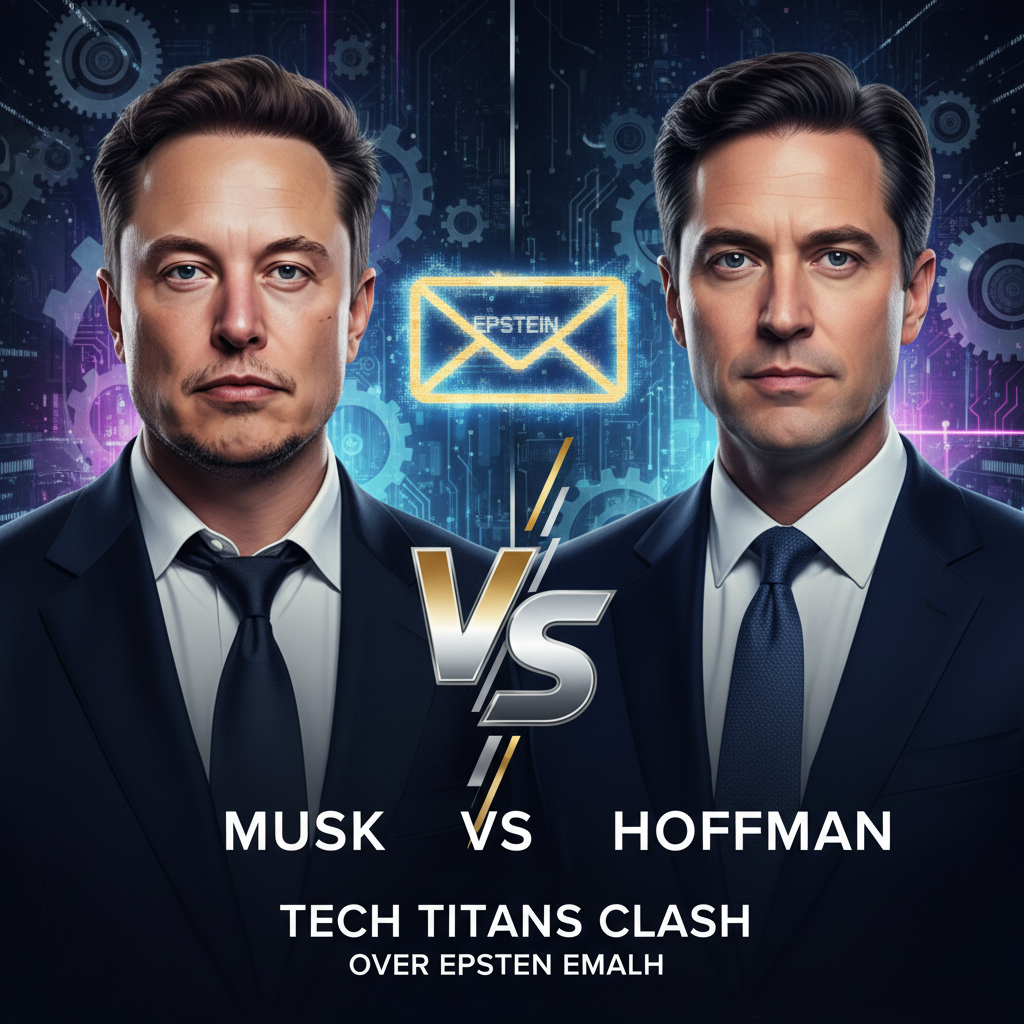
The Slack channel lit up with a flurry of messages. Engineers at a San Francisco-based AI firm, let’s call it ‘Nova AI,’ were tracking the Elon Musk and Reid Hoffman feud in real-time. The core issue: alleged connections to Jeffrey Epstein, a topic that’s been a festering wound in the tech community since 2019. Now, the wound had been ripped open again.
It started with a few pointed tweets, then escalated. Screenshots of emails were shared, accusations flew, and the digital mudslinging began. Musk, known for his combative online presence, didn’t hold back. Hoffman, the LinkedIn co-founder, responded with his own salvos. The atmosphere in the Nova AI office felt thick with a mix of shock and morbid curiosity. The team, focused on deploying its next-generation LLM, was suddenly distracted by the very public spat between two of tech’s most prominent figures.
“It’s a sideshow, really,” muttered a senior engineer, glancing at the monitor displaying the latest performance metrics of Nova AI’s own large language model. “We’re trying to hit the 2026 roadmap targets. This… this is just noise.” The roadmap, as outlined in the last internal presentation, involved a significant upgrade to their infrastructure. The plan calls for transitioning from the current M100 GPUs to the more advanced M300 series by Q1 2026. This is essential for the planned expansion in the healthcare sector, which, according to a recent report by Deloitte, is projected to be a $300 billion market by 2027. It’s a huge opportunity.
But the public bickering between Musk and Hoffman underscored deeper tensions. The Epstein scandal has cast a long shadow, forcing uncomfortable questions about the tech elite’s relationships and the ethical boundaries of power. The timing was particularly sensitive, given the ongoing scrutiny of the industry’s influence and the increasing regulatory pressure from Washington.
“This is not just a PR problem; it’s a reflection of deeper issues,” said Anna Chen, a tech analyst at Forrester Research. “These public spats erode trust, and that has real-world consequences.” She added that the ongoing debate could impact investor sentiment and, by extension, the ability of companies like Nova AI to secure funding. Chen’s team is currently revising its Q4 forecast downward by 5% due to the increased uncertainty.
The implications were clear: the tech world, already under fire for its perceived excesses, was now facing a renewed reckoning. The fight between Musk and Hoffman, though personal, had become a proxy for larger battles about power, ethics, and the future of technology.
Back at Nova AI, the engineers got back to work. The hum of the servers, the clatter of keyboards, the quiet focus on the screen – all of it seemed to drown out the noise. Or maybe that’s how the supply shock reads from here. The team would need to stay focused on the 2026 plan. The success of their product, and by extension, the company, hinged on it.
About the Author