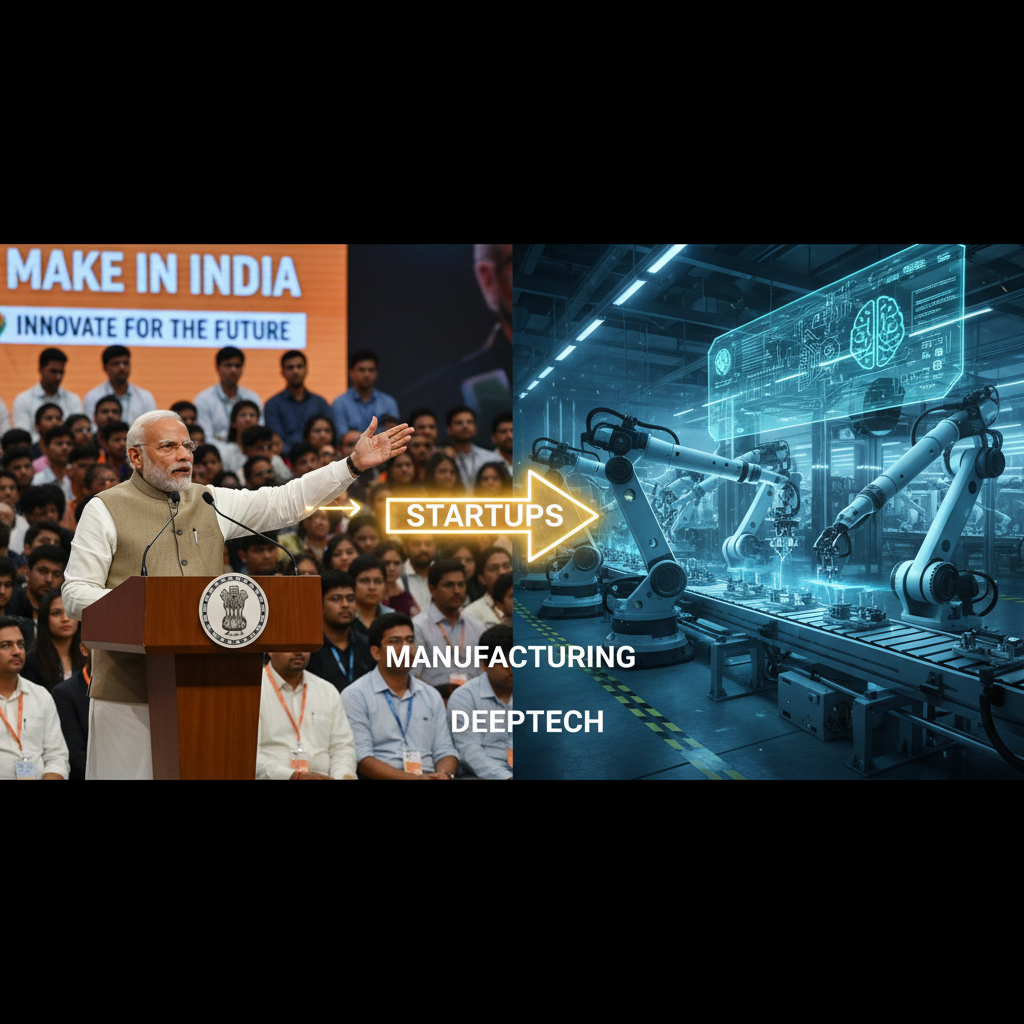
The hum of servers filled the air, a low thrumming counterpoint to the rapid-fire keyboard clicks. Inside a Bangalore data center, engineers from a burgeoning AI startup, “BharatTech,” were hunched over their monitors. They were running thermal tests on their latest custom-designed AI chip, codenamed “Surya.” The pressure was on. Prime Minister Modi had just called on Indian startups to focus on manufacturing and deeptech, a move that BharatTech’s CEO, Priya Sharma, saw as both a challenge and a massive opportunity.
“We’ve been preparing for this moment,” Sharma had told her team. “The digital and services-led businesses have paved the way, but the future is in building actual things.”
The ‘things’ in this case are high-performance AI chips, designed to compete with the likes of Nvidia and AMD. The Surya chip, according to BharatTech’s roadmap, is slated for initial production in Q1 2026. Sharma’s team aims to have it outperform the Nvidia H100 in key benchmarks, a bold ambition, given Nvidia’s dominance. But as anyone on the operations floor will tell you, the road from ambition to reality is paved with supply chain constraints, export controls, and the ever-present specter of manufacturing capacity.
“It’s a huge shift,” says Dr. Anika Patel, a senior analyst at a Mumbai-based tech consultancy. “The emphasis is now on building world-class products, which means mastering the entire value chain, from design to manufacturing.” This is a significant pivot from the earlier focus on software services. The Indian government’s push for self-reliance in technology, coupled with global geopolitical tensions, is creating both demand and opportunity.
The manufacturing piece is the hardest. BharatTech, like many Indian startups, faces a complex landscape. While the government is offering incentives for domestic manufacturing, the reality is that much of the advanced chip manufacturing capacity remains concentrated in Taiwan (TSMC) and South Korea. China’s SMIC is the closest competitor, but access to their most advanced nodes is restricted by U.S. export controls. This means BharatTech will likely have to navigate a maze of international partnerships and domestic capacity building, a process that could easily stretch the 2026 launch date.
The engineers paused their work, a brief respite before the next round of tests. The Slack channel pinged with a message from Sharma: “Focus on thermal efficiency. Every watt counts.”
Meanwhile, the market is already anticipating the shift. According to a recent report from JP Morgan, the demand for AI chips in India is expected to surge by 40% annually over the next five years. This projection, however, is contingent on the ability of Indian startups to secure manufacturing capacity and navigate the global supply chain. The stakes are high, and the pressure is on. It’s a race against time, with the future of India’s tech sector hanging in the balance, or maybe that’s how the supply shock reads from here.
Sharma’s team knows the score. They’re building more than just chips; they’re building a future.
About the Author