The numbers, they say, don’t lie. Or so the saying goes, anyway. And in the arena of economic policy, where political narratives clash with the cold, hard data, the truth often gets lost in the noise.
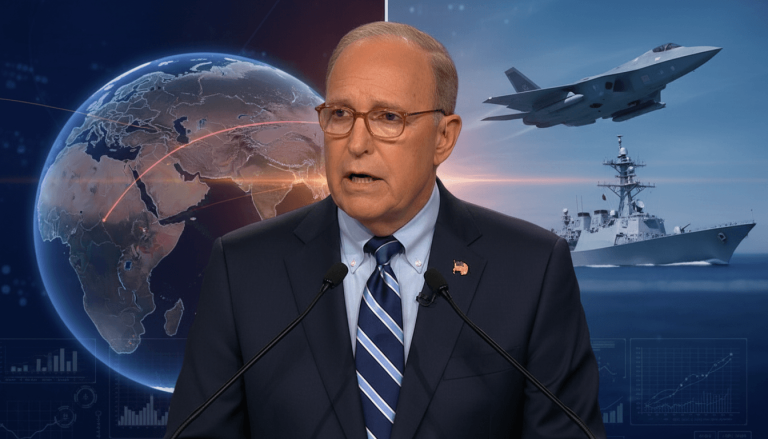
Take the recent commentary from Larry Kudlow, as reported by Fox Business. He’s making the case that Donald Trump’s time in office saw a potent mix: strong economic growth coupled with remarkably low inflation. Kudlow’s argument directly confronts the claims from Democrats and certain corners of the media, who have often painted Trump as an inflationist.
It’s a story of dueling perspectives. On one side, you have the narrative of potential economic mismanagement, with all the usual suspects: rising prices, stagnant wages, the squeeze on the middle class. On the other, a picture of prosperity — robust expansion, job creation, and a stable financial environment. The truth, as always, is likely somewhere in the middle, a blend of policy decisions, global forces, and sheer luck.
Kudlow, a former director of the National Economic Council, isn’t just offering an opinion; he’s presenting a counter-narrative, backed by figures. He’s pointing to specific data points, the kind that can either bolster or dismantle a political argument. The implication is clear: the economic record, under Trump, doesn’t fit the inflationist label.
He might be referring to the period from 2017 to 2020. During that time, the U.S. economy experienced a period of sustained growth. Unemployment rates hit historic lows, and wages saw a slow but steady increase. At the same time, inflation remained relatively stable, hovering around the Federal Reserve’s target of 2%. It’s a picture that, on the surface, appears to contradict the claims of those who predicted economic turmoil.
“The fake news media will never admit it, but the numbers speak for themselves,” Kudlow stated on Fox Business. It’s a line that cuts to the heart of the matter: the battle over perception and reality. The numbers are out there, waiting to be interpreted, and the interpretation often depends on who is doing the looking.
What happens next is anyone’s guess. But for now, the economic data from that period remains, a testament to a complex time.
About the Author