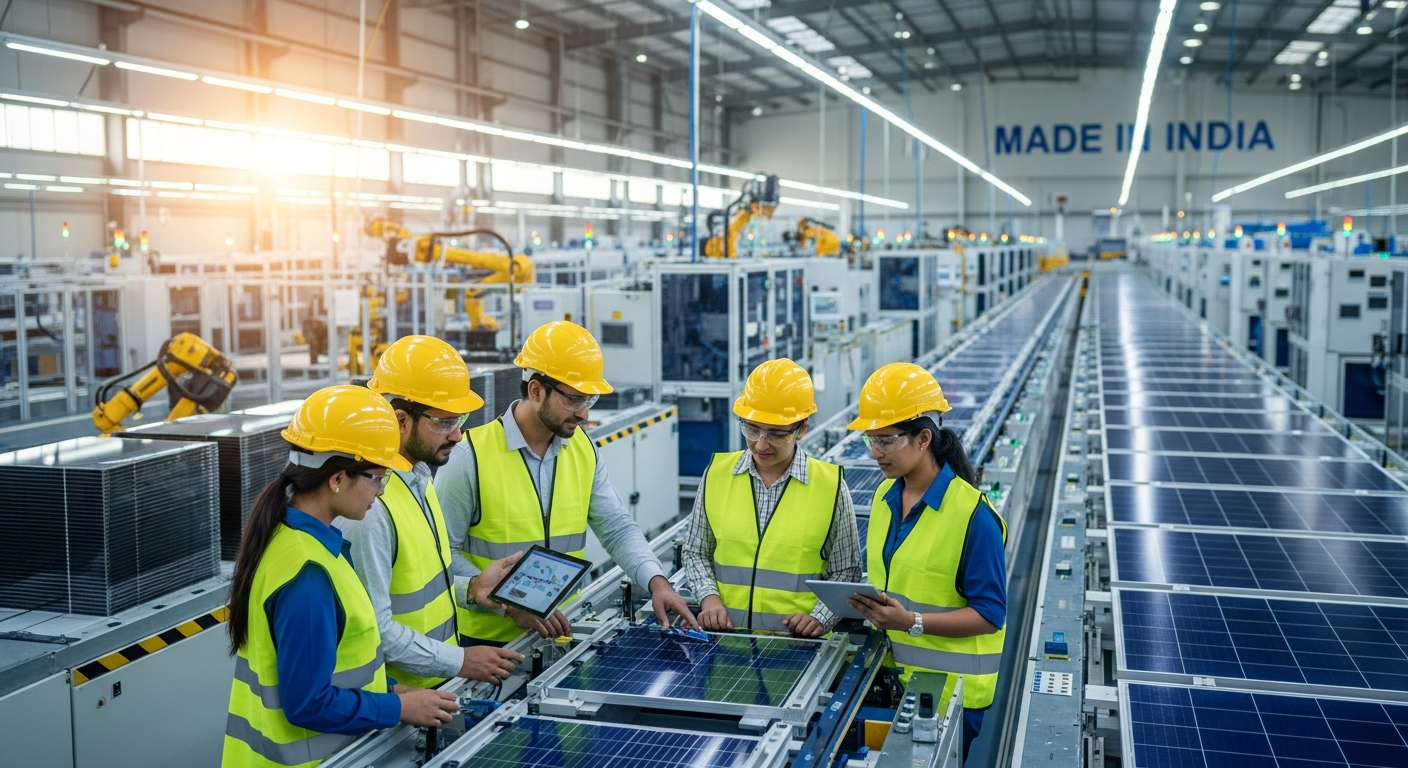
The factory hums. Not with the roar of heavy industry, but a precise, almost clinical whir. Inside, India’s solar manufacturing push is underway. The stakes? Billions in investment, thousands of jobs, and energy independence. The test? Technology.
It’s not just about building panels. It’s about building the right panels. The Economic Times recently reported on India’s ambitious plans to become a solar manufacturing powerhouse. This means choosing the best technology, the most efficient processes, the most competitive suppliers. A misstep now could mean years of catching up. Or, worse, becoming dependent on the very countries India is trying to surpass.
Consider the landscape. China currently dominates the global solar supply chain. India, on the other hand, is trying to catch up. The country has set an ambitious goal to reach 500 gigawatts of renewable energy capacity by 2030, a large portion of which will be solar. Achieving this means massive domestic manufacturing capacity. That capacity, in turn, depends on technology choices.
One critical choice: the type of solar cell. The article highlights the importance of selecting the right technology for solar cell manufacturing, which underpins both competitiveness and risk. Different cell technologies offer varying efficiencies and costs. Some are more suited to India’s climate and infrastructure than others. The wrong choice could lead to wasted investment and uncompetitive products. A source at the Ministry of New and Renewable Energy (MNRE) was quoted saying, “The government is committed to supporting domestic manufacturing, but not at the expense of efficiency or cost.”
There’s a palpable tension in the air. The pressure to build, to scale, to compete. But also the knowledge that the decisions made today will echo for years. The factory floor is a carefully orchestrated dance of machines and materials. Each step, from silicon wafer to finished panel, is a potential point of failure – or triumph. The success of India’s solar ambitions will be measured not just in megawatts, but in the choices made, the technologies adopted, the risks navigated.
The journey from dependence to dominance is rarely straightforward. It’s a process fraught with challenges. But here, in this factory, the future of India’s solar power is being built, one cell at a time.
About the Author