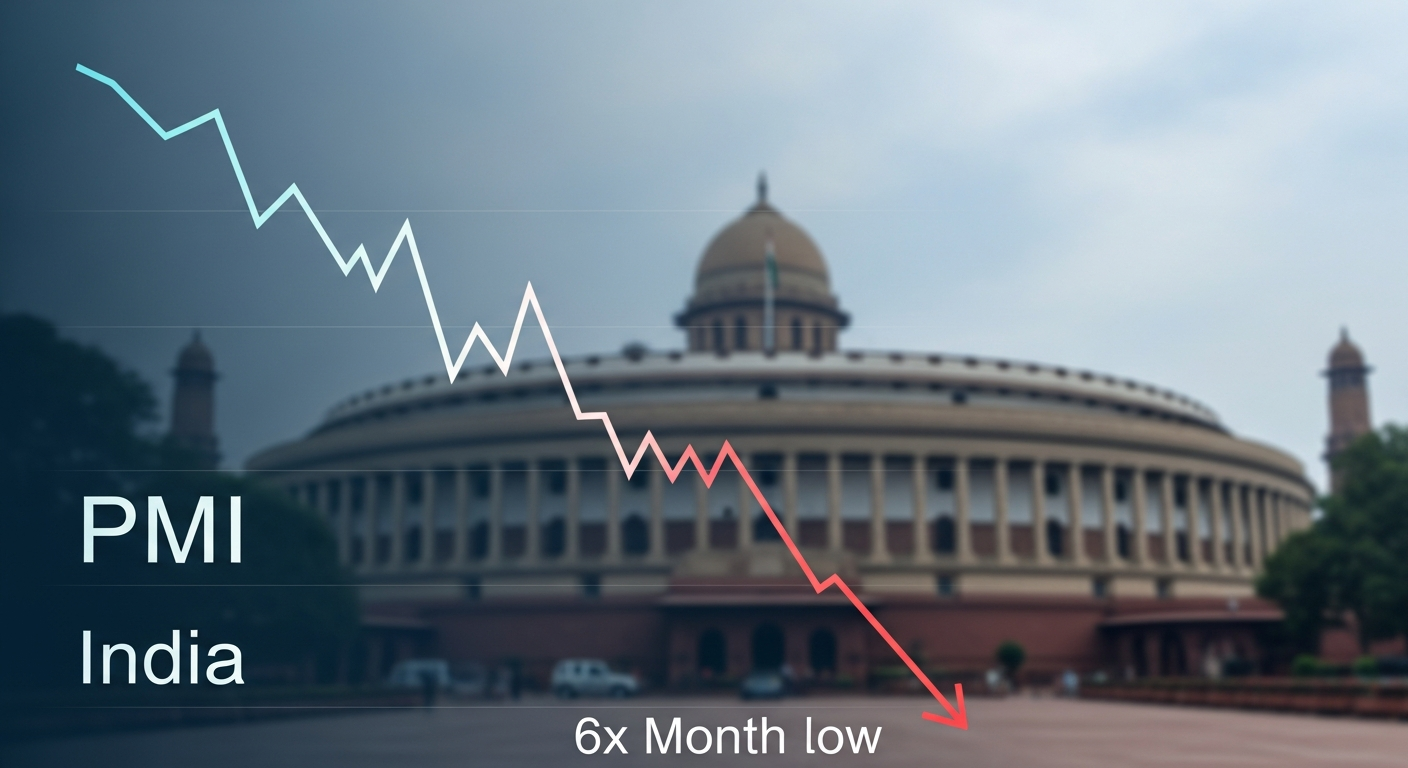
The air in Mumbai still hums, a low thrum of ambition. But the numbers… they tell a different story. The HSBC Flash India Composite Output Index, a key marker for the country’s economic health, dipped to 59.9 in November. That’s down from 60.4 in October.
It’s a six-month low, according to data from S&P Global. What does that mean on the ground? It means the combined performance of India’s manufacturing and services sectors is cooling.
I walked through the Bandra Kurla Complex this week. Construction cranes are still reaching, but the pace… feels different. Less frenetic. Fewer taxis clogging the streets. It could be a trick of the light, but the shift is noticeable. Is this what a slowdown looks like?
The Purchasing Managers’ Index (PMI) is closely watched. It provides an early signal. It’s a snapshot of business conditions, based on surveys of purchasing managers. A reading above 50 indicates expansion; below 50, contraction.
The November figure, while still above 50, suggests the pace of growth is easing. HSBC compiles the data. S&P Global releases it. They’re watching the same trends, from different vantage points.
“The Indian economy continues to expand, but the pace has moderated,” said a senior economist at a Mumbai-based financial firm, requesting anonymity. “We’re seeing a slight pullback in both manufacturing and services. It’s not a crisis, but it’s a signal to watch carefully.”
Where does this leave us? The holiday season is approaching. Consumer spending could provide a boost. Or perhaps the global headwinds will be too strong. The next few months will be telling.
The numbers are in. The story is unfolding. The air in Mumbai is still buzzing, but the hum has changed. The question is: what will happen next?
About the Author