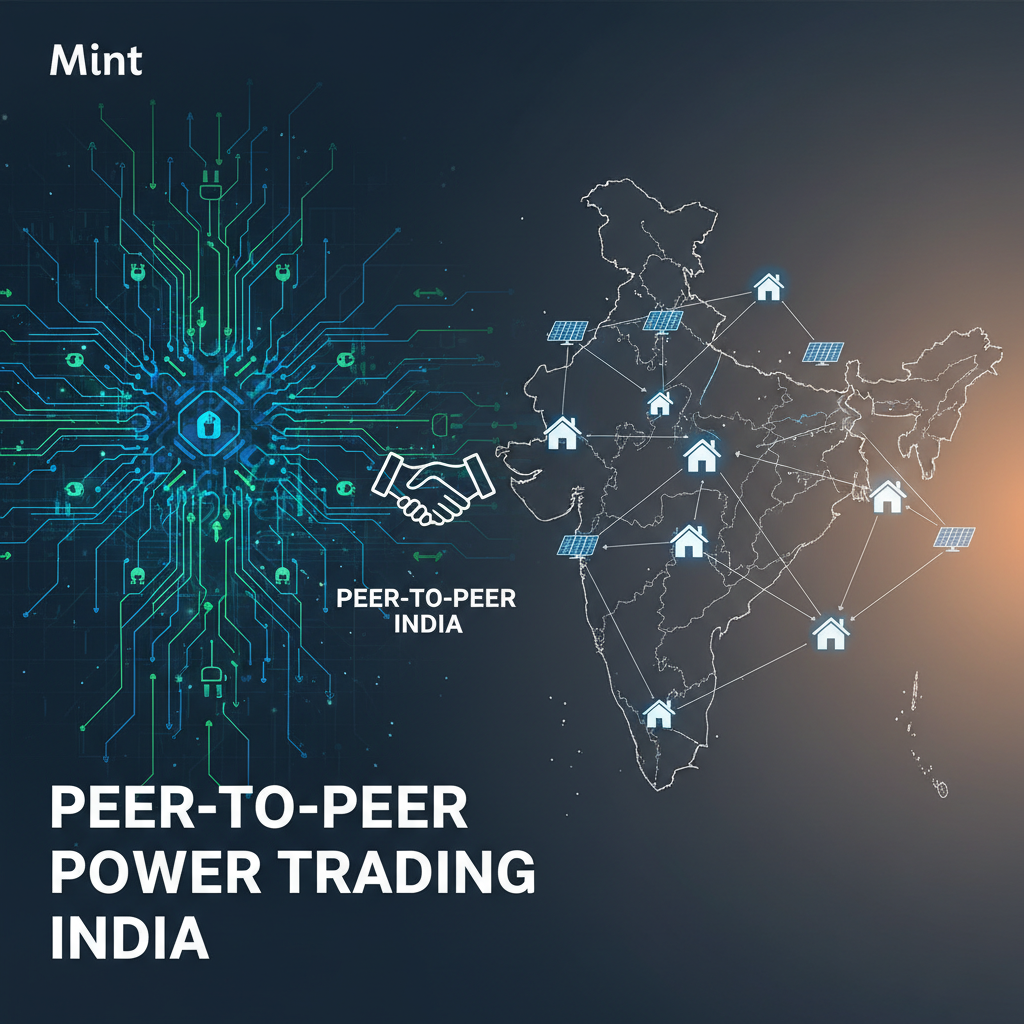
The buzz in the financial circles, especially in India, is about the shift in power dynamics. It’s about households and businesses, now empowered to trade surplus renewable energy amongst themselves. This isn’t just a technological upgrade; it’s a fundamental reimagining of how energy flows, with profound implications. The India Energy Stack is the engine, blockchain the secure ledger, and consumers the new active players.
This peer-to-peer (P2P) trading system, as per reports, is designed to let consumers sell their excess solar power directly to each other. The core idea is simple: If your rooftop solar panel generates more electricity than you need, you can sell the surplus to your neighbor. It cuts out the traditional intermediaries, potentially offering better prices for sellers and cheaper electricity for buyers. It’s a vision of a more decentralized, consumer-driven energy market.
The system, powered by the India Energy Stack and blockchain technology, is still in its early stages. But the potential is enormous. Imagine the possibilities: homes becoming mini power plants, businesses optimizing their energy costs, and the grid becoming more resilient. The move is also expected to boost the adoption of renewable energy sources, aligning with India’s broader sustainability goals. It’s all interconnected.
This shift isn’t without its challenges. There are questions around regulatory frameworks, security, and scalability. One of the primary concerns is ensuring that the blockchain-based transactions are secure and transparent. Also, the success of P2P trading relies heavily on consumer participation and awareness, which needs to be carefully cultivated. The costs of setting up the necessary infrastructure and ensuring interoperability between different energy sources are also significant factors.
“This is a game changer,” said Dr. Priya Sharma, an energy economist at the Centre for Policy Research, during a recent interview. “It’s kind of like the early days of online trading, but for electricity. The potential for disruption is huge.”
But the numbers… they tell the story. The Indian government has set an ambitious target of achieving 500 GW of renewable energy capacity by 2030. P2P trading, if successful, could be a key enabler in reaching that goal. The market is projected to be worth billions. The exact figures are still being crunched, but the trajectory is clear.
Still, there are hurdles to overcome.
The regulatory landscape needs to be supportive, and that means clear guidelines and incentives. Consumers need to be educated about the benefits and the process. The infrastructure—smart meters, digital platforms—needs to be widely available and reliable. It’s a complex undertaking.
The implications are far-reaching, from the smallest household to the largest corporation. The shift to P2P power trading in India is more than just a technological update. It’s a shift in power, a chance to reshape the energy landscape. The future, in a way, is now.
About the Author