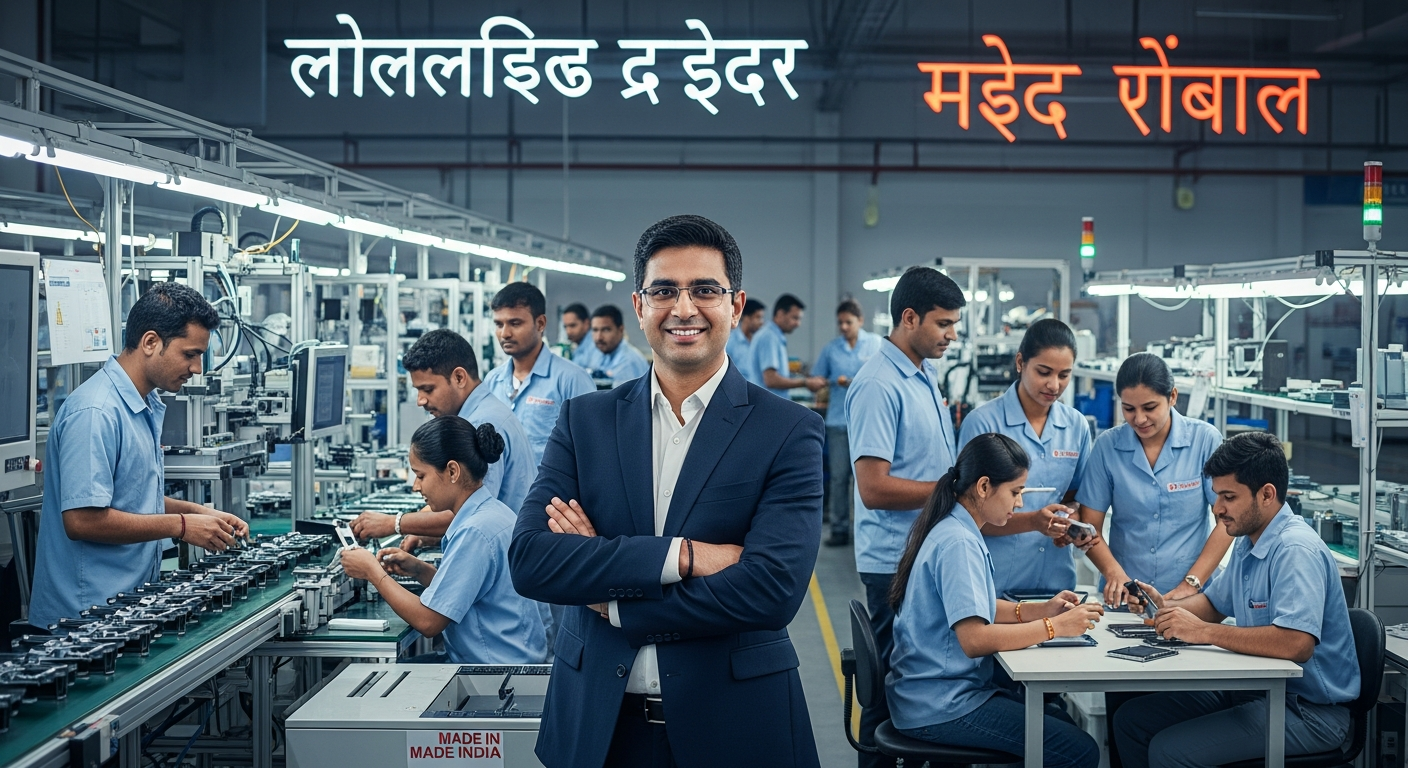
The hum of machines, the scent of solder, the quiet focus of engineers – these are the sounds and smells of India’s manufacturing ambitions. But according to Sanjeev Agarwal, Chief Marketing Officer at Lava, a true manufacturing revolution requires more than just assembly lines.
It’s about ‘local value-add,’ he says, speaking from experience. Lava, one of India’s leading domestic mobile phone brands, has seen the challenges firsthand. The current landscape often means importing sub-assemblies, which squeezes margins and limits the potential for scaling up. This is the reality for many electronics makers across the country.
Agarwal’s perspective isn’t just theory. It’s born from the daily grind of building a business in a rapidly evolving market. He understands the need to integrate deeper into component manufacturing and design. It is a strategic move that is essential to reducing dependence on imports. This shift, he believes, is the key to unlocking true manufacturing strength for India.
“India will achieve true manufacturing strength only by expanding local value-add,” Agarwal stated in a recent interview with ET Manufacturing. His words echo a sentiment shared by many in the industry, a recognition that the future lies not just in assembling products, but in owning the entire value chain.
Consider the city of Noida, a hub of electronics manufacturing. The factories there are buzzing with activity, but the real test lies in how much of that activity is truly ‘Made in India.’ Can India design its own chips? Manufacture its own displays? These are the questions that will determine the country’s place in the global manufacturing hierarchy.
The journey won’t be easy. It requires investment, innovation, and a supportive ecosystem. But the potential rewards – economic growth, job creation, and technological independence – are immense. It’s a vision that extends beyond the bottom line, touching on national pride and the aspirations of a billion people.
The path forward, as Agarwal suggests, is about more than just numbers and percentages. It’s about building an industry, brick by component, design by design.
About the Author