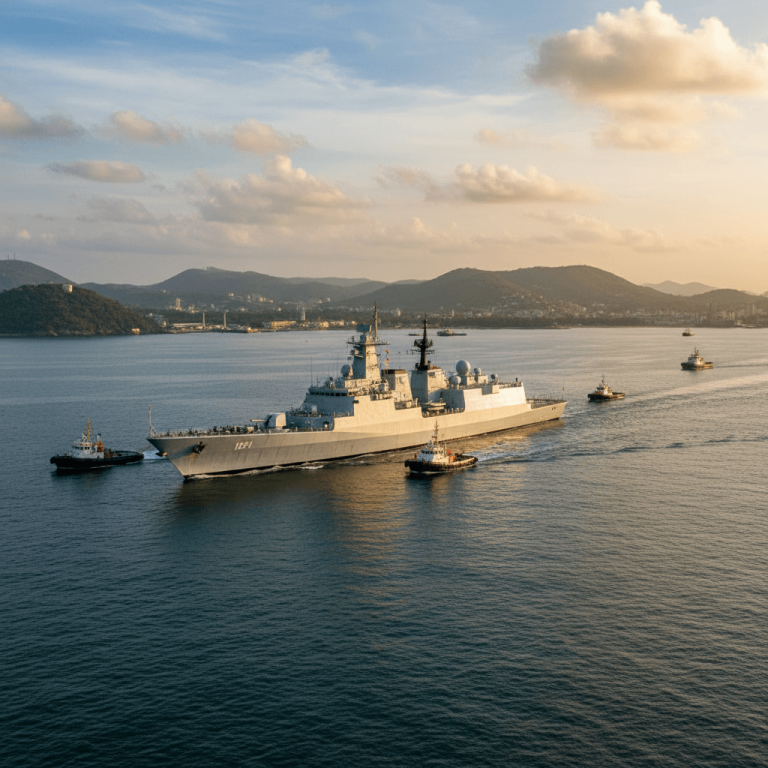
The hum of the testing equipment filled the air as engineers at the Goa Shipyard Limited finalized the pre-commissioning checks. It was here, in the heart of India’s shipbuilding industry, that the ICGS Samudra Pratap, a marvel of indigenous design, was taking shape. The vessel, designed to enhance the Coast Guard’s capabilities, was about to be officially commissioned by Rajnath Singh.
The core mission: to tackle marine pollution, provide firefighting support, and bolster maritime surveillance. The vessel’s design reflects a strategic pivot towards self-reliance in defense manufacturing, a key goal of the Indian government. This focus is critical, given the growing need for robust maritime security in the Indian Ocean region.
“This vessel isn’t just a piece of hardware; it’s a statement,” says a senior analyst at the Institute for Defence Studies and Analyses (IDSA). “It signals India’s commitment to both environmental protection and strategic autonomy.” The analyst added that the commissioning of the Samudra Pratap is expected to significantly improve the Coast Guard’s response time to pollution incidents, reducing the potential damage to marine ecosystems.
The vessel’s capabilities are extensive. It is equipped with advanced pollution control systems, including oil skimmers, dispersant spray systems, and storage tanks. These systems are designed to contain and clean up oil spills, a critical function given the increasing maritime traffic in the region. Furthermore, the Samudra Pratap is equipped for firefighting, adding another layer of safety for both ships and coastal installations.
The commissioning of the ICGS Samudra Pratap is part of a broader trend. India’s defense sector is witnessing a surge in indigenous design and manufacturing. This shift is driven by a combination of factors, including government policies promoting self-reliance, the desire to reduce dependence on foreign suppliers, and the growing capabilities of Indian shipyards. The success of projects like the Samudra Pratap will likely encourage further investment and innovation in the sector. It’s a clear signal of intent, and a commitment to protecting India’s maritime interests.
About the Author