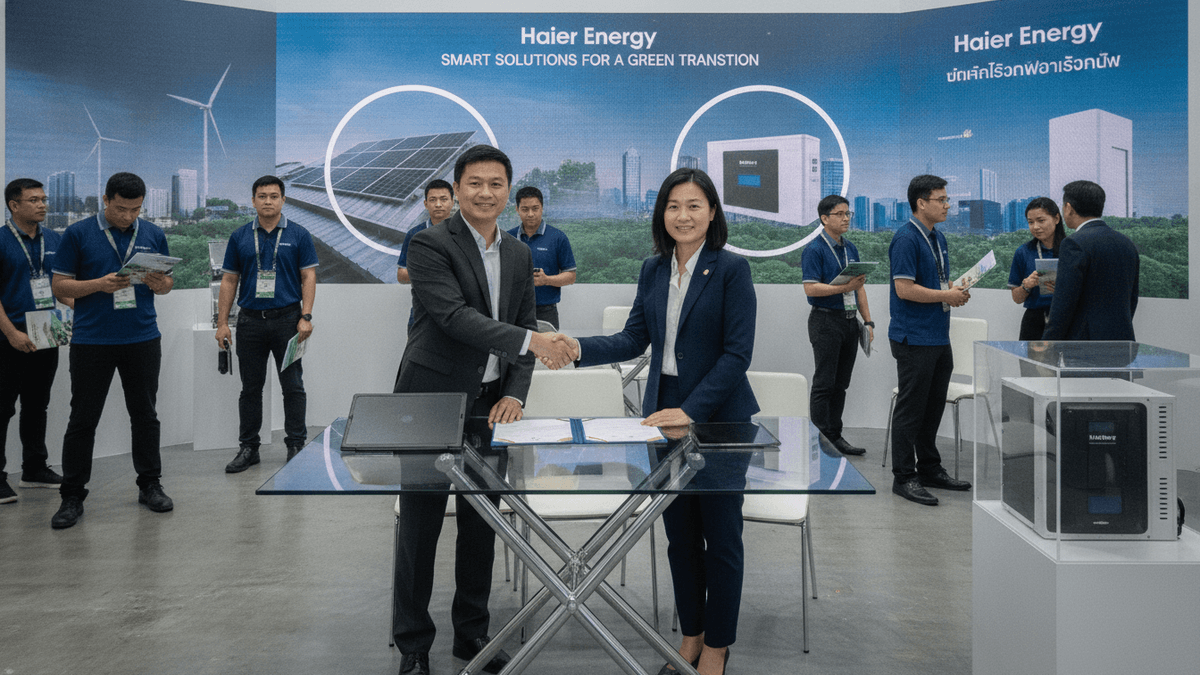
Haier Energy executives shake hands at their exhibition booth during ASEAN Sustainable Energy Week.
Haier Energy made a significant entrance at the 22nd ASEAN Sustainable Energy Week (ASEW 2026) in Bangkok, unveiling its comprehensive range of smart energy solutions. This debut isn’t just a product launch; it signifies a strategic acceleration into Southeast Asia’s burgeoning clean energy sector, offering a blueprint for businesses looking to capitalize on the region’s green transition.
The company showcased a full spectrum of energy solutions, catering to residential, commercial, industrial, balcony, and portable applications. This holistic approach positions Haier Energy to address diverse market needs, from individual homeowners seeking solar power to large-scale industrial operations aiming for energy independence. Crucially, Haier Energy didn’t just exhibit; it secured strategic cooperation agreements with numerous regional partners, underscoring its commitment to building a robust, localized ecosystem across key markets like Thailand, Malaysia, Indonesia, and Vietnam.
For startup founders and investors in the energy sector, Haier Energy’s strategy offers valuable insights. Their emphasis on “strong localized capabilities” — including establishing local teams and manufacturing support — is a critical differentiator. In a region as diverse and complex as Southeast Asia, a localized approach ensures efficient delivery, tailored technical support, and responsive after-sales service, overcoming common market entry hurdles. This strategy not only builds trust but also allows for agile adaptation to local regulations and consumer preferences.
The implications are clear: Haier Energy is not merely selling products; it’s investing in the infrastructure and partnerships necessary to become a foundational player in Southeast Asia’s energy landscape. Their success, particularly with existing implementations in Thailand, demonstrates the viability of their “reliable and cost-effective clean energy solutions.” This move signals increased competition and innovation in the region, pushing existing players to enhance their offerings and creating new opportunities for collaboration and technological advancement in the pursuit of a sustainable future.
About the Author