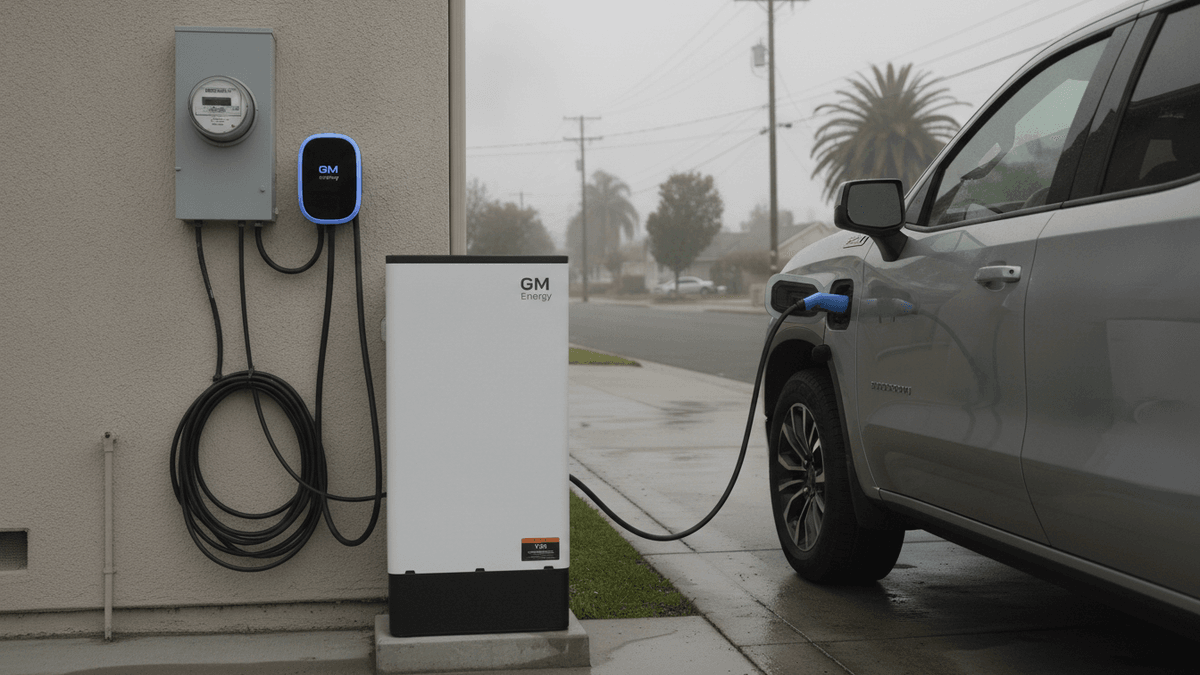
GM Energy home integration unit powers a parked electric truck on an overcast day.
General Motors has announced a significant software update that will enable some electric vehicle (EV) owners to sell power back to the electric grid. This move leverages the growing number of bidirectional EVs on U.S. roads, with GM alone reporting over 250,000 such vehicles currently in operation.
The new capability expands upon GM’s existing vehicle-to-home energy system, which already allows EVs to power homes during blackouts. With this update, owners can now send electricity from their vehicles to utility providers during times of high demand, with GM set to receive a portion of the proceeds. This initiative positions EVs as a crucial resource for grid balancing, especially amidst increasing demand from AI data centers and the impacts of extreme weather.
GM estimates that its current fleet of bidirectional EVs possesses enough storage capacity to power approximately 120,000 homes for up to a week. The company is actively testing this vehicle-to-grid integration technology through a partnership with Pacific Gas and Electric Company (PG&E). GM anticipates that by 2030, over 52,000 of its EVs will be actively involved in grid-balancing protocols.
Further testing is underway in Michigan with DTE Energy, utilizing the homes of GM employees. This pilot program aims to enhance reliable backup capacity while accommodating the preferences of home and EV owners. Wade Sheffer, GM Energy Vice President, described the initiative as a “win for customers, automakers, and utilities,” emphasizing the importance of maintaining a safe, reliable, and affordable grid.
Sheffer outlined three key areas for simplifying the path forward: increasing customer enrollment in utility programs through GM and industry partners, educating consumers on the benefits of EV grid support and utility programs, and developing best practices from ongoing regional pilot projects. GM also highlighted the need for clear incentives, such as time-of-use tariffs, to motivate consumer participation. These incentives would allow EV owners to charge affordably during energy surplus periods and receive compensation for supporting the grid during peak demand.
To boost consumer confidence, GM is also working on streamlining paperwork, engineering reviews, and utility interconnection processes for bidirectional chargers. “It’s time for us to look at parking lots and driveways across our communities as a massive, distributed power asset waiting to be integrated,” Sheffer stated, adding that collaborative efforts can help secure an affordable, reliable, and resilient energy future.
About the Author