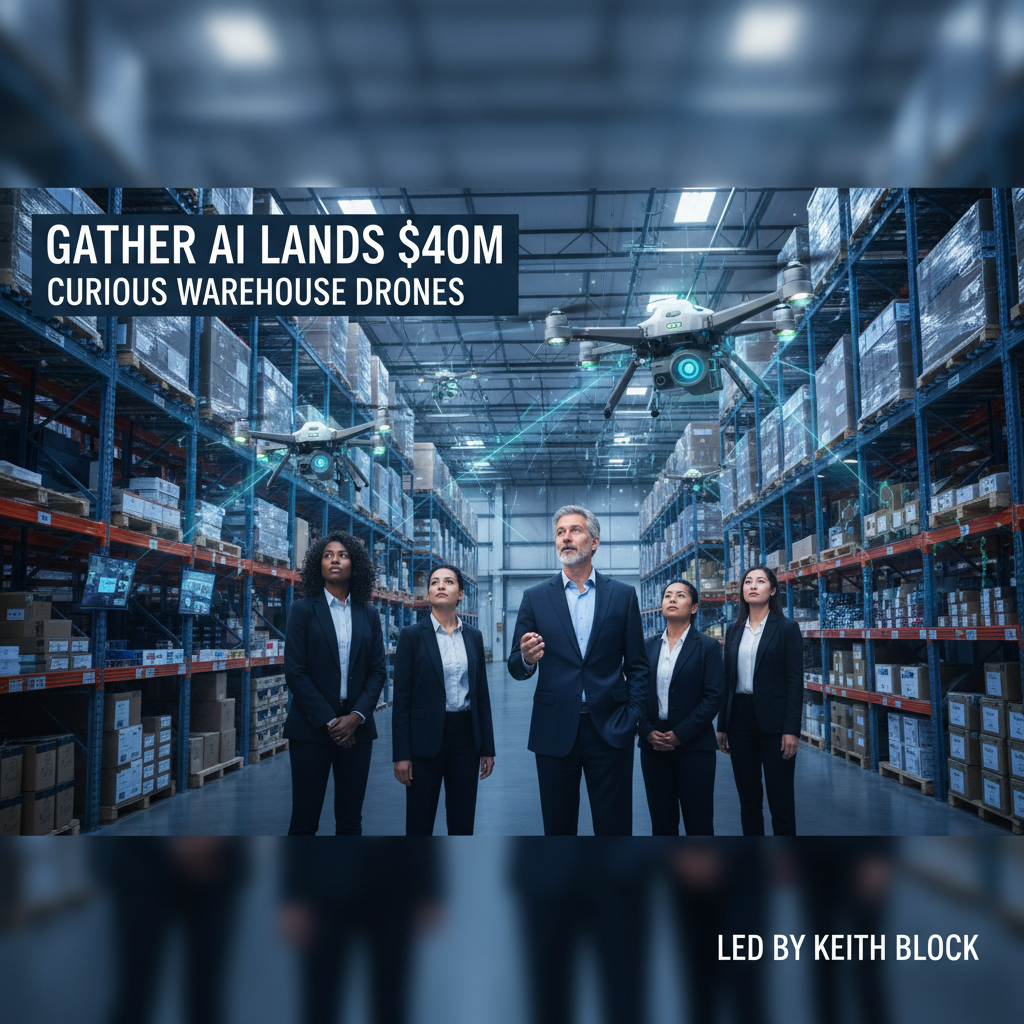
The hum of the server room was a low thrum, barely audible over the clatter of keyboards. Engineers at Gather AI, heads bent over screens, were running thermal tests. It was early February 2026, and the pressure was on. The company, focused on autonomous warehouse drones, was preparing to announce a $40 million Series B led by Keith Block’s Smith Point Capital. The funding, they hoped, would fuel the next stage of their vision: a warehouse AI system that didn’t just scan, but *sought*.
Gather AI’s drones are designed to be, in the words of one engineer, “curious.” Unlike traditional warehouse robots that follow pre-programmed paths, these drones use advanced AI to actively search for specific data points – inventory levels, damage, even potential safety hazards. This “curiosity” is powered by sophisticated computer vision and machine learning models, allowing the drones to adapt to changing warehouse environments and identify anomalies in real time. The goal is to provide a more dynamic and responsive view of warehouse operations, improving efficiency and reducing costs.
“We’re not just building robots; we’re building a data-gathering ecosystem,” explained CEO and co-founder, speaking from a muted conference call. “The drones are the eyes and ears, but the real intelligence comes from the AI that processes the information.” This sentiment is echoed by analysts like Sarah Jones of ARK Invest, who projects the warehouse automation market to reach $50 billion by 2028, driven by labor shortages and the increasing complexity of supply chains. The demand is there; the challenge is execution.
The funding from Smith Point Capital, the firm founded by former Salesforce CEO Keith Block, is a significant vote of confidence. It provides Gather AI with the resources to scale its operations, expand its engineering team, and deploy its drones in more warehouses across the country. The company plans to use the funds to accelerate the development of its AI algorithms and refine its drone hardware. The roadmap includes plans for an upgraded drone model, the “Voyager X,” slated for release in early 2027, featuring enhanced processing power and improved battery life.
The path forward isn’t without its challenges. Supply chain constraints, particularly for advanced chips and sensors, loom large. The company is navigating export controls and domestic procurement policies, mindful of the geopolitical currents that can impact access to critical components. SMIC versus TSMC is a daily question.
The announcement of the funding was met with cautious optimism. Gather AI’s ability to “seek” data sets it apart, a key differentiator. The next few quarters will be critical, as the company works to deliver on its promises and prove the value of its “curious” approach to warehouse automation. The engineers in the server room, meanwhile, kept testing.
About the Author