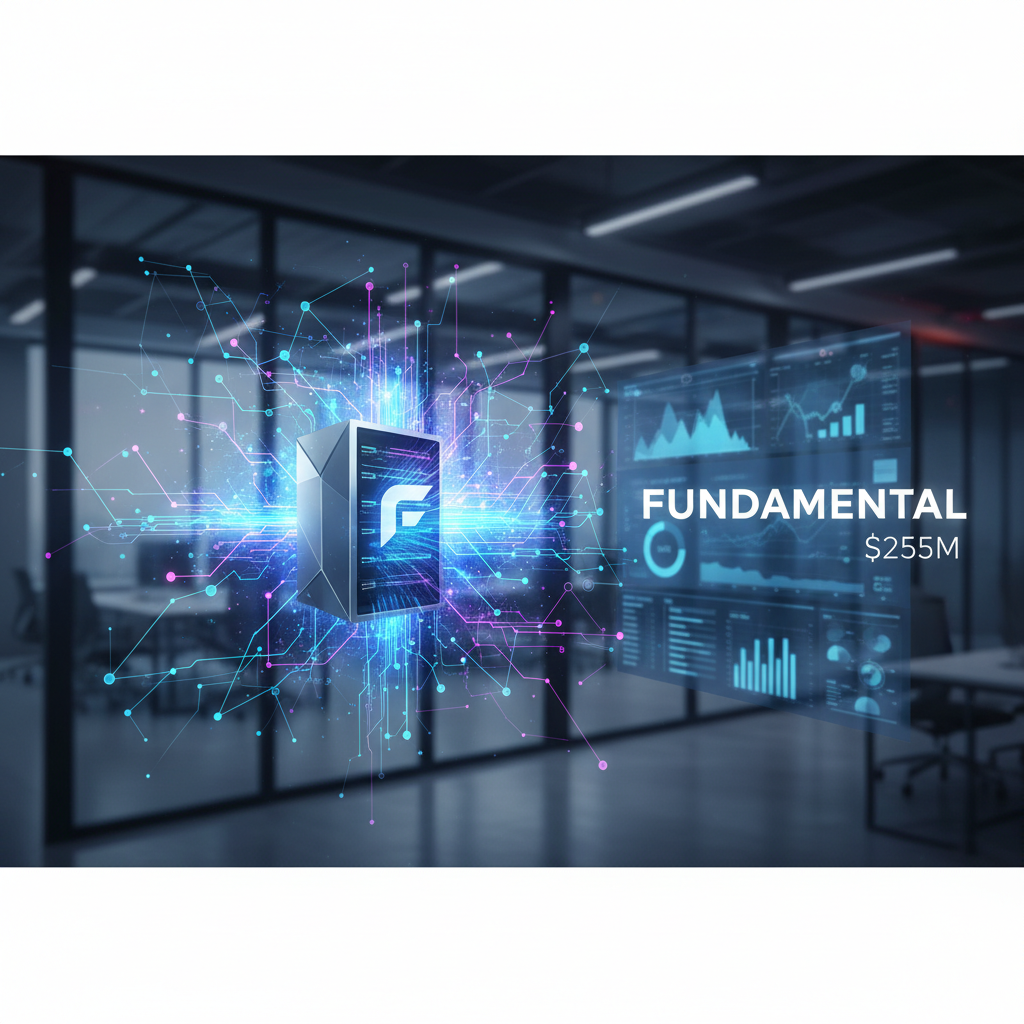
The hum of the servers was a constant presence in the dimly lit room, a low thrum that vibrated through the floor. Engineers at Fundamental, a startup focused on big data analysis, huddled around screens, eyes glued to performance metrics. It was February 5th, 2026, and the team was putting the finishing touches on their latest model, a foundation model designed to extract insights from the mountains of structured data generated by enterprises.
The company had just announced a $255 million Series A, a significant vote of confidence in their approach. This funding round, led by XYZ Ventures, would allow Fundamental to scale its operations and accelerate the development of its technology. The core of their innovation lies in a new way of tackling the old problem of structured data analysis, which is what enterprises produce in vast quantities.
“We’re not just building another analytics tool,” explained Sarah Chen, Fundamental’s CTO, during a recent briefing. “We’re creating a new foundation, a platform that can understand the relationships within structured data at a level never before possible.” This means, in practice, being able to quickly sift through sales figures, customer data, and operational metrics, to find patterns that would otherwise take months of manual analysis. Or perhaps that’s how the supply shock reads from here.
The market is certainly there. According to a recent report by Forrester, the market for big data analytics is expected to reach $400 billion by 2028. This rapid growth is driven by the increasing volume and complexity of data generated by businesses across all sectors. However, the existing tools often struggle to provide actionable insights quickly enough, which is where Fundamental is hoping to come in.
One of the key challenges, as Deutsche Bank analyst, Michael Jones pointed out, is the need for more efficient processing. “The current infrastructure struggles to keep up with the demands of modern data analysis,” he said. He further added that the new model of Fundamental could change how enterprise data is used. The company’s approach involves a new architecture that optimizes both hardware and software, leveraging the latest advancements in chip technology. They are working closely with manufacturers to ensure access to the necessary processing power, even in the face of ongoing supply chain constraints.
The company is targeting a 2027 release for its M300 series, which is expected to offer a significant performance leap compared to the current M100 models. This roadmap, however, is subject to the realities of the global chip market and the geopolitical landscape. Export controls, particularly those impacting access to advanced semiconductors, could impact the timeline. The company is actively exploring domestic procurement options, but the capabilities of SMIC, for example, still lag behind TSMC in terms of cutting-edge manufacturing.
The success of the Series A, however, suggests that investors are willing to bet on the company’s ability to navigate these challenges and deliver on its promises. The engineering team, still glued to their screens, knows the stakes are high, but they also know they are on the cusp of something new. They are building a foundation, not just for their company, but for a new way of understanding the world of enterprise data.
About the Author