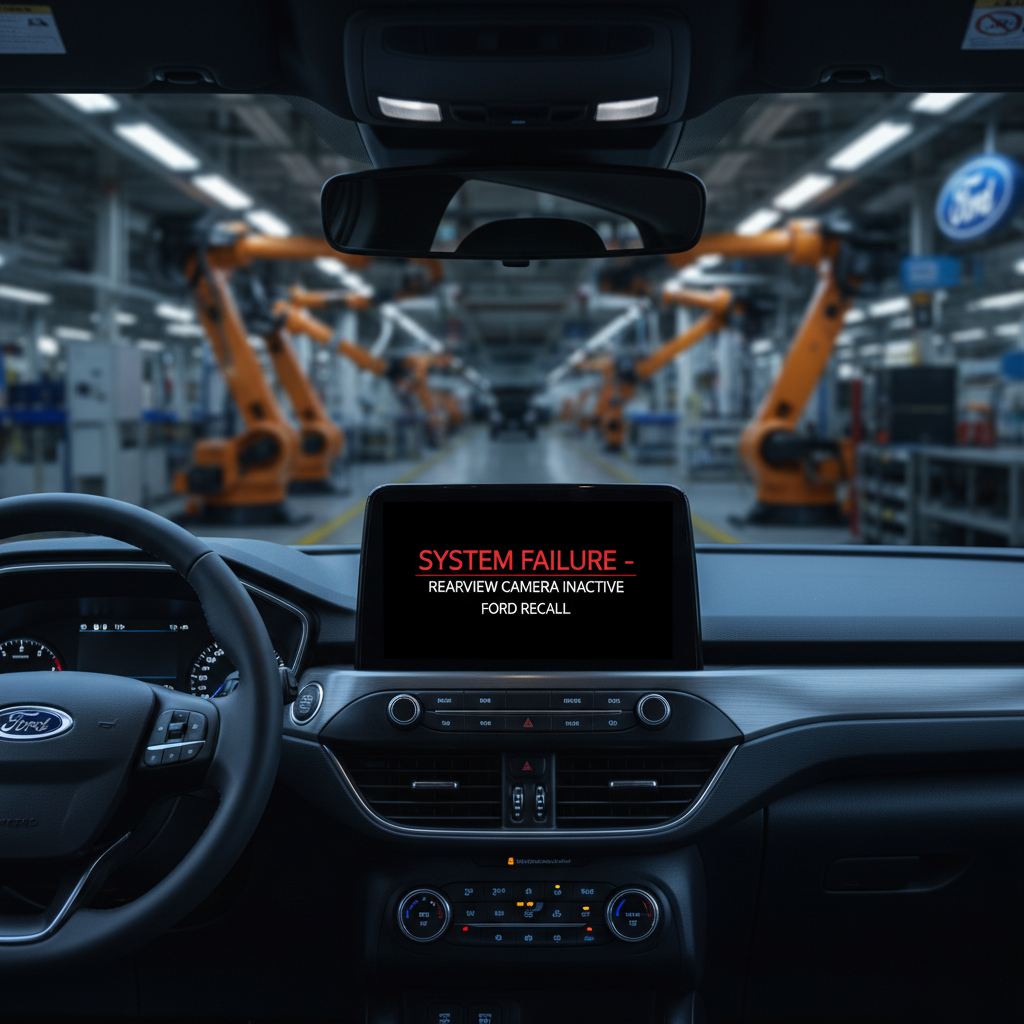
The fluorescent lights of the Dearborn engineering lab hummed, a low thrum that usually faded into the background. But today, the hum felt different, a dissonant note accompanying the hushed tones of the team huddled around a monitor. On the screen, a simulation of a Ford Edge’s rearview camera flickered, then went black.
The problem, as detailed in Ford’s recent recall of 1.74 million vehicles, is a software glitch. The recall affects a wide range of models, including the Bronco, Edge, and Escape, all of which could experience rearview display failures. This isn’t a new issue; the National Highway Traffic Safety Administration (NHTSA) first flagged the problem, citing the potential for increased crash risk.
“It’s a cascading failure,” explained Sarah Chen, a senior software engineer on the call. “A corrupted module, a bad line of code… it’s enough to take the whole system down.” The team was racing against a ticking clock: customer frustration, potential legal liabilities, and the ever-present shadow of the supply chain.
The irony wasn’t lost on anyone: a safety feature, designed to prevent accidents, becoming a source of vulnerability. This is the new normal.
According to a recent report by J.D. Power, the average vehicle recall now affects more than 200,000 vehicles. The pressure is on, and the stakes are high. One misstep, one missed line of code, and you’re dealing with hundreds of thousands of impacted customers.
The recall itself is a fix. Ford dealers will update the software, free of charge. But the underlying issue speaks to a larger trend: the increasing complexity of modern vehicles. As cars become more reliant on software, the potential for glitches and failures increases exponentially. The more code, the more places for things to go wrong.
“We’re seeing it across the industry,” noted Stephanie Jones, a senior analyst at AutoForecast Solutions. “The move to more advanced driver-assistance systems (ADAS) and infotainment systems is pushing the limits of current software development practices. It’s not just Ford; it’s everyone.”
The industry is in a race, a frantic scramble to keep up. The pressure is on software engineers, but also on the semiconductor manufacturers. The need for more powerful, more reliable chips is constant. The supply chain has been a constant headache. Even with the best intentions, the reality is that the industry is still catching up.
Back in the lab, the simulation flickered again, the black screen mocking the team. The solution, they hoped, was within reach, a few lines of code, a simple update. But the implications of this recall, the potential for future problems, stretched far beyond the walls of the lab. It’s a reminder: the road ahead is paved with software, and the journey is not without its risks.
About the Author