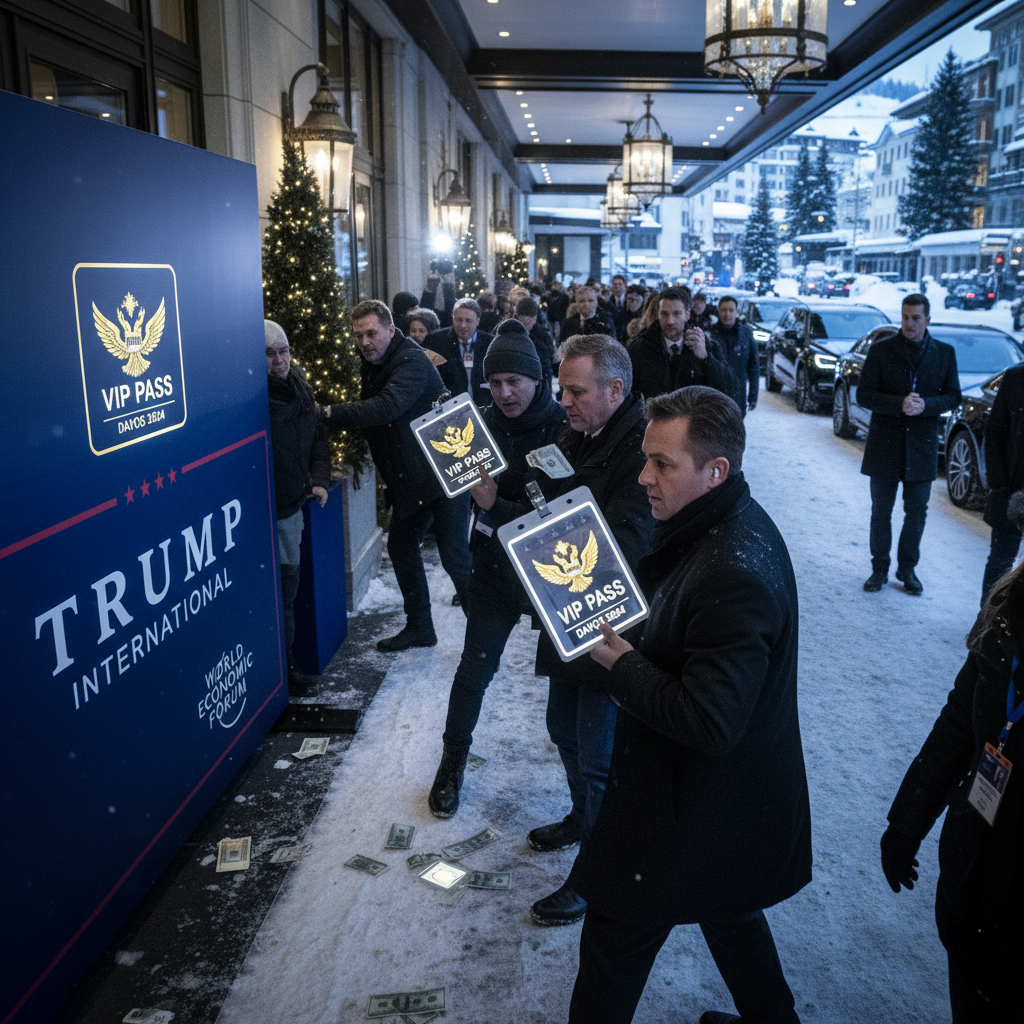
Davos, Switzerland – The glitter of the World Economic Forum (WEF) has been slightly tarnished this year as reports surface of billionaires being duped by fake VIP pass scams at Trump’s exclusive USA House venue. The incident highlights the vulnerability of high-profile events to fraud and the lengths to which scalpers will go.
During the WEF, which draws global leaders and high-net-worth individuals, scalpers reportedly targeted attendees of events at the USA House, a venue associated with Donald Trump. These scalpers were selling counterfeit VIP passes, allowing them to make money through fraudulent activities. The scams, which have caused considerable “sympathies” among the affected billionaires, have raised security concerns about the event’s integrity.
The situation underscores the challenges of managing security at high-profile events. The USA House, known for hosting exclusive events, became a prime target for those looking to exploit the prestige and access associated with the WEF. The fake VIP passes granted access to these exclusive events, which are highly sought after.
The use of scalpers to distribute the fake passes suggests a sophisticated operation, likely capitalizing on the high demand and the perceived value of access to Trump’s USA House venue. This incident serves as a cautionary tale, reminding attendees to exercise caution and verify the authenticity of credentials, especially when dealing with third-party vendors. The negative sentiment surrounding the event has raised questions about security protocols and the potential impact on future events.
The incident is another reminder of the risks associated with large gatherings and the need for robust security measures. The fact that billionaires, known for their resources and security, were targeted speaks to the sophistication of the scam. The focus now shifts to preventing future incidents and ensuring the safety and security of all attendees at the World Economic Forum and similar events.
About the Author