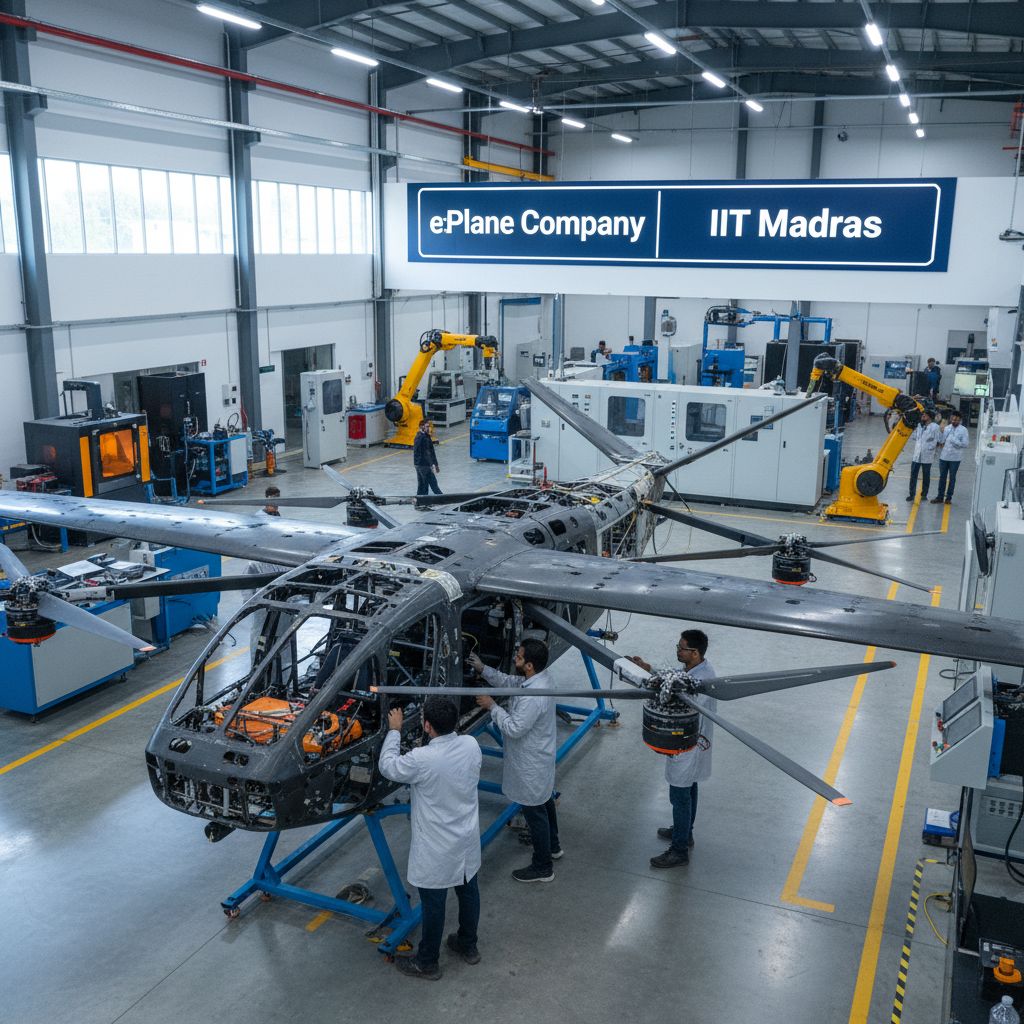
The hum of machinery fills the air, a low thrum punctuated by the staccato clicks of engineers reviewing schematics. In the newly opened eVTOL prototyping facility at IIT Madras, the ePlane Company is pushing forward, a flurry of activity centered on its e200X air taxi. The integrated plant in Thaiyur, a significant step, aims to support the certification and full-scale development of the electric vertical takeoff and landing (eVTOL) aircraft.
The immediate goal: deploying air ambulance services. It’s a pragmatic move, analysts say, and a smart one. “Focusing on medical transport first allows for faster regulatory approvals and a more controlled initial rollout,” explains Dr. Anjali Sharma, aerospace analyst at the Institute for Future Mobility. She notes that this approach mirrors strategies seen in the early days of drone development, where commercial applications like package delivery paved the way for more complex uses.
Inside the facility, the e200X prototype sits partially disassembled. Engineers huddle around a thermal testing rig, meticulously monitoring the heat dissipation of the electric motors. The specifics matter: the e200X is designed for a range of 200 kilometers, a capability that hinges on efficient power management and thermal regulation. The company plans to begin air ambulance services within the next 18 months; the timeline, however, is subject to certification and the inevitable supply chain hiccups that plague any new manufacturing initiative.
The company is aiming for a 2026 launch of its commercial air taxi service, according to sources familiar with the matter. This ambitious timeline suggests a rapid pace of development, testing, and regulatory approvals. But the challenges are real. The eVTOL sector is still nascent, and the regulatory landscape is constantly evolving. The Indian government has shown interest in promoting domestic manufacturing, which could help ePlane secure access to key components. However, the global competition is fierce, with established aerospace companies and well-funded startups vying for a share of the market.
The implications are clear: the success of the ePlane Company hinges not only on its engineering prowess but also on its ability to navigate the complex web of regulations, secure funding, and build a robust supply chain. It’s a high-stakes game, and the prototyping facility at IIT Madras is the arena where the future of air mobility is being forged, one test flight at a time.
About the Author