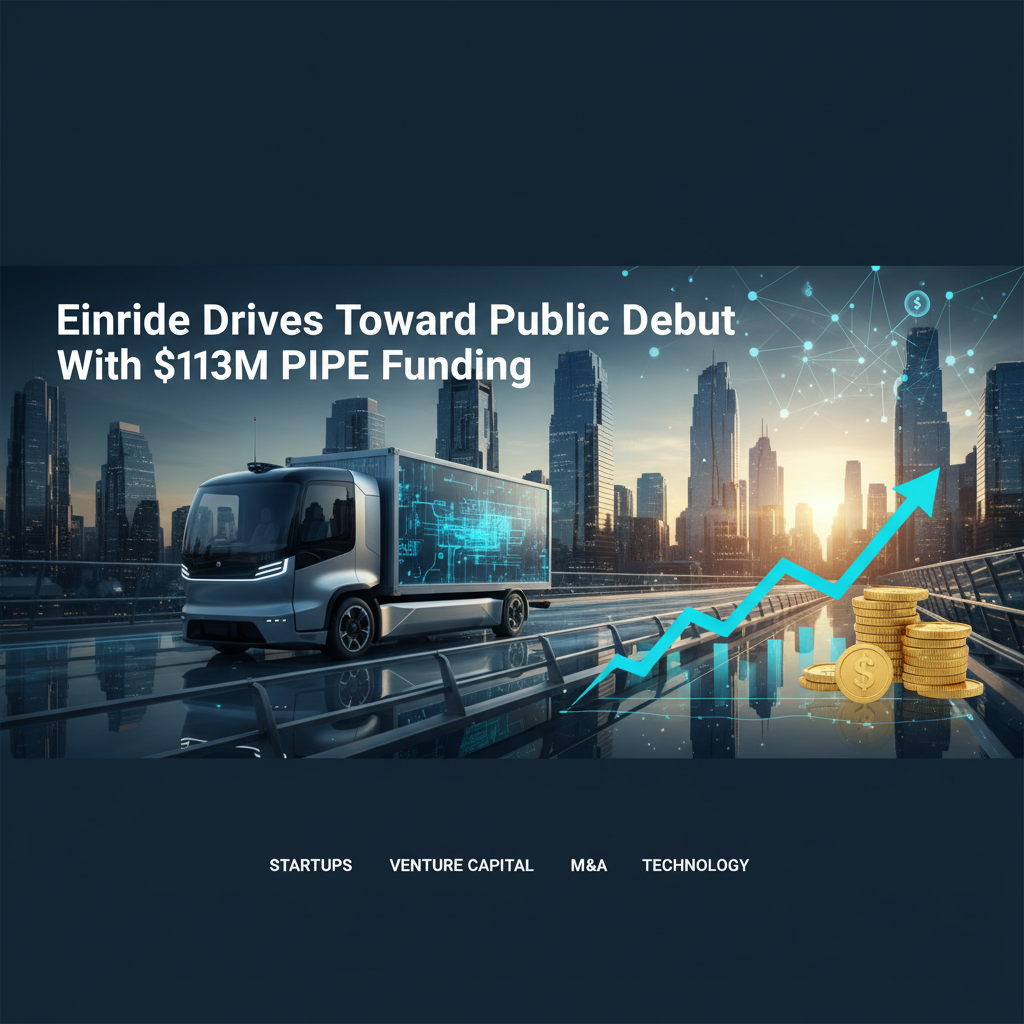
The hum of servers filled the air, a low thrum echoing through the Einride engineering lab. Engineers hunched over screens, lines of code scrolling past. It was late February 2026, and the pressure was on. The looming SPAC merger, slated for early 2026, hinged on hitting key milestones, and the recent $113 million PIPE (Private Investment in Public Equity) funding round only amplified the stakes. The money, a significant vote of confidence, had to translate into tangible progress.
Einride, a Swedish self-driving truck startup, is betting big on the future of autonomous freight. The company aims to revolutionize the trucking industry with its electric, self-driving Pods and accompanying freight mobility platform. This PIPE, an oversubscribed round, signals strong investor belief in Einride’s vision, particularly as it moves toward a public listing. The capital injection is crucial, allowing Einride to accelerate its product development, expand its operational footprint, and scale its commercial deployments.
“This funding allows us to execute our strategy and bring our sustainable freight solutions to a wider market,” stated a company spokesperson. The strategy revolves around deploying its Pods on strategic routes, integrating them into existing logistics networks, and demonstrating the economic and environmental benefits of autonomous trucking. But the path isn’t without its challenges.
One of the biggest hurdles is navigating the complex regulatory landscape. Autonomous vehicle regulations vary significantly across different regions, creating a patchwork of compliance requirements. Furthermore, public perception and acceptance of self-driving technology remain a factor. Convincing shippers and the public that these vehicles are safe and reliable is paramount.
“The market is there, but it’s a marathon, not a sprint,” observed Sarah Jones, a transportation analyst at Morgan Stanley. She noted that while the initial focus is on long-haul routes, the real value lies in optimizing the “last mile” of delivery, a more complex and competitive space. That’s where Einride’s platform, which includes charging infrastructure, fleet management, and operational support, truly shines.
The company’s roadmap, as outlined in investor presentations, targets key milestones for the coming years. By 2027, Einride plans to have a significant fleet of Pods operating across multiple states, with a focus on high-volume freight corridors. The company projects revenues to reach $500 million by 2028, a figure that hinges on successful deployments and securing long-term contracts with major shippers. The challenges, of course, are many.
Manufacturing constraints are a constant concern. Supply chain disruptions, particularly for critical components like sensors and chips, can create bottlenecks. TSMC’s manufacturing capacity, or lack thereof, is a key variable. Export controls, particularly those targeting advanced AI chips, pose another hurdle. And then there’s the race against competitors like Waymo Via and Kodiak Robotics, all vying for a slice of the autonomous trucking pie. Einride is betting on its integrated approach, offering a complete solution from vehicle to operations, to gain an edge.
The engineers in the lab, however, are focused on the immediate task: fine-tuning the software, running simulations, and making sure the Pods are ready to roll. The fate of the SPAC, and the future of Einride, hangs in the balance, one line of code at a time.
About the Author