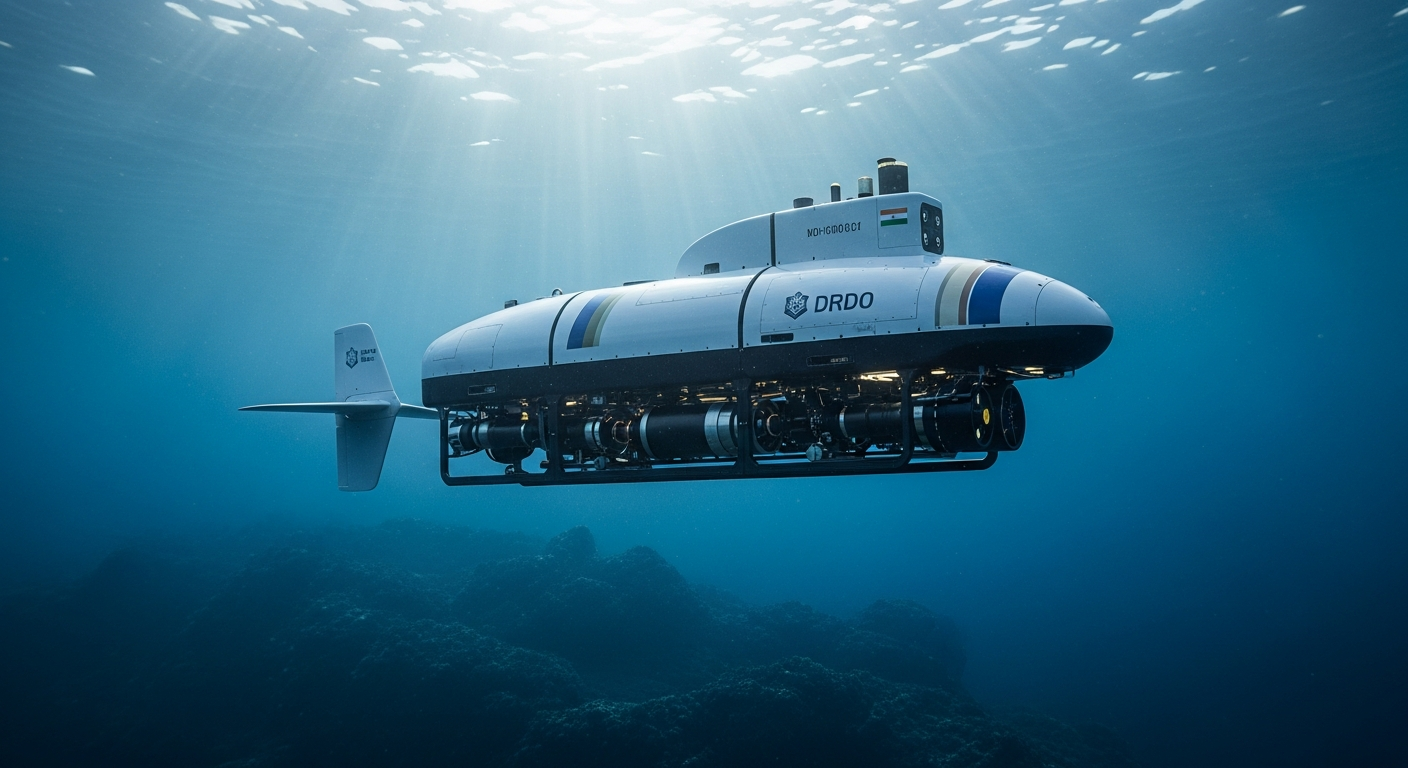
The sea, it seems, just keeps getting more complex. And the folks at DRDO – the Defence Research and Development Organisation – are responding in kind. They’ve been quietly working on something significant: new autonomous underwater vehicles, or AUVs, designed for a rather specific and crucial task. Mine countermeasure missions.
It’s a world away from the surface, a place of shadows and pressure. These new AUVs, as per reports, are equipped with sonar and cameras. The idea is to identify mine-like objects in real-time. Think of it: a whole fleet of these small, unmanned subs, silently scanning the depths.
I read somewhere that the system uses multiple AUVs, working in concert. That detail struck me. It’s not just one vehicle; it’s a coordinated effort. A team, of sorts, navigating the unknown. It feels like a step forward, a way of seeing – and understanding – what lies beneath.
These developments, as per the ET Manufacturing report, are a big deal. They enhance underwater defense capabilities, which is a pretty critical thing these days. The DRDO, as an organization, has been at the forefront of defense technology for a while now. They’re constantly adapting.
The technology itself is fascinating. The use of sonar to map the ocean floor, combined with cameras to get a visual, is kind of brilliant. It’s like giving these AUVs a sense of touch and sight, all in one package. It seems they’re aiming for a comprehensive picture.
Earlier this year, in a related development, there were reports of increased naval activity in the region. That context makes these AUVs all the more relevant. It’s a reminder that beneath the surface, there’s a constant, silent vigilance.
And it’s not just about defense, is it? It’s also about exploration. About pushing the boundaries of what we can see and understand. The ministry hasn’t released specific deployment dates yet, but the implications are already clear. It’s a new chapter in underwater technology.
About the Author