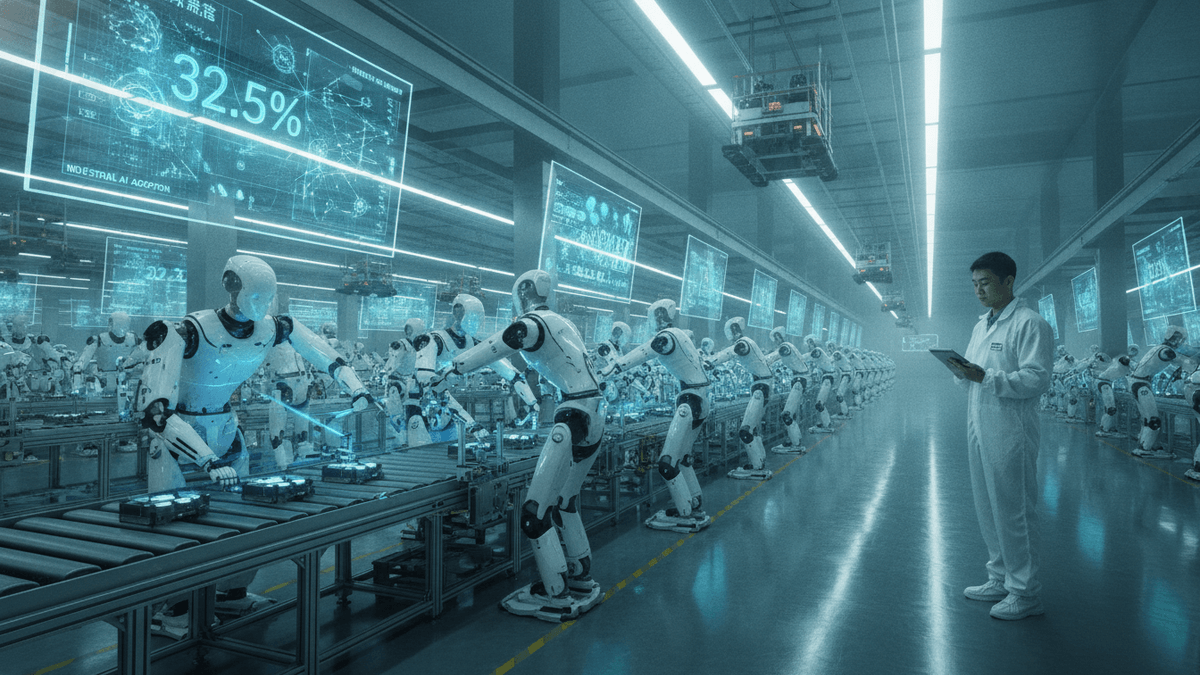
Robotic assembly line in a Chinese factory with integrated AI data overlays.
China’s industrial sector is undergoing a profound transformation, with over 30% of its large-scale enterprises now integrating artificial intelligence. This rapid adoption, particularly within manufacturing, signals a strategic pivot towards advanced automation and efficiency that demands attention from global investors and operators.
The numbers paint a clear picture of this accelerating shift. Officials project the production of 100,000 humanoid robots this year, increasingly deployed across factories, underscoring a commitment to advanced robotics. Furthermore, the market for AI-powered devices is on a steep ascent; sales of AI smartphones and personal computers are anticipated to surpass non-AI devices for the first time in 2026, building on the momentum of over 100 million AI-enabled smart terminals shipped last year. The domestic ecosystem is also thriving, with China’s native AI agents recording more than 20 million monthly visits, indicating widespread consumer and business engagement.
For startups and established businesses alike, China’s aggressive AI strategy presents both opportunities and competitive pressures. This isn’t merely about incremental efficiency gains; it’s a foundational shift that could redefine global manufacturing benchmarks, supply chain resilience, and technological leadership. Companies not actively engaging with or preparing for these advancements risk being left behind in a rapidly evolving industrial landscape.
Looking ahead, China is poised to host the 2026 World AI Conference and High-Level Meeting on Global AI Governance in Shanghai from July 17–20. This event will serve as a critical platform for unveiling new AI products and fostering international cooperation, further cementing China’s role as a key player in shaping the future of global AI governance and innovation. It’s an important date for anyone tracking the strategic direction of artificial intelligence worldwide.
About the Author