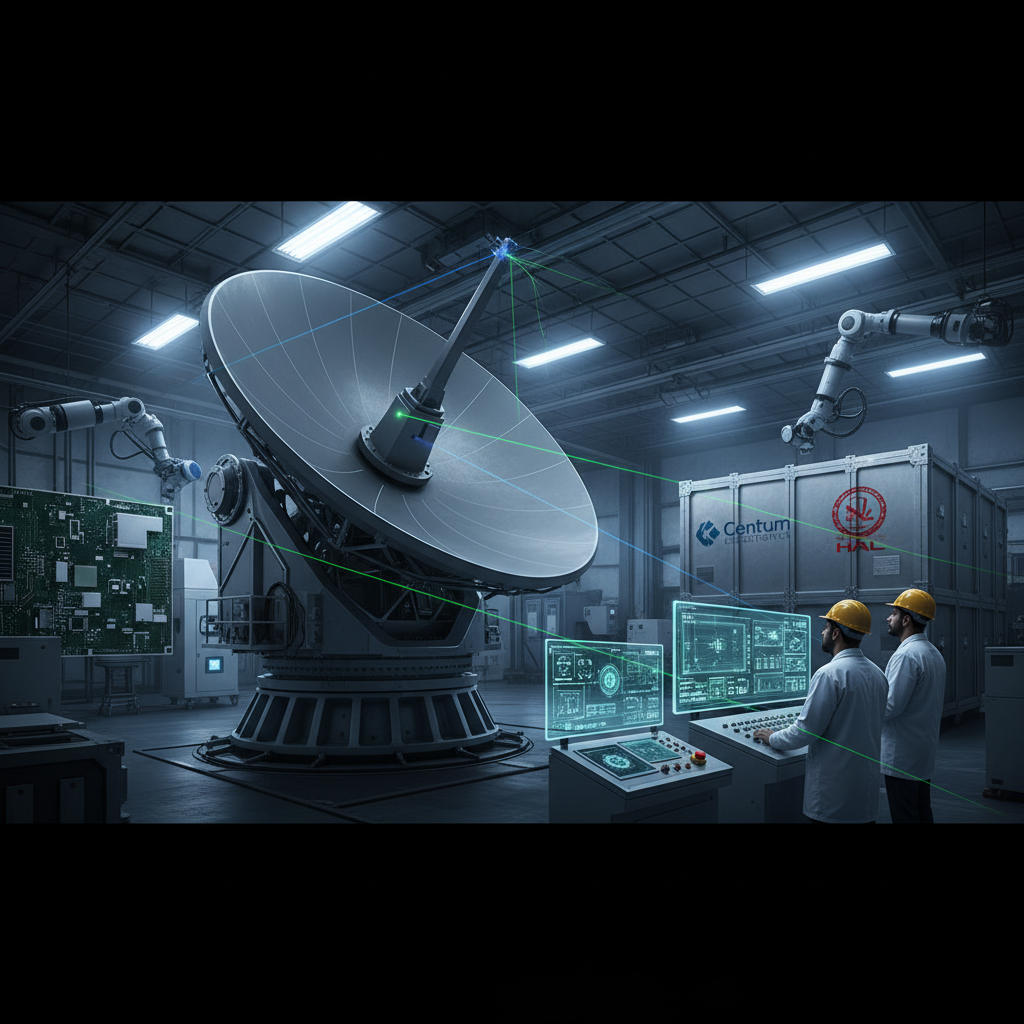
The hum of the server room was a low thrum, barely audible over the clatter of keyboards. Engineers at Centum Electronics, heads bent over schematics, were deep in the weeds of Phase-1 design. The task: developing an Active Electronically Scanned Array (AESA) radar for the Indian Navy’s maritime utility helicopters.
This is where the rubber meets the road. Centum Electronics recently secured a ₹66 crore contract from Hindustan Aeronautics Limited (HAL) for this project. The initial phase focuses on design and development, with a potential follow-on production phase valued at ₹500 crore.
“This contract win is a significant step,” says Rohan Verma, a senior analyst at Ambit Capital. “It underscores the growing domestic capabilities in defense technology.” He noted that the project’s success is critical for the ‘Make in India’ initiative, and it represents a move toward self-reliance in the aerospace and defense sectors. The development of AESA radar technology is a crucial advancement, enhancing the helicopters’ ability to detect and track targets in complex maritime environments.
The technical challenges are considerable. AESA radars, unlike older mechanically scanned systems, use numerous transmit/receive modules. These modules allow for electronic beam steering, providing enhanced target detection, tracking, and multi-mode operation. Manufacturing these modules requires precision, and the supply chain, as always, is key. The current global chip shortage and export control regulations add another layer of complexity.
The HAL contract, announced recently, specifies a timeline that demands rapid progress. Engineers are now reviewing thermal tests, ensuring the radar can withstand the harsh conditions of maritime operations. The pressure is on, especially with the promise of a larger production phase hanging in the balance. The details of the radar’s operational capabilities are closely guarded, but the implications are clear: improved surveillance and threat detection for the maritime fleet.
The market is responding. Analysts predict a surge in demand for advanced radar systems over the next five years, fueled by geopolitical tensions and the modernization of defense forces globally. This includes India. The project’s success could position Centum Electronics as a key player in the Indian defense market, a market projected to grow significantly in the coming years. This is not just about technology; it’s about strategic positioning in a rapidly evolving global landscape.
The engineers are working late, fueled by coffee and the shared goal of delivering a cutting-edge radar system. The future of India’s maritime security may very well depend on their success.
About the Author