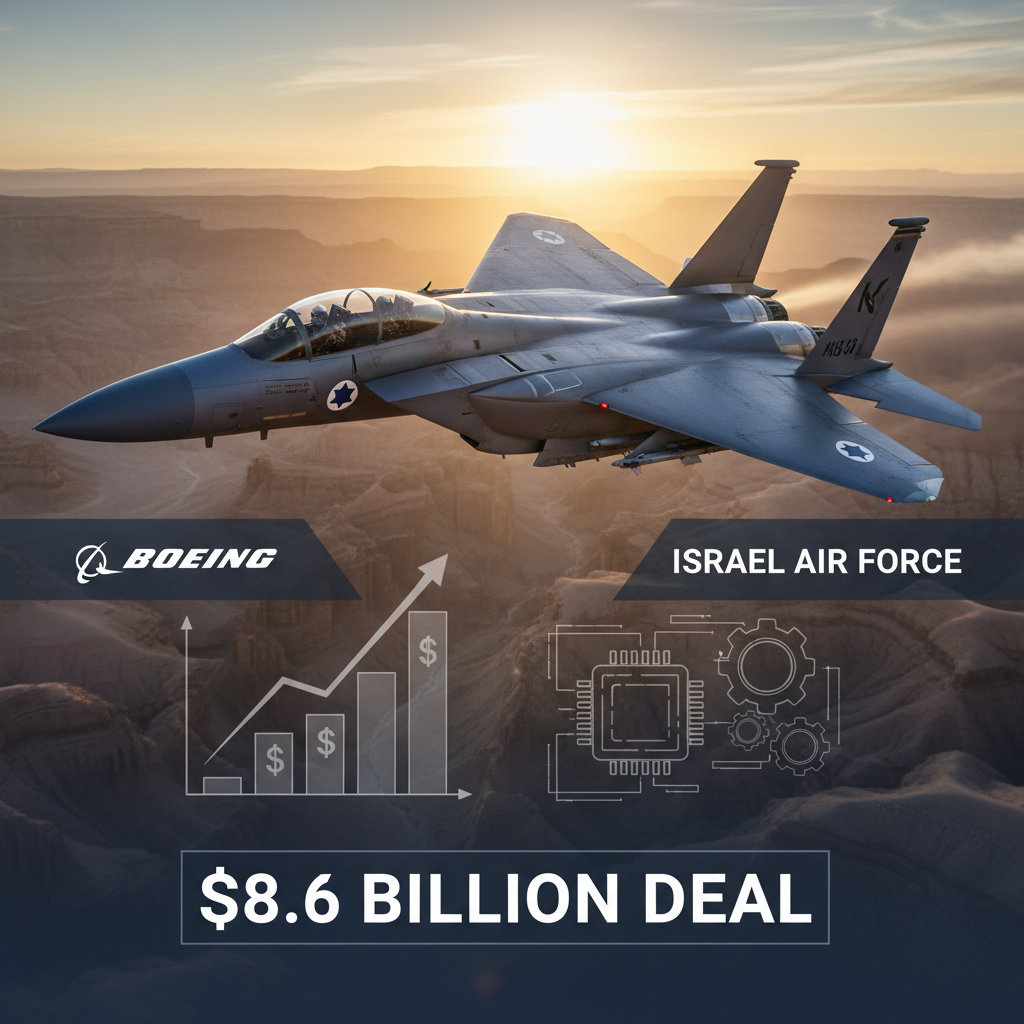
Boeing has been awarded an $8.6 billion contract by the Pentagon to build 25 new F-15IA fighter jets for the Israeli Air Force. This significant deal, announced recently, underscores the ongoing demand for advanced military hardware and the robust relationship between the United States and Israel.
What: The contract encompasses the production of 25 F-15IA fighter jets, with an option for an additional 25 aircraft by 2035. The F-15IA is a variant of the F-15 fighter jet, specifically tailored to meet the operational requirements of the Israeli Air Force. This deal represents a substantial investment in Israel’s defense capabilities.
Who: The primary entities involved are Boeing, the manufacturer, and the Israeli Air Force, the end-user. The Pentagon facilitated the contract, highlighting the U.S.’s role in supporting its allies through defense procurement.
Where: The fighter jets will be delivered to Israel, enhancing its air defense capabilities within the region.
When: The initial contract covers the production of 25 jets, with the possibility of extending the order by 2035. This long-term perspective indicates a sustained commitment to the project and the strategic importance of the partnership.
Why: The primary why behind this contract is to bolster the Israeli Air Force‘s capabilities with state-of-the-art fighter jets. These advanced aircraft will provide a significant advantage in maintaining air superiority and protecting Israeli airspace. The deal also represents a strategic alliance between the U.S. and Israel, reinforcing their mutual defense interests.
How: The contract was secured through a Pentagon contract, demonstrating a streamlined process for defense procurement. This method ensures that the Israeli Air Force receives the necessary equipment efficiently while maintaining established security protocols.
This contract is a win-win situation, providing a boost to Boeing’s manufacturing sector while also equipping the Israeli Air Force with cutting-edge technology. The deal highlights the enduring importance of international defense partnerships and the continuous advancements in military aviation.
About the Author